Friday, October 25, 2013

Project Ojibwa: Canadian Cold War Submarine (Literally) Museum

I just thought I would share a new museum project that opened for tours this summer in Port Burwell, Ontario.

From the site:

"The Elgin Military Museum is proud of having met the challenge of incredible hurdles to preserve and operate HMCS OJIBWA, a cold war Oberon Class submarine, as part of a Museum - reflecting our naval heritage for the benefit of future generations. Now, along with the restoration of the submarine, a new branch of the Elgin Military Museum, the  Museum of Naval History is in the works. With luck, it will open in 2014, the one hundredth anniversary of the Canadian Submarine Service.

HMCS OJIBWA was the first submarine built expressly for the Royal Canadian Navy (although there were submarines in the Canadian navy since the Great War). The process took longer than expected; however, we are now the proud owner of this former cold warrior."

Cheers, 

Jordan

Wednesday, October 23, 2013

Prize watch:


Constance Backhouse, the University of Ottawa law professor and historian, was one of five persons recently honoured with the Governor-General's award in commemoration of the Persons Case.  (Persons Day, October 18, slipped by us this year.)

And the Hilary Weston Prize in non-fiction was awarded to Graeme Smith for his Afghanistan memoir The Dogs Are Eating Them Now

And Tom Morton reminds me the Governor General’s History Awards for Excellence in Teaching just wer announced for:
  • Rachel Collishaw of Glebe Collegiate Institute in Ottawa
  • Romy Cooper and Graeme Cotton of General Gordon Elementary, Vancouver,
  • Matt Henderson of St. John’s-Ravenscourt School, Winnipeg,
  • Lucie-Jean Mercier of Académie Lafontaine, St-Jérôme, Quebec
  • Catherine MacDonald of Fr. L. J. Austin Catholic Secondary School, Whitby, Ont.,
  • Neil Orford of Centre Dufferin District High School in Shelburne, Ont
Canada's History announced a slew of student awards in history as well.  Congratulations, all around.

Monday, October 21, 2013

It's Trafalgar Day (Kiss me, Harper?)


CFB Halifax's Trafalgar by Wm. Wyllie, via Wikipedia
Wikipedia informs us that today is the 208th anniversary of the naval battle of Trafalgar, off the coast of Spain, and that Trafalgar Day is an event widely celebrated in the British Commonwealth.

It is? You would think that if Trafalgar Day had ever been much of a thing, some Canadians would have jumped on it. Google has a lot more links to Canada Day in Trafalgar Square than to Trafalgar Day in square Canada.

But fear not, military history traditionalists.  HMCS Queen, the Naval Reserve station in Regina, Saskatchewan, has commemorated Trafalgar Day since 1923, and will hold a Trafalgar Ball next weekend.(Indeed Wikipedia does acknowledge the day is a naval thing mostly.)

Update, October 22:  While I was being snarky, Keith Mercer was doing some serious blogging on Trafalgar's Canadian connections.


Friday, October 18, 2013

History in the throne speech


The speech by the governor general that opened parliament on Wednesday was one of the longest ever -- and a lot of it is pretty turgid.You can read it all here, but as a public service we've looked for you to see what it had to say about history.

Well, first the throwaway lines, here and there:
This year, we celebrate the 250th anniversary of the Royal Proclamation. This extraordinary document is part of the legal foundation of our country. It recognized the rights of Aboriginal people in Canada for the first time and established the basis of their relations with the Crown.  [The government mostly downplayed this anniversary, so consider this catch-up.] ...
Today, as we contemplate our 150th anniversary, the eyes and ears and expectations of Canadians turn toward this Parliament. ...
In the words of Thomas D’Arcy McGee: “I see in the not remote distance one great nationality bound, like the shield of Achilles, by the blue rim of ocean. I see it quartered into many communities, each disposing of its internal affairs, but all bound together by free institutions...”  [David Wilson, score!] ...
Look at the paintings that adorn this room—scenes of the Great War. They remind us of this, and of the profound sacrifices made by our men and women in uniform. These heroes are the pride of our country and the backbone of our history. ...
As we look confidently to the future, we draw great strength from our past. Beginning with our Aboriginal peoples, Canada’s story is one of risk, sacrifice, and rugged determination. From the founding of New France, to the fight for Canada in the War of 1812; from the visionary achievement of Confederation, to our victory at Vimy Ridge, Canadians have repeatedly triumphed over long odds to forge a great country, united and free.  ... 
As the dawn of our Confederation approached in the 1860s, our founding Prime Minister Sir John A. Macdonald said of Canada’s future that he saw “a great nation—great in thought, great in action, great in hope, and great in position.” His vision has come to pass.
 The speech also includes a section of specific (well, throne-speech specific) commitments regarding 2017:
Canada’s Confederation is worth celebrating. As we approach our historic 150th anniversary in 2017, our Government will join with Canadians in honouring this momentous milestone by:
  • Marking the 150th anniversaries of the Charlottetown and Québec Conferences;
  • Celebrating the 200th birthdays of two of our greatest Fathers of Confederation, Sir George-Étienne Cartier and Sir John A. Macdonald;
  • Commemorating the centennial of the First World War and the 75th anniversary of the Second World War, and the enormous sacrifices made by Canadians and our Allies in both;
  • Re-dedicating the National War Memorial to the memory of all men and women who fought for our country;
  • Building a Memorial to the Victims of Communism, to remember the millions who suffered under tyranny;
  • Marking the end of Canada’s mission in Afghanistan by honouring the service of our men and women in uniform, including those who made the ultimate sacrifice combating the spread of terrorism;
  • Honouring the proud history of our Canadian Armed Forces by restoring military traditions;
  • Strengthening the Cadet and Junior Ranger programs;
  • Establishing the Canadian Museum of History to share the story of Canada with pride;
  • Supporting the Pan and Parapan American Games and the FIFA Women’s World Cup in 2015, showcasing Canadians’ proud, competitive and united spirit under the maple leaf; and
  • Working with Canadians to support community projects, local celebrations, and other initiatives to commemorate this historic occasion.
       The coming anniversary of Confederation is also a time to mark the contribution of Canada’s        First Nations, Métis and Inuit communities, who have had a defining role in shaping our 
       country.
  • Our Government will continue our dialogue on the treaty relationship and comprehensive land claims.
  • And our Government will continue to work in partnership with Aboriginal peoples to create healthy, prosperous, self-sufficient communities.
 It is often observed that this government associates Canadian history with Canadian military history. As the speech shows, they really do go there reflexively.

Update:  Brian Busby notes the government expresses no interest in: 
the upcoming 50th anniversary of the flag. Though not sixteen months away, you'll note that it received no mention in the throne speech. Cartier's birthday? Yes. Flag? No.Interesting too that the Government is "establishing" the Canadian Museum of History, as if there was nothing before.  

Thursday, October 17, 2013

Shutdowns and Senate reform


It was actually kinda surprising, last night, to see that given a choice between saving the full faith and credit of the United States, returning the government to work, and preventing economic disaster, on the one hand, and pursuing their crazy ideological obsessions, on the other, a sufficient number of American Republicans actually chose the option that was, you know, not completely insane. These days, whodathunkit?

Best analysis I saw of the American crisis came from Spanish political scientist Juan Linz, who actually died during the shutdown but who had foreseen it all years ago. In 1990, Linz observed that in systems with separation of powers between president legislature and executive, “No democratic principle exists to resolve disputes between the executive and the legislature about which of the two actually represents the will of the people.” The Republicans may have been crazy, that is, but in bringing their own country to the brink of disaster, they were only using the powers the constitution provides to them. (h/t: an American journalist called Jonathan Chait.) Linz wondered why the crisis of 2013 had not happened already, and constantly.

There has been a certain amount of smugness expressed from parliamentary countries, based on the observation that in such systems separation of powers exists but is not complete. Confrontation between executive and legislature is possible, but in the end the legislature yields, or the government is replaced, or an election produces a new legislature and government.

Strikes me that the only way Canada could enable the kind of impasse the United States has recently seen would be to establish a truly Triple-E Senate. If “equal” and “effective” mean what they promise, a Triple E Senate would presumably be able to hold hostage, say, a government budget supported by the Commons, thereby rendering government unworkable by fully constitutional means. (I'd be glad to be corrected on this -- did triple-E theory allow for some resolution of such a confrontation?)

Maybe this is why Triple E works well as a banner for Western grievance when the Reformers are out of power, but does not get implemented when they are in power. Yesterday’s speech by the governor general promised either Senate reform or Senate abolition. As understanding grows that any senate reform can only make governance worse,I'm thinking, the drift toward a consensus on abolition seems likely to continue.

Tuesday, October 15, 2013

Is it ethical to recommend students for history doctoral programs...


... without making sure they are very well schooled in the real and genuine (lack of) prospects for work in the field? Tenured Radical raises the question. (Are Canadian stats significantly different, I wonder?)

Leadership problems, head of state problems ... but not Canada this time


The new guy (with the initials BS!)
The Australian Labor Party, driven from office in a recent general election, chose a new leader over the weekend, its third in a few months. Fans will recall that the ALP caucus deposed PM Julia Gillard last summer in favour of Kevin Rudd, whom they had early deposed in favour of Gillard.

Sad to say, the ALP has moved toward the Canadian system of mass party voting. However, they have so far only moved part way, and the parliamentary caucus used its remaining power to veto the mass membership choice and give the leadership to Bill Shorten.  Many Australian observers expect momentum towards fully removing leadership selection from the people's elected representatives to continue.

Just to complicate things, Shorten, the new leader of the opposition, is married to the daughter of the Governor General of Australia. One American observer wonders what the queen will say.

Friday, October 11, 2013

Save the census; send this woman to jail


A Toronto judge acquitted 79-year old Audrey Tobias despite her refusal to complete the mandatory portion of the 2011 census. She didn't approve of the company hired to do technical work on the census, so she refused to do it.

The judge acquitted her because she is old and so, he said, she might have been confused and bewildered about the whole thing. He wasn't sure, he said, if she really intended to refuse to complete the census. Ms Tobias is grateful for being acquitted, but she continues to boast she knew exactly what she was doing and was willing to experience a jail sentence.

Ms. Tobias's act was similar to that of the government when it made the long-form part of the 2011 census voluntary -- and therefore, it is clear, mostly worthless. In refusing the remaining part, Ms. Tobias too was deliberately trying to sabotage knowledge about this country in order to score a political point.  Okay the government didn't actually commit a crime, since it has the authority to manage census-taking, and its penalty should be political not juridical. But for citizens, the law should take its course; the census is too important to become optional for anyone with a political opinion.

Ms.Tobias says she did willingly and deliberately commit a crime. She's right. Refusing to comply with census regulations is the same as refusing to pay taxes, serve on juries, and perform the other responsibillities of citizenship. If you are determined to be civilly disobedient, you should be willing to do the time, and Ms. Tobias apparently was. Even though she is a little older than most of us, the judge should have taken her at her word, instead of excusing and encouraging destructive and uncivil behaviour.

Wednesday, October 09, 2013

How's the War of 1812 going, 200 years on?


Not well, if you identify with us against those Yankee invaders.  Last weekend marked the anniversary of the Battle of the Thames or Moraviantown (warning: link may contain fife-and-drum music). Having lost naval control of Lake Erie in September 1813, the British, Upper Canadians, and First Nations got thoroughly beaten. Subsequently, much of southwestern Ontario was occupied, at least loosely, by the Americans, who were also pushing across much of the Niagara peninsula, and much nasty guerrilla fighting developed..

War of 1812 commemoration coverage has been losing its media buzz, but it sez here 20,000 people attended the commemorations around Chatham last weekend.

The battle caused the death of Tecumseh of the Shawnee, key leader of First Nations resistance to American expansion.  In Fife and Drum, the newsletter (no sound effects) of the Friends of Fort York in Toronto, Kyle Wyatt considers the images imposed on Tecumseh over 200 years.

(Image: CTV Windsor)

The arrival of the admen, continued


By email (and with visual evidence as above), Charles Hoffman of McGill and Indiana Law School makes the case that Canadian political advertising goes back longer than 1952:
Reading through the Susan Delacourt piece you linked to reminded me of the ads run by the Conservatives during the 1925 Nova Scotia provincial election, which I came across while doing research into the debates leading to the 1928 abolition of the Legislative Council of Nova Scotia.  In brief, the opposition Conservatives ran a series of ads against the 43 year old Liberal government under the theme "Vote Him Back Home".  The ads were largely devoid of specific proposals, instead focusing on the general economic malaise that had caused so many Nova Scotians to emigrate to the United States and blaming the Liberals for failing to stem the tide.  There were at least five versions—a mother asking "Where's my boy?", an infant asking "When is Daddy coming home?", one focused on the exiles themselves ("But we are exiles from our Native Land" - attached), another telling the story of a Halifax doctor hearing a traditional Nova Scotia melody in a small American town, and the last showing a farmhouse abandoned by yet another emigre.  All ended with the refrain:
 Vote Him Back Home
Vote Against The Government That Drove Him Into Exile
Vote For a change that will give A Good Living For All Nova Scotians
 While there are some similarities to the 1957 federal campaign (including the interesting parallel of the long-out-of-power Conservatives taking up newer advertising techniques to combat the establishment Liberals), there are at least two significant differences.  First, unlike 1957, the 1925 Nova Scotia ads did not play up Conservative leader Edgar Nelson Rhodes at the expense of other candidates—indeed, Rhodes is entirely absent from the election ads (though the Conservative-leaning Halifax Herald did put quite a bit of emphasis on him).  Second, I have not found any references to Rhodes or the Conservatives making much use of that era's new media, radio.  As best as I can tell, this was a very "old media" sort of campaign, even if the Conservatives were making much better use of the newspapers than did the Liberals.  So, I wouldn't say the 1925 NS election disproves Delacourt's thesis, but it does offer some interesting context of how advertising was slowly making its way into Canadian elections in the period preceding 1957.
 Oh, and to end the suspension, the Conservatives won the election in a landslide, taking 40 of the province's 43 Assembly seats.  Of course, the Liberals still held an overwhelming majority on the Legislative Council, leading to Premier Rhodes' ultimately successful push to abolish the Council.
Nova Scotia 1925: a successful Conservative-led movement to abolish an unelected upper house.  Some note on Hoffman's work here.

Tuesday, October 08, 2013

The arrival of the admen in Canadian politics

Political journalist Susan Delacourt, now in the Post, apparently, offers a nice history of when advertising guys began to replace politicos in Canadian politics.  Would you have said 1952?

Update, October 9:  Shoulda known, shoulda mentioned.  Delacourt has a new book out on the subject of politics as marketing, and Everyday History has been reading it.

Irish Seanad survives: more evidence referenda and representative government don't play well together


Who could say No to that?
Ireland voted the other day on a referendum about Senate abolition. After leading the polls throughout the race, the Yes side narrowly lost. The Seanad, an unelected and largely powerless upper house roughly similar to Canada's goes on.

The referendum question was a simple Yes/No -- attractive compared to the Canadian style of "Do you want to consider potentially giving a possible mandate to tentatively negotiate...."  But it prevented debate on avenues for change and reform as part of the process. As usual, those who set the question shape the terms of debate and the outcome.  

As usual with referenda, the Irish debate encouraged maximalist demagogery, with the No side conjuring up an executive power grab if the Seanad were gone, and the Yes side just as extreme about elitist, unelected, autocratic blah-blah-blah.

Whatever Canada does about our Senate, I hope we have as little as possible to do with referenda. If  enough provincial legislaturs will line up, pass a simple statute, override or pack the senate, and just do it. 


Friday, October 04, 2013

Royal Proclamation considered at York University, Monday

The Active History team that produced the Royal Proclamation series this week is hosting a discussion on the same theme at York University on Monday, the anniversary date.

That's at 305 York Lanes --the York central concourse and shopping area -- 3:00 to 5:00 pm, with Victoria Freeman, Tom Peace (by skype at least), Keith Jamieson, Colin Coates, and me.

Update, October 7:  Not in Hogtown:  Charlevoix has a roundup of other RP250 events.

Hayes on Coyne on Parliament


Image by Luc Melancon, from The Walrus
William Hayes, by email, says that after reading Andrew Coyne's article,"Repairing the House: How to Make Members of Parliament Relevant Again" in The Walrus tenth anniversary issue (Buy it; I did), he made a bet that:

Christopher Moore is the ghost-writer of the article.
Sorry, William, you lose. Coyne writes his own. (But you made me laugh.)

After reading it, I did have the thought (for the benefit of all you who come here for history news and get bored with me banging on about Parliament), I could now declare victory and retire from the struggle. It hasn't happened yet, but I think everyone who is not completely brain-dead has begun to concede that the campaign against the democratic deficit in Canada has to start with the MPs taking control of caucus and establishing that the party leader is a member of caucus, subject to its discipline as much as any other member.

Coyne says it regularly. Wherry in Maclean's believes. Rafe Mair in BC is mostly there. The Economist has signed on. The ball has begun to roll.  The MPs will hear its rumble eventually.

The way you can tell I didn't write Coyne's story? He still buys that old counsel of despair -- that reform is rendered impossible by the Elections Act rule about leaders having to sign their MPs' election papers.
In Canada, as a matter of law, no candidate may run for Parliament under a party banner without the signature of the leader on his or her nomination papers. The requirement dates back to 1970, with a change in the elections laws requiring that the candidate’s party affiliation be printed on the ballot (previously, only the candidate’s name appeared). Someone, it was reasoned, had to vouch for the candidate as the party’s legitimate standard-bearer, and who better than the leader?
Except, of course, that this gave the leader an absolute veto over the nomination of every member of caucus, real or prospective.
The law is there, sure. But once caucuses require leaders to be subject to caucus rules, leaders who want to abuse that Election Act authority to dispose of MPs who might doubt or oppose them will easily be reined in - fired if necessary -- by the caucus at large (as a threat to each of them).

In fact, a caucus probably needs some way to ensure that potential MPs who wish to join it actually share the party's values. So long as the leader is responsible to caucus, why not delegate that role to him or her, via the Election Act provision?  That's the nice thing about accountability -- it can actually make people accountable. Which is what a parliament is supposed to be about.

Coyne's best line about MPs, though he himself seems hardly to believe it:
it is ultimately up to them. None of these reforms are possible if MPs themselves are not prepared to stand up for their rights, and yet if ever a start were made it would surely create the platform from which to argue for more.
Once they stand up for their rights, they are already there, I'd say. Congrats to The Walrus, by the way. I buy it often, though I do often wish there were more worth reading in it.

What history blogging was invented for


Active History's weeklong consideration of the Royal Proclamation of 1763 has been a remarkable piece of engaged scholarship -- timely, engaging, accessible, and without any neat or easy lesson or conclusion. And an intellectual pleasure to follow.

In a better world, half the country's old media political columnists and cultural commentators would be picking up on it. Instead, pretty much zipnada.

Thursday, October 03, 2013

Ontario's Visual Heritage: War of 1812 on TV


The Ontario Visual Heritage Project, committed to the idea that:
Local history has the power to enable connections between people and the places they live, work and visit. In order for people to care about these places, they must know the ingenuity, hard-work and determination that created their community, their way of life, or their business. They must know the forces of nature that for millions of years carved the lake, grew the forest, or created the natural resource that they use daily. We believe the best way to do this is through the personal narrative - through stories. 
is putting one of its films up on TVOntario on Saturday, October 5 at 9:00 pm.  The film is "A Desert Between Us and Them," about raiders and rebels on Upper Canada's western frontier during the War of 1812.

Wednesday, October 02, 2013

Prize watch: the GGs


Canada Council announced the short lists for the Governor General's Literary Awards this morning.  Not so much history in the nonfiction list this year, at least by the conventional meanings.

  • Sandra Djwa's Journey With No Maps, a life of the poet-painter P.K.Page
  • Carolyn Abraham The Juggler's Children, a family history/genealogical tale
  • Nina Munk, The Idealist, on Jeffrey Sachs' anti-poverty project
  • Allan Smutylo, The Memory of Water, about aqueous 'scapes around the world
  • Priscilla Nuttall (sorry) Uppal, Projections, a memoir of her mother
Abraham's is the most historical, maybe, a family memoir that travels a long way. Nuttall's is the only one also nominated for the Hilary Weston prize, noted here the other day. It's a lit'ry prize folks, not a research prize.

This month in Canada's History


Now reaching subscribers and newstands and up digitally too, the latest Canada's History has some fine trad stories:  animals that went to war, the great Lake Huron storm of 1913.  Some tough stuff: Heather Robertson on the terrible history of the Orillia asylum. A graphic-history take on the real Original Six (no Bruins?  no Leafs!) And some serious historical reflection: Tina Loo on the the vanishing "Canadianist" in Canadian history departments. And reviews, and features, and...  Read.

My own column takes up the 250th anniversary of the Royal Proclamation of 1763 and why it matters. And in this issue, the piece for the mag's ongoing War of 1812 series is mine, too. Two hundred years out from the Battle of Crysler's Farm, I'm looking at John Crysler, the owner of the farm and loyal hero, but also at his first cousin Adam Crysler, who became one of the accused on trial for his life at the great Ancaster treason trial.

The online Canada's History has just launched Destinations, a site for historically-oriented travel in Canada: where to go, how to plan the trip, and a lot more. More about that here.

Levine on Newman on Dief+50


Young Newman and his wife-colleague-rival Christina McCall
Historian Allan Levine takes note of the fiftieth anniversary of Peter C. Newman's Renegade in Power, the study of John Diefenbaker that launched modern political journalism as a genre to be reckoned with in Canada.
At the Diefenbaker Centre at the University of Saskatoon, where Diefenbaker’s papers are housed, there is a handwritten note in the Renegade in Power file. Archivists assured me many years ago that it was penned by Diefenbaker and attests to his fury and meanness.
“Then there is Newman,” it begins. “He is the literary scavenger of trash. Manufactured and concocted. He is in close contact with the Liberal hierarchy and gets his briefings from them as to what he should publish. False propaganda. Vicious. Health of my wife. Cruel Stories, Caricatures.”
As Levine notes, historians have mostly affirmed and reinforced Newman's image of Dief.

(Photo: from National Post)

Tuesday, October 01, 2013

Prize watch: nonfiction


Historians pretty much shut out at the Writers' Trust Hilary Weston Prize in Nonfiction this year. Most "historical" title is Thomas King's The Inconvenient Indian .  Shortlist for the October 21 announcement:
  • Thomas King | The Inconvenient Indian: A Curious Account of Native People in North America;
  • J.B. MacKinnon | The Once and Future World: Nature As It Was, As It Is, As It Could Be
  • Graeme Smith | The Dogs are Eating Them Now: Our War in Afghanistan
  • Andrew Steinmetz | This Great Escape: The Case of Michael Paryla
  • Priscila Uppal | Projection: Encounters with my Runaway Mother

In Britain the shortlist for the principal British nonfiction prize, the Samuel Johnson, previously won by Canadians Margaret MacMillan and Wade Davis, is heavy on history this year. Shortlist for the Nov 6 announcement:
And while we are noting them, my column in Canada's History was recently awarded the Manitoba Magazine Association's "Maggie" for best column.  No $60,000 cheque attached to this one, but gratefully received nonetheless.
.

Monday, September 30, 2013

Royal Proclamation+250 at Active History


Active History launches a week of commentary to mark the 250th anniversary of the Royal Proclamation of (October 7) 1763. Tom Peace's introduction to the project, "The Politics of Proclamation, The Politics of Commemoration," linking Active History's coverage directly to Canada's decision not to take note of this anniversary, is not to be missed.

Daschuk, "Clearing the Plains" reviewed


In the new Literary Review of Canada, sociologist Andrew Woolford reviews James Daschuk's Clearing the Plains:Disease Politics of Starvation and the Loss of Aboriginal Life:
Daschuk locates a watershed shift from the unintended consequences of the pre-treaty era to the more interventionist policies that followed after the treaty period and the push for European settlement on the plains. It is at this stage that one sees in Daschuk’s book the active “clearing” of the plains, as suggested by the title. The treaties themselves are part of this process. Although conceived by indigenous peoples on the plains as a means of survival in the midst of a rapidly changing world, for the Dominion the treaties were a means to contend with indigenous peoples who were perceived as obstacles to settlement.
The review is entitled "Ethnic Cleansing. Canadian Style," but Woolford suggests Daschuk offers a more nuanced and subtle analysis.

University of Regina Press is a recent imprint, built on the backlist of the Canadian Plains Research Centre Press. (CPRC itself, based at the university, still survives.) The press's announcement of its launch is, unfortunately, undated.

Friday, September 27, 2013

Have views on archives in Canada?


The Canadian Historical Association's VoxHistorica notes that the Royal Society of Canada, currently conducting an investigation of the state of archives in Canada that is touring the country, also has an online questionnaire seeking input on this question.

Smackdown: Denby vs Urwand, and maybe Harvard


In the New Yorker, film critic David Denby recently reviewed some histories of Hollywood's treatment of Nazi Germany in the 1930s. He's pretty hard on Ben Urwand, whose book title "The Collaboration" pretty much summarizes Urwand's view of the relationship. As Denby puts it:
Urwand ... does much more than charge the bosses with cowardice (an accusation with which I agree); he has them actively working for the Nazis. On June 25th, Urwand told the [New York] Times that, in the thirties, “Hollywood is not just collaborating with Nazi Germany, it’s also collaborating with Adolf Hitler, the person and human being.” It’s an extraordinary and damning claim, if true. But Urwand offers no evidence of this personal connection
That's the money quote in History News Network's coverage of the Denby review. But much of HNN's interest seems related to the fact that Urwand has a Harvard fellowship and Harvard published the book.

Denby does express surprise that Harvard University Press would have published a book he finds so dubious. He is pretty hard on Urwand. But it seemed like a fairly routine reviewing smackdown, considering what Denby sometimes says about the movies he covers.

Is the New Yorker allowed to criticize Harvard history?, seems to be the undertone of the HNN coverage.

Wednesday, September 25, 2013

History of the Republic

(Google images)

... no, the Canadian republic.

A new organization, Republic Now, committed to
the replacement of the non-resident British monarch as Canada’s Head of State with a democratically-selected, resident, Canadian
announces a founding public meeting in Toronto October 19.  Details at the website.

Update:  That's not the org's logo at right.  Couldn't find an image of it -- and this one amused me.  (Thanks Samuel Wood, for inspiring the clarification by denouncing the grammatical crime he sees there.)

Tuesday, September 24, 2013

Historian in the 'hood -- and other legal histories


Charlotte Gray's new book The Massey Murder is about a done-wrong servant girl who shot one of the Masseys on his own doorstep in 1915 -- and (not a spoiler, I hope) got away with it at trial. Charlotte G. may have found the perfect window into that elusive subject, Toronto and how it got that way. True crime, social class, gender, money and power and politics, and a courtroom drama -- I've been looking forward to it.  Turns out she is promoting the book tonight at the library just down the road from me in Toronto.  Go, Charlotte.

I'd been kinda reserving note of that book for a general note about this fall's books from the Osgoode Society for Canadian Legal History, but here goes.  The Society, which has done an extraordinary work in creating legal history as a thriving field in this country, mostly publishes works that are pretty scholarly and specialized, as they should be. This is one of the years they have some mass-market vavoom too.  The Massey Murder is an Osgoode Society co-publication, and so is another window on Toronto, Lawyers, Families and Businesses by Ian Kyer, of which we took note a while ago.  Kyer's subject is the Beattys, Blackstocks, and Chadwicks, a crowd of lawyers from old-money Toronto, and what happened to the families and the law practice early in the twentieth century when a whirlwind of new money from Northern Ontario mining blew through it.

A third OS book this year is the Roy McMurtry memoir, Memoirs and Reflections. That would move a heap of copies even if only Roy's close friends bought it. Among his many other achievements, McMurtry founded and built up the Osgoode Society, as one of his chapters recounts.

The fourth OS book and the most scholarly this year is the eleventh in its Essays in Canadian Legal History series, this time a collection edited by Blaine Baker and Donald Fyson on legal history questions on the Province of Canada -- that is, Ontario and Quebec pre-confederation.  A little less buzzy than the others, maybe, but gonna be vital for those in the field.

(Conflict alert:  I'm currently working on a project funded through the Osgoode Society, and have friends and colleagues throughout this post, so not entirely dispassionate. So?)

Monday, September 23, 2013

Supreme Historian


"... we find that in the tavern on this site he drank..."
Beverley McLachlin, chief justice of the Supreme Court of Canada  (now the longest serving chief justice of Canada ever, squeaking past Sir William Johnstone Ritchie a few days ago, having served nearly 14 years  -- and still eligible for five more years) will lead a John A. Macdonald-themed walking tour of Kingston, Ontario, next weekend.

Well, she's a smart person, for sure. Why shouldn't she know history too?  But this tour has been led in the past by Don Cherry, among others, so maybe the bar's not too high.

History Titles this Fall 3


UBC Press has a long list of Canhist titles this fall. A selection from the fall catalogues:

  • Whitney Lackenbauer on The Canadian Rangers, those red-beret guys in the Arctic, and Peter Kasurak, A National Force on the Canadian Army post 1950.
  • Teresa Iacobelli, Death and Deliverance on Canadian courts martial during the First World War, and Graham Broad, A Small Price to Pay on Canadian home front consumption patterns during the Second World War ("Between 1939 and 1945, jewelry, clothing, and drug store sales doubled, restaurant business tripled, and Canadians bought over a billion tickets to the movies.") 
  • Kathryn Magee Labelle, Dispersed but Not Destroyed, on the Wendat nation after the destruction of Huronia c1649, and Cara Krmpotich and Laura Peers et al, This is Our Life on the repossession of Haida material culture from British museums to Haida Gwaii.
  • Patricia Roy, Boundless Optimism, a biography of transformational British Columbia premier Richard McBride.
  • James Pitsula, Keeping Canada British, not another book on the maple crown, but a study of the Ku Klux Klan in Saskatchewan in the 1920s.
  • Ruth Compton Brouwer, Canada's Global Villagers, a study of Canadian University Service Overseas, CUSO, the starting point for secular Canadian NGOs in international development in the era of deconialization.
  • Sean Kheraj, Inventing Stanley Park: An Environmental History.
  • Catherine Carstairs and Nancy Janovicik, eds., Feminist History in Canada: New Essays.
  • Mark Jamieson, The Battle For the Fourteenth Colony, on the American invasion of Canada 1775

Friday, September 20, 2013

UPDATED - "O.D. Skelton: The Work of the World, 1923–1941" by Norman Hillmer


UPDATE: The book has been published and can be found here, at the McGill-Queen's University Press site.

----------------------------------------------------------------------------------------------------------------------------------

I wanted to quickly expand on a previously listed history title. "O.D. Skelton: The Work of the World, 1923-1941" edited by Norman Hillmer. From one of the top historians in the country this work won't disappoint any scholar of Canadian history. I'm anxiously awaiting my copy. I won't spoil the book by attempting my own cursory review - I'll instead direct you elsewhere...


Champlain Society Publications:


Ottawa Citizen article by Robert Sibley that includes discussion of the work:


Amazon.com:


Cheers, 

Jordan

History Titles this fall 2


University of Toronto Press catalogue for Fall Winter  announces some history titles:
and others....

Thursday, September 19, 2013

History of Conspiracy


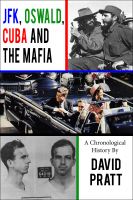
In a couple of months the fiftieth anniversary of the Kennedy Kingston  assassination will be all over your news.  Just ahead of the rush, Kingston educator and writer David Pratt offers a "chronology" of events, minute by minute at times.

The title, JFK, Oswald, Cuba, and the Mafia suggests Pratt is more interested in the conspiracy than in the career and achievements of Kennedy. 

It's born digital, an ebook original from BEV Editions, the experimental publication outlet run by Toronto agent Beverley Slopen.  Details and purchase opportunity here.

Wednesday, September 18, 2013

Public Service Announcement: where to send your furious DCB email


"I've fallen into the Dictionary of Canadian Biography's email list.  AND I CAN'T GET OUT!"

After launching its upgraded website this summer, the DCB started emailing a weekly note drawing attention to new biographies and other features of the site.

Today one recipient, Richard Mackie, appealed: "Hi,   any chance you can take me off your list?  I get too much email.   Thanks."  Soon scores of others began adding their "me-too's."

And every message went not only to the DCB -- but to everyone else on the list of recipients.

Now all those recipients are getting demands from Christie Blatchford (Who knew?): "Will you all stop hitting reply all? Have your names removed as you like but I sure don't need to know."  Her message, of course, went to all on the distribution list, and at least twice. They probably didn't need to know your advice either, Christie.

Recipients also got to read help for the DCB from Stephanie Conn: "I also wish to be removed but there seems to be no way for us to do this.Usually there is an 'Unsubscribe" link, but not on your emails. I see we also have accounts, but I do not know my website log-on, and there is no way to retrieve a lost password or username, so I cannot go in to check my account and adjust the option to receive the mailings.  This would be a great thing to fix."

The DCB now apologizes.It promises to do all this. It begs for messages to be sent to dbc@dbc.ulaval.ca and not to the list address, which (as we oughta know by now) automatically goes to all the world. So far requests to be unsubscribed continue to pour in to the distribution list.  

For inane, useless short messages, it's almost like being on Twitter.

History titles this fall 1


The McGill-Queen's University Press catalogue promises some histories from some well known and not so well known authors for the fall.

and more....

Monday, September 16, 2013

Canadianizing New Zealand parliament


David Cunliffe, new NZ opposition leader
For the first time, a leading New Zealand political party has headed toward Canada in its leadership selection process.  Traditionally NZ followed the parliamentary process: voters elected MPs accountable to them, and MPs then caucused and chose a leader accountable to caucus.  Most parliamentary countries long resisted the Canadian system in which leaders are chosen by extra-parliamentary selectorates and are not accountable to the duly elected members.

NZ Labour (the main opposition) recently held a leadership race in which the selectorate was 40% caucus, 40% the general membership, and 30% the unions. The winner was opposed by most of the caucus he now leads. The campaign was attended by complaints that the candidates, facing the new costs of mass-selectorate campaigning, had been abusing their MPs travel privileges to get about the country to campaign.  (Clearly they have a ways to go to reach the full Canada, but its probably just a matter of time.)

The progression has a certain logic, as the role of MPs in New Zealand had already been diminished by the adoption of proportional-representation voting, so that many MPs have become essentially party representatives without an independent constituency.

Friday, September 13, 2013

History of the national and the social


In his thinking about Quebec history from New France to recent decades, my old professor Fernand Ouellet used to come back to what he referred to as "the social" and "the national."

The social, broadly speaking, referred to the tensions and conflicts between various socio-economic groups in Quebec: the seigneurs versus the peasants, the merchants and professionals versus the workers and farmers, and so on.  The national, broadly speaking, was French versus English.  Ouellet thought the social was the important conflict, but often obscured by the national.  So in the tensions running up to the rebellions of 1837-38, the profound grievances were social: peasants oppressed by overcrowding, declining yields, high rents, obsolescent practices... but the political leadership, mostly professionals and seigneurs none too keen to address those problems, focussed attention on the national:  the maudit anglais.

The Parti Québécois has had a long run balancing the social and the national, keeping progressives and conservatives behind it by an emphasis on both. With some notable lapses:  Lucien Bouchard's demogogic nous sommes opprimés, nous sommes humiliés. Successful enough, however, that until recently, despite the progressive side of Quebec politics, it never had a social democratic party other than the PQ/BQ.

Premier Marois's new Charter of Values seems like the triumph of the national within the PQ ("We cannot have a country if there are all sorts of Québécois." one of her aides is quoted as saying).  But it is fascinating to see the profound and principled opposition coming from the progressive elements that survive in the PQ and the BQ, from old separatists who don't want to live in Pauline Marois's country.

Update, September 16:  Molly Ungar recalls more of the Ouellet analysis, from his time teaching at York in Toronto:
His observation that “Montreal was and is where all the action is” has proved to be accurate many times over the years, and is just as correct today in the wake of the Charter of Values as it was in the mid-19th century. The Quebec Catholic Church was unable to neutralize the continually modernizing culture of Montreal, and the PQ has never been able to neutralize the continuing diversification of Montreal’s culture. As Montreal goes, so goes the province, and what we’re seeing unfold in Quebec is yet another attempt to reverse this process.
 Professor Ouellet’s fascination with the economic implication of food culture also led to months of confusion, as his discussion of “politos” remained a mystery to me until I realized that he was explaining one of his favourite historical paradoxes – the habitants’ aversion to eating potatoes.


Wednesday, September 11, 2013

War of 1812 bicentennial...


... seems to be winding down, as has been observed previously.

Historiann's funny Yank take on the Lake Erie naval battle at Put-In Bay, September 10, 1813, is all the commemoration of that anniversary I noticed. T'other hand, my essay on John Crysler of Crysler's Farm and his first cousin Adam Crysler, one of the eight men hanged for treason at Ancaster, will be out in Canada's History in a week or two.

How to mark the First World War centenary


This British plan seemed like a good one: simply to plant millions of poppies.  It's just been shot down by funders, apparently.
(Image from The Guardian Online.)

Tuesday, September 10, 2013

David A. Wilson at the DCB


Went down last night to the University of Toronto to a little function to celebrate the appointment of David Wilson as the sixth (since 1959) General Editor of the Dictionary of Canadian Biography. Oddly, news of the appointment is not yet up on the DCB's own website.

David Wilson cemented his credentials for the job with his biography of D'Arcy McGee, much as his predecessor John English did with biographies of Lester Pearson and Pierre Trudeau. English and his predecessor Ramsay Cook, however, were also political insiders with good connections at the highest levels of official Ottawa.  And they needed to be, given the near-constant financial crisis the DCB endured during the 1980s and 1990s.

Word last night was that the financial crisis has eased. David Wilson should have the chance to apply other skills.

Monday, September 09, 2013

What parliaments are for, cont'd.


Constitutional scholar Philippe Lagassé has posted on his blog a consideration of my comments from last week about crown prerogative and accountability, and I added a comment to his post, and he commented in reply, and...  If you are into it, it's all here at his site.

(Digital) History of Treaties


 In a brief YouTube from York University, William Wicken discusses the impetus of his book The Colonization of Micmaw Memory, recent winner of the John A. Macdonald Prize, and the treaty litigation over aboriginal rights in the Maritimes early in the twentieth century. (h/t voxhistorica)

John Long, author of Treaty 9: The Agreement to Share the Land draws our attention to a new website setting out the historical basis of the litigation just starting over the interpretation of Treaty 9 in northern Ontario.  

How he spent his summer vacation


Michael Kavchak of Ottawa decided to make a video about the battle of Vimy Ridge.

Friday, September 06, 2013

Royal Proclamation anniversary conference in Ottawa


The feds were not interested but someone remembers the significance of this one.  The Land Claims Agreements Coalition will hold a one-day seminar on October 7, 2013, the 250th anniversary of the Royal Proclamation of 1763, at the Canadian Museum of Civilization.  Details and registration now here.  Aboriginal leaders, law prof s, and a historian or two on the agenda.

The LCAC represents participants in the modern land treaties -- ie, the recent ones covering mostly the territories and northern Quebec.

History of bike racing in Alberta


This is a history blog, and I really do intend to start covering history news again.  I've been a little busy getting back into the swing of things.  (I note a lot of other history blogs seem quiet this week, too, no doubt due to the start of the academic term.)

Meanwhile, even though it is not July, some bike racing. The six-day Tour of Alberta, the inaugural running of what is billed as the most substantial bike race ever held in Canada, is looking pretty terrific despite a few broadcasting glitches, and my boy Ryder Hesjedal is doing well, despite an awkward miscue in Stage 1.

Update, September 9:  Tour wrapped up yesterday before 100,000 10,000 fans in Calgary (Calgary Sun coverage here). Good racing all week, lots of fans, and Alberta never looked better.They had spectacular landscapes to race in, for sure. The Tour of Alberta deserves continued support and could grow into something spectacular. Here's hoping they even zip over into Saskatchewan or B.C. once in a while. And that the puckheads at Sportsnet start treating cycling seriously and competently -- or that the Tour finds another broadcaster.

Wednesday, September 04, 2013

What parliaments are there for, cont'd

Mark Reynolds draws my attention to the argument of Ottawa international affairs commentator Philippe Lagassé that the British parliament's rejection of the cabinet's plan to make war on Syria is actually a threat to parliamentary democracy, not the affirmation of it that I was saluting yesterday. Lagassé's argument is here and worth reading, but this is the gist of it:
In simple terms, I’m worried that they’re granting the House of Commons control over executive functions and Crown powers without MPs having to take responsibility for their actions, namely by making a government fall and replacing it with a ministry that can command the support of the House. If the Commons can veto a number executive powers and decisions without withdrawing confidence in the government, I’m concerned that they’re allowing to House to dictate executive decisions without forcing MPs to accept a equal degree of consequence for their choices. In effect, I wonder if the UK is embracing too much check and not enough balance.
 Y'know, I mostly agree with Lagassé on the principles. Ultimately the responsibility of the House is to sustain or throw out governments, not to manipulate policy details and leave the cabinet to carry them out.

A cabinet does have executive responsibilities. The Cameron government might still assert crown prerogative to pursue a war policy in Syria -- thereby putting itself in conflict with the House and probably the public too. And the House would have to either knuckle under or defeat the government.

But there has to be a tension between the government and the house. On matters as momentous as war, a government needs to be able to test Parliament's temper short of triggering a confidence vote. So Cameron asked the House its opinion, got an answer he did not want -- and decided not to pursue that fight any further.  The British house, as I see it, was not usurping the executive role, merely warning the executive it did not like the government's plan, and that if it was pursued there might be consequences up to and including a confidence vote.

"Crown prerogative" is not a blank cheque; the crown has as much prerogative as the house is willing to allow to it. Our Canadian problem is that our docile-to-the-point-of irrelevance caucuses mean the house will grant the leadership ANYTHING. As we just saw in Britain, that isn't the case in real parliaments.

Tuesday, September 03, 2013

What parliaments are there for...


... is voting on things.  I mean seriously voting on things.

For Canadians with hopes of reviving the tradition of parliamentary democracy in this country, nothing could be more heartening than the British parliament's recent vote on military action against Syria, in which the prime minister, leading a majority government, said force would be used and Parliament said no, force will not be used. And parliament prevailed.

It is easy to misunderstand what happened there.  Here is a French commentator:
the strikes will probably be postponed because of the British Parliament’s having vetoed an intervention. The Labour Party said no to David Cameron
Well, the Labour Party did say no.  But Labour did not and does not have the votes to deny David Cameron anything.  

It was backbench Conservative and Liberal-Democrat members of the governing coalition whose opposition to the prime minister's plan was decisive. They put their responsibility to hold the government to account ahead of their narrowly partisan loyalties, and decided the government proposal should not be supported.

This is how parliamentary democracy works.  The norm is not an occasional isolated and suicidal "rebel" voting against his/her leader and swiftly being removed from the party caucus and all prospect of re-election. The global norm is lively and active caucuses in which every member genuinely participates in scrutinizing leaders's proposals and deciding which of them are worth support.

See the Australian election, in which the Labour Party caucus's decision a couple of months ago to replace Julia Gillard as prime minister and install Kevin Rudd had turned a looming electoral disaster into a close fought race. In Nova Scotia, just by comparison, friends of the NDP government say the prompt replacement of premier Darrell Dexter is the best chance for the NDP to win the looming election.  But in Canadian politics there is no accepted mechanism for prompt removal of a leader. Party supporters there are reduced to hoping he might choose to resign.

One wonders over and again when Canadian backbenchers (and commentators) might notice the worldwide trends and begin to review the Canadian backbenchers' tradition of quasi-treasonous docility.

I don't know if not bombing Syria is better than bombing Syria, if Rudd is better than Gillard, or if someone else would be better than Darrell Dexter.  But I know it is up to Members of Parliament to decide those things - no matter what their leaders may prefer - in Canada as in other parliamentary democracy.
 
Follow @CmedMoore