Showing posts with label treaties. Show all posts

Monday, November 03, 2025

History of how not to reconcile


Charlie Angus's Ring of Fire Youtube ad --  cause you may be sick of Ontario's one.

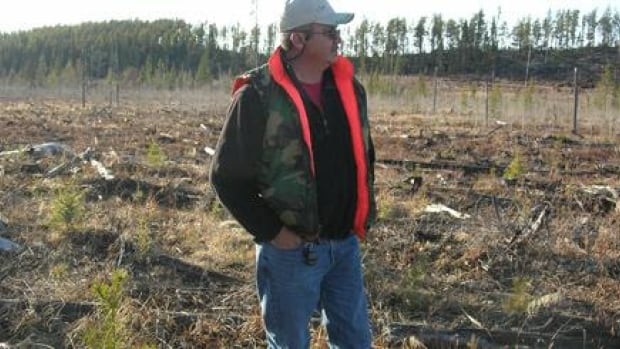
Okay, Donald Trump hates the Reagan ad.  The widely circulating Ontario ad that makes me mad is the one endlessly proclaiming that the Ring of Fire is going to save us all: Give us $22 billion, give us 77,000 jobs. Rebuild the Canadian economy by digging up more minerals for the USA. 

The Reagan ad was legal, honest, and fair. The Ring of Fire ad is fake news all the way.

Happily, the antidote is found in Riley Yesno's article in the Toronto Star this weekend "The Truth about Ontario's Ring of Fire ads."  Here's the essential takedown of this miracle project in two sentences:

"So why hasn’t this project started already?

"The biggest problem: The province doesn’t have the right to the land."

That's the truth we need to start with. Treaty 9, which covers the so-called Ring of Fire  (a marketing slogan, recently coined; Yesno prefers "Mammamattawa") and most of northern Ontario, was an agreement to share the land.  The chiefs consistently refused to make treaty until they were told "the land will always be yours," "you may hunt and fish forever," "reserves are only places no white man can disturb up" over and over again.  

It is true Ottawa's official text of Treaty 9 uses words like "cede, yield, release, and surrender" and "the Crown may "take up" Treaty 9 where and when it choses to.  But the treaty text was written and printed up in Ottawa before the treaty commissioners ever set out for the Severn River. No commissioner dared to say these words aloud or allow them to be translated for the chief.  The real Treaty 9, the one actually negotiated on the land by the authorized parties on both side, was absolutely an agreement to share the land.

This reality behind Treaty 9 is unusually well documented, perhaps because it was one of the last made (in 1905). But the basis on which all the Canadian treaties were made and ratified is the same: an agreement to share the land.   There really is no legal basis for Ontario to develop extractive projects in Mammamattawa unless and until the two sides negotiate agreements as to how the wealth will be shared.  Ontario really has not even started bargaining.

Harold Johnson, the Cree lawyer and writer, used to say the settlers of Canada have an absolute right to be here. That absolute right comes with the treaties they made with First Nations. 

And to validate that right, he would then say, all the settlers have to do is to live up to the commitments made in the treaties.

Maybe there has to be one BIG court case.  The Supreme Court has been begging Canada and the provinces to negotiate treaty rights and land claims , and not to force all the decisions into the courts.  But there is a lot of jurisprudence to suggest which way the courts will find if pushed to it.  

Why do so many people find it hard to articulate these realities.   As they say, it's hard to see the truth if your livelihood depends on not seeing it.

Vital Reading:  John Long: Treaty 9: The Agreement to Share the Land in Far Northern Ontario (McGill-Queen's UP).

Cheater version:  "George McMartin's Big Canoe Trip" from CBC Radio Ideas .Online


Monday, August 18, 2025

History of Treaties in the Globe and Mail

Ogoki/Marten Falls in northern Ontario

Reading Saturday's Globe and Mail, I thought of adding a new headline to my (imaginary) collection of dumb Globe and Mail headlines. This one was about the recent BC court decision on Cowichan indigenous title to a chunk of suburban Vancouver (maybe paywalled), and it read:

  "Court ruling on Indigenous claim creates uncertainty around land ownership"

Should it not read "the ruling creates certainty around landownership"??? In the absence of treaties, indigenous title endures, and it should be certain that indigenous title can no longer be ignored and dismissed. 

Happily, I turned a few more (digital) pages, and found the Globe's own columnist Andrew Coyne, saying what their headline writer could not imagine. Coyne sees clearly the situation to which our governments and a depressingly large number of commentators, including academics who should know better, still seem oblivious.  Title matters, and treaties (and their absence) matter. Deal with it, is Coyne's much needed message.

We are inundated with talk of -- and legislation for! -- blithely overriding indigenous consultation and consent in order to rush through energy corridors, resource developments, and other magical solutions to the American threat. A case in point: a recent Globe op-ed by Northern historian Ken Coates and Charles Cirtwell of the Northern Policy Institute.

Coates and Cirtwell's sentiments are admirable:

If Prime Minister Mark Carney’s ambitious and still ill-defined plan for national economic renewal has a chance of success, the next decade will clearly be shaped by the development of the Provincial North. The people of the Provincial North should be clear winners in this endeavour, or Canada will be the loser.

Indeed. But their solution seems extraordinarily blinkered:

Many communities in the Provincial North have substandard internet, water services, fire protection and roads, to say nothing of the most serious shortcoming in the region: housing. While not a traditional megaproject, a collective commitment of this nature could well form part of a “grand bargain” that secures Indigenous support for resource and infrastructure plans.

Surely the time has long since passed for the idea that some new charitable contribution to northern living standards  -- better internet, say -- will suffice.  The grand bargain already exists: a treaty. And it should not be left unmentioned.  

What northern Ontario  -- the main area of Coates and Cirtwell's "Provincial North" -- requires is treaty implementation. Treaty 9 (I mean the real treaty, negotiated on the land as the Royal Proclamation requires, not the fraudulent written-in-advance version in Ottawa's archives) established a sharing of the land between the Indigenous owners and the Crown, with mutual agreement on how it is used, and negotiated divisions of the benefits.  Read John Long on Treaty 9 for the details.

The Cowichan ruling applies where there is no treaty. And where treaties already do exist, as in the Provincial North, they ha veto be taken seriously: adhered to, not ignored. Maybe that will have to be the next big court ruling. 

Ottawa's gift of a few new houses and better internet isn't going to cut it. That's a certainty.


Tuesday, July 30, 2024

Treaty History

The black letter of the Huron-Robinson Treaty covering parts of south-central Ontario is pretty plain: there will be annual payments in exchange for a land settlement, and the amount would be adjusted "from time to time." Since it has not been adjusted since 1875, there's a lot of back money owing. Taking 150 years to sort this out --- really? That's the gist of the recent Supreme Court of Canada ruling.

But as far as I can tell from reading contemporary thinking about treaty implementation, the more promising solution is to assume that all these treaties were and are agreements to share the land. On that basis, First Nations should be able to draw revenues from their share of taxation and other land revenues sufficient to cover their own self-government and administration. That seems in all ways better than simply enlarging the payouts from Mother Ottawa.

But it still feels that Canada is a long way from that understanding -- the recent Haida land title agreement notwithstanding. Pending it, there will be bills like these to be paid.


Thursday, November 02, 2023

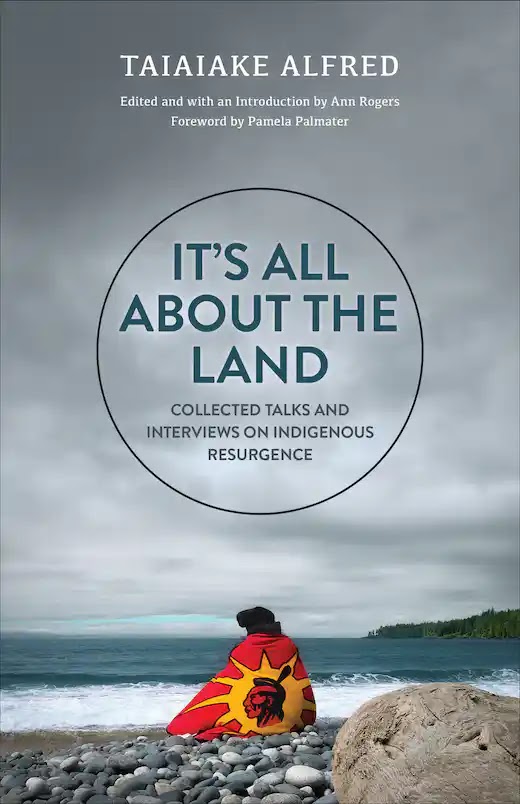
Book Notes: Taiaiake Alfred, It's All About the Land

I’m not the intended reader for Taiaiake Alfred’s new book It’s All About the Land. You probably aren’t either. 

Mostly, Alfred is addressing indigenous people about what they must do to get out from under us. To that end, he argues that Canada and settlers and industrial civilization have so colonized indigenous peoples that even legal, structural changes that would amount to self-government will fail unless indigenous peoples succeed in decolonizing themselves psychologically, culturally, and collectively. He argues for an indigenous spiritual awakening, drawn from the land and expressed in a warrior sensibility, meaning not violence but a willingness to suffer, to take responsibility, and to confront.

Alfred has advised royal commissions and the TRC, but he is profoundly critical of any indigenous person who participates in band councils, the Assembly of First Nations, and all the other Indian Act-approved forms of self-government. He used to be a professor at the University of Victoria, but he finds indigenous academics overwhelmingly susceptible to being co-opted and colonized by their employment. One can guess he makes enemies.

Reconciliation? Nice in principle, he says, but mostly a con:

Reconciliation in a classic sense… I think that anybody who comes at the concept in an objective way would say… ‘We need to go through those steps.’ But in Canada reconciliation is not that. … It’s recolonization. …  Everybody likes the idea of reconciliation as a concept, but as it is being developed and applied in Canada, it’s a problem and, I would say, even a manifestation of contemporary colonialism.

Monday, August 29, 2022

History-adjacent: Dorothy Eber 1925-2022 and Douglas Lambert 1930-2022

I have not been keeping up with historical obits here lately. Too many? Mostly scholars and scholarly work with which I have not been familiar? Summer doldrums? Bit of all three, maybe.

But I want to note the recent death of Dorothy Eber and the elegant obit by Judy Stoffman in the Globe. Eber was a Montreal-based journalist, but her historical contribution was oral histories of Inuit informants. She started with Inuit artists, and moved on to Inuit historical testimony in general. Perhaps most important, by the late stages of here career her Inuit translators, whom she credited lavishly, seemed to be launching an Inuit oral history program all of their own. I had the pleasure of profiling her for Canada's History in 2008, and you can read it here (scroll down a bit in the link).

Another history-adjacent death: that of Douglas Lambert. He was not a historian. He was a lawyer and then a judge: Mr Justice Douglas Lambert of the British Columbia Court of Appeal, 1978-2005. But his recent death notice makes a point of mentioning his particular contribution to judisprudential and national history:

He was perhaps best known for his significant contribution to the evolution of the law on Aboriginal Title and Rights. His ground-breaking judgments on Indigenous law, 23 in all, span a quarter of a century, and include Haida Nation v BC, which protected Haida Gwai forests and enshrined the province's duty to consult and accommodate Indigenous nations.

Lambert's decisions (and dissents too) on indigenous matters at the BC Court helped crack that province's once rock-solid denial of aboriginal rights, and his interpretation of title and treaty law had a profound influence at the Supreme Court of Canada as well. I'm not sure how well it is understood how far ahead of the political community the judicial community has come to be on these matters. It's fair to say Lambert was also ahead of most Canadian historians in grasping the fundamental change that would have to come to Canada's understanding of treaty rights and obligations, aboriginal title, and self-government.  

I did not know Lambert at all, but I got to know of him while researching The British Columbia Court of Appeal in the late 2000s. 

(Among some historical deaths I did not get to: that of Gordon Darroch, pioneer of quantitative history (I remember when that was a thing), recently remembered by York University.)  

Wednesday, November 10, 2021

History of Reconciliation

I didn't see much notice of a recent Ontario Court of Appeal case beyond this Canadian Press story in the Globe and Mail. But what it says sounds like where this much-talked-of thing called reconciliation is going and has to go.

Whitesand FN (a litigant)
The case is called Restoule v Canada (full text of the OCA decision here). It concerns territories covered by what are known as the Huron-Robinson and Superior-Robinson Treaties of 1850.  According to the newspaper summary, the court found that the derisory $4 a head paid annually by the Crown to the First Nations involved (an amount unchanged since 1875) in no way fulfills the treaty agreement "to share the resource wealth from the territory"

"To share the resource wealth from the territory." More or less forever, First Nations elders, leaders and scholars across Canada have declared that the treaties they made with the Crown were negotiated as agreements to share the land and its wealth. More or less forever, the Crown has declared that the treaties were surrender agreements -- the land and its resources passed once and for all to the Crown. 

In the last few decades, indigenous and non-indigenous historians have been affirming and documenting in a flood of studies that the First Nations' interpretation is the accurate one. Restoule is another piece of evidence that the courts, while gamely insisting that these matters would be better solved through negotiation than litigation (fat chance!), are moving to an overwhelming and irresistable affirmation that the First Nations (and lately the historians) have been right.  As Restoule says, "an agreement to share the resource wealth from the territory."

Exactly how to share the resource wealth is not determined in Restoule, and quite likely the Supreme Court of Canada will want the opportunity to weigh in on many aspects of this case. But sharing the land, sharing the wealth is coming. First Nations are co-owners of their treaty territories, entitled to a share of the (immense, duh) wealth it generates, and entitled to use that share to support indigenous self-government within their territories.  

When that actually comes to pass, we can talk about reconciliation happening. 

Meanwhile, the almost simultaneous budget statement of the Government of Ontario proposes to commit a billion dollars to build a road that will give mining companies access to the minerals of the "Ring of Fire" region (in Treaty 9 territory north of the Restoule locations) in blithe confidence that Ontario owns everything there and can do what it wants with its resources while giving no serious attention to Treaty obligations as the courts are beginning to interpret them. On the Crown side, reconciliation remains a very long way away.  

Monday, October 26, 2020

Lobsters and sharing agreements


I find that I support the Sipekne’katik First Nations pretty much unreservedly in their commitment to an indigenous lobster fishery in Atlantic Canada. This backgrounder from the Globe & Mail says the Supreme Court gave the Mi'kmaq a right to a lobster fishery in 1999, but surely it's more that they always had a treaty right to such operations, which the Court merely confirmed.

But in the long run, a piecemeal, court-ordered, one-industry-at-a-time recognition of economic rights is not going to be the path to the self-sufficiency that has to underpin indigenous self-government and reconciliation. I have an article coming in next month's Canada's History about what Canadian historians are telling us about treaties as sharing agreements. Lately it's been shaping how I watch the news from Nova Scotia.

Courts might order an indigenous share of west-coast salmon fishing, say, but what happens after the stocks are fished out? Or a forest is clear-cut, or devalued by climate change? Or a particular oil-field runs out? These things happen, though experts say the southwestern Nova Scotia lobster stock is not endangered right now. No one can deny that the Mississauga of southern Ontario have a treaty right to hunt and fish right across metropolitan Toronto, but can we be literal about that now the game is long gone from the concrete canyons?

Surely what Canada needs to be admitting is that treaties were never about some lobster and salmon, or some stands of trees, or some beaver ponds. They were conceived and settled as sharing agreements. Sharing agreements need to address, not specific (often marginal) resource sectors, but the land and the economy that the treaties were about. The violence of non-indigenous lobster fishers against the Mi'kmaq, both recently and in the past, is appalling. But those furious fishers have a point that they alone should not bear the cost  --real or potential -- of recognizing indigenous economic rights. 

The courts can point the way, but they are never going to get to the kind of broad permanent agreement that is required. That's a political responsibility. And Canadian governments flinch from that responsibility because they suspect that a great many Canadian voters would respond to a general sharing agreement that established a permanent economic basis for First Nations self-government pretty much the way the Saulnierville lobster fishers have been responding to a handful of Sipekne’katik lobster boats. 

Image: Globe and Mail

Thursday, February 13, 2020

Book Notes: Borrows and Coyle on Indigenous Title


Yesterday, for a project largely unconnected to the current protests and blockades responding to the Wet'suwet'en crisis, I was looking at The Right Relationship: Reimagining the Implementation of Historical Treaties, a 2017 book edited by John Borrows and Michael Coyle.  (See yesterday's post below).

It happens to set out, quite succinctly, that the United Nations Declaration on the Rights of Indigenous Peoples, or UNDRIP, establishes that states seeking to use indigenous land need to acquire "FPIC" -- "free, prior and informed consent" from the indigenous parties concerned.  

Canadian courts, however, even when advancing recognition of indigenous title in Delgamuukw, T'silqotin, and other cases, have adhered to a lesser standard, "the duty to consult and accommodate" and, along with that, the requirement for "compelling and substantial" reasons when overriding indigenous title. Compelling and substantial reasons is the standard the BC court Federal Court of Canada (correction, Feb 14) applied last week in authorizing the gas pipeline across Wet'suwet'en territory. Essentially, if I read these deep legal waters right, in Canada indigenous title is still overridden in Canadian law by provincial, let alone federal, economic objectives.  

Hence the resistance.


Tuesday, February 11, 2020

Historians and Wet'suwet'en


I went to Montreal last week, and I'm glad it wasn't this week, because our train ride was along the rail line closed this week by the Deseronto Mohawks, in support of the Wet'suwet'en opposition to the pipeline being pushed through their territory, The blockades follow a court decision that the Wet'suwet'en have a right to be consulted, but "no veto," over economic development on their territory.

Much as I feel for my fellow train travellers hoping to travel over First Nations lands, I cannot help thinking the protesters, not the courts, have it right on this one.

A lot of talk about "reconciliation" seems to be taken as little more than "let's be nice, let's get along, let's not fight." But at the root of reconciliation is meaningful indigenous self-government. No government can be self-supporting without a taxation base and revenue sources. For First Nations, meaningful self-government and control of land are virtually the same thing. Bluntly, if First Nations always have to accept "Canadian" assessments of what indigenous lands and resources are worth and who can develop them, most First Nations will always be too poor to have meaningful self-government.

The court decision effectively means Canada has a veto upon economic development for First Nations -- and we've seen how that has worked out for 150 years and more. The courts are still understanding treaties as "cede-yield-surrender" agreements, as expressed in the written treaty texts, rather than the "share the land" agreements that were made during the treaty negotiations. As long as they do, there is little prospect for indigenous prosperity, for meaningful self-government, and for "reconciliation."  

There's a role for historians here, I think. Judges have been moving toward "meaningful consultation," and "the honour of the Crown" in treaty interpretation and territorial control questions. But like most other Canadians, they still flinch from accepting land sharing as the essence of the treaty agreements. But judges are smart people, and they read, and they can be influenced and informed by sensible well-grounded historical interpretations. 

If historians, indigenous and not, continue to make that case -- that when the treaty negotiators, indigenous and not, agreed that "the land will always be yours" and that "you may hunt and fish [i.e., use the land] forever," and that the reserves would not be the full extent of indigenous territory but only places where the residents would not even have to share resources, they really were making agreements to share territory for mutual benefit -- then gradually judges may come to see that enabling Canada to proceed without agreement really is more trouble than it is worth. And bad law.

If the Wet'suwet'en heriditary chiefs believed Canada was ready to share territory for mutual benefit, I suspect they could reach an agreement on this pipeline. As long as courts assert that Canada doesn't need freely-granted agreement, there will be blockades.  Nice people like us will miss their rides to Montreal -- and much more.    


Monday, September 10, 2018

More on the History of Treaties and Pipelines


Alan B. McCullough wrote to me in response to my posting here of Thursday, September 6, "History of Treaties and Pipelines."  It's an important matter he raises, so let me quote him in full and then respond (at some length, I warn you):
I don’t want to let your statement that “…the treaties that were negotiated face-to-face with Indigenous leaders were always framed as sharing agreements not surrenders (no matter what the written text filed in Ottawa says)” pass without comment. You obviously know what the written text of the treaties say but let me quote an example. Treaty Six, signed at Forts Pitt and Carlton reads
 “The Plain and Wood Cree Tribes of Indians, and all other the Indians inhabiting the district hereinafter described and defined, do hereby cede, release, surrender and yield up to the Government of the Dominion of Canada, for Her Majesty the Queen and Her successors forever, all their rights, titles and privileges, whatsoever, to the lands included within the following limits, that is to say:…” That seems clear to me. There were some sharing aspects to the numbered treaties (limited hunting and fishing rights, the provision of reserve land) but these were minor in comparison to the amount of land which was transferred to Canada."
 The Plains and Wood Cree may not have fully understood the language used although I am inclined to give them credit as astute bargainers who reluctantly agreed to difficult terms. However, I cannot believe that the Canadian officials did not understand these terms as anything but a surrender. The concept of the treaties as a sharing agreement is a relatively recent innovation among some scholars and is far from general acceptance. As recently as 1984 Gerald Friesen wrote in The Canadian Prairies, p.138, that the federal government wanted “…to extinguish Indian claims to the territory once and forever.”
 If you are going to ignore the “written text filed in Ottawa” I think it is incumbent on you to do more than assert “that treaties were always framed as sharing agreements.”
Alan, you raise an important issue, and I thank you for putting this problem so clearly and succinctly, and with supporting evidence. I don't want to change a word of what I wrote, but you are entitled to ask for some expansion of what already felt to me like a long post. Let me begin by saying I am not an expert on treaty history, and my reading is partial and incomplete. Still less do the Cree or the Haida or the signatories of any particular treaty need me to speak for them. But the matters you raise are fundamental, and one cannot practise Canadian history without addressing them

First, let's consider what a treaty between (what is now) Canada and a First Nation is. The Royal Proclamation of 1763, in which Britain imposed the treaty obligation on its representatives in British North America, sets out a good definition:
"…If at any Time any of the Said Indians should be inclined to dispose of the said Lands, the same shall be Purchased only for Us, in our Name, at some public Meeting or Assembly of the said Indians, to be held for that Purpose by the Governor or Commander in Chief of our Colony respectively within which they shall lie….
We are used to thinking of treaties as written documents analogous to contracts where teams of lawyers have gone over every phrase and comma. The Royal Proclamation's definition may be useful here. It establishes treaties as agreements made in person on the land in question. The wording of the Proclamation suggests that if the chiefs, who neither read nor wrote English and may not have spoken it either, put their marks on a treaty document, they would be affirming, not the text itself but the agreement actually made on the ground between the negotiating parties.

If the texts, which do indeed contain such language as "cede, release, surrender and yield up … forever," are understood as transcripts or reports on an actual treaty, then historians are entitled -- indeed required -- to consider how accurately those written texts reflects the agreements themselves, the ones made in person between the Governor's representatives and an assembled First Nation. If there is a persistent disagreement between the written text of the treaties and independent evidence of what was actually agreed on the ground, why should we take the wording of the written text at face value and ignore the actual treaty?

I was very impressed several years ago by John Long's book Treaty No. 9: The Agreement to Share the Land in Far Northern Ontario in 1905. Indeed it impressed me so much that I made a radio documentary about it for CBC Radio, which you can listen to here

Treaty 9 is broadly similar to several other Canadian treaties with First Nations, though made late (in 1905). Its written text does include the "cede, release, surrender" language, for instance. But in the book Long assembled and published abundant evidence, even from the treaty commissioners themselves, that during the actual discussions the Cree and Ojibwa chiefs consistently refused any proposal that they should surrender their land or self-government. They did not agree to be confined to postage-stamp reserves. They intended to continue to hunt and fish and use their land. 

In order to get the chiefs' marks on the treaty document, the commissioners were compelled, at one meeting after another, to make broad promises: that reserves would only be places in which no white man could disturb the Indians and, particularly important, that the Indians would be free to hunt and fish forever, without restriction. It was upon the reiteration of those promises that the chiefs consented to affix their marks to the commissioners' document.

Long's Treaty 9 acknowledges, I think, that the Cree and Ojibwa were not getting something for nothing when they secured these promises from the commissioners. They were giving up something substantial. They understood in 1905 they could not prevent Euro-Canadians from coming into their territory. And they understood that Canada could be a source of benefits and necessities: medicine, education, access to new technologies and new livelihoods. What they offered in exchange, it seems pretty clear, was a sharing on agreed terms of what had been First Nations territory, land, and resources between the First Nations and Canada -- a big concession, but not a crazy one.

I haven't followed every treaty or every history of actual treaty negotiations, but when I look into them, or when I read phrases like "as long as the grass grows and the rivers run," and similar commitments, the Treaty 9 model -- treaties as sharing agreements -- sounds a lot more realistic than "cede, yield, surrender," -- no matter what the written text says. Note that when the Treaty 9 commissioners were negotiating and promising, they were carrying with them a Treaty 9 text that was already written and closed and which they could not change. How could it become a reliable transcript of negotiations yet to take place?

When one starts to accept what treaties actually were and are, it becomes easier to understand what the Assembly of First Nations wants, and what Idle No More wants (or wanted), and what indigenous intellectuals and scholars and writers frequently insist on. As I hear them, they want treaties respected. They want it understood that we are all treaty people. They want it accepted that such is the way forward.  It seemed to me, as I made the radio documentary, that was what Stan Louttit, then Grand Chief of the Mushkegowuk Cree of the James Bay Lowlands, was telling me his grandparents wanted when they made treaty.

I think that historians can help make the case -- indeed, are already making the case -- that if we want to make progress on reconciliation, if we want to make progress on pipelines, if we want to make progress on simple justice and what the law calls "the honour of the Crown," what we need to do in Canada is to start respecting and implementing treaties. Not unreliable cede-yield-surrender texts that do not stand up to historical scrutiny, but real treaties, amply documented as sharing agreements, made by people who, as you say, Alan, were indeed astute bargainers who agreed to difficult terms.

I think the evidence is: Canadian land treaties made with First Nations were about sharing, not surrendering. And they still are.

How all this applies to pipelines on the British Columbia lands where British Columbia and Canada refused to make treaty at all, and where the First Nations never even agreed to a sharing agreement… well, that's another question.

As I said at the start, I'm not a treaty historian or a specialist in these questions. I know something of what every Canadian ought to know, I think. But I would welcome further contributions from treaty historians, Euro-Canadian or indigenous, who may follow this blog.

Update, September 11:  Happy to see this morning that Kayak, the kids' history mag published by Canada's History, has got the idea down.  Cover story on the new issue: "We are All Treaty People"

Thursday, October 05, 2017

Book Notes: Smith on Hall on Alberta Treaties


I was corresponding with Don Smith -- that's Professor Emeritus Donald B. Smith, University of Calgary -- and he recommended D.J. Hall's recent history From Treaties to Reserves to me. At my urging, he then provided this brief "book note" about it for this blog:
From Treaties to Reserves: The Federal Government and Native Peoples in Territorial Alberta, 1870-1905. D.J. Hall. Montreal and Kingston: McGill-Queen's University Press, 2016. Pp. 504, $110.00 cloth, $34.95 paper

A number of excellent studies exist already on the numbered treaties on the prairies. Books on Treaties Six (1876) and Seven (1877) in what is now Saskatchewan and Alberta, include: Richard Price’s edited work, The Spirit of the Alberta Indian Treaties (1979, 1999); Treaty 7 Elders and Tribal Council with Walter Hildebrandt, Sarah Carter, and Dorothy First Rider’s The True Spirit and Original Intent of Treaty 7 (1996); Harold Cardinal and Walter Hildebrandt, Treaty Elders of Saskatchewan (2000); Arthur J. Ray, Jim Miller, and Frank Tough, Bounty and Benevolence. A History of the Saskatchewan Treaties (2000), and Hugh A. Dempsey’s The Great Blackfoot Treaties (2015). Professor Hall’s From Treaties to Reserves now joins these important volumes. Professor Hall, a professor emeritus of history at the University of Alberta, focuses on the Dominion government's perception of its relationship with the First Nations in Alberta from 1870 to 1905. The veteran Canadian political historian is totally at ease with the contemporary parliamentary debates, federal sessional papers and pertinent manuscript sources. He has written a strong coherent account of the federal government’s Indian policies in the immediate post-treaty period in the North West to the year Saskatchewan and Alberta both became provinces.
Thank you, Don Smith. (His comprehensive review of the book will appear in the Canadian Historical Review in March 2018.)

(Historians' brief recommendations, along these lines, of worthwhile new works in Canadian History are always welcome. Emailing info at right)

Monday, October 24, 2016

Canada's History to launch Treaty Relationship webinar


Canada's History Society, publishers of Canada's History Magazine, announces a Treaties and the Treaty Relationship webinar series aimed at teachers and students, and launching October 26. The series is run in collaboration with the Treaty Relations Commission of Manitoba, and will run bi-weekly until March 2017.
This initiative is a public education strategy for kindergarten to grade 12 that includes teacher resource guides and the opportunity for educators and students to hear from members of the TRCM Speakers' Bureau. These speakers share information and promote conversation to foster an understanding of the historical and contemporary issues that relate to treaties. These presentations speak to both the Canadian and First Nation perspective of treaties.
Online registration here.

Friday, September 30, 2016

Book Notes: Marie Battiste for Treaty Day


I had not known that tomorrow, October 1, is Treaty Day in Nova Scotia. Probably quite a few Nova Scotians don't know either, though it is officially proclaimed by the province.

Treaty Day was revived in 1986 to mark the Supreme Court of Canada's 1985 decision that the Crown remains bound by the 1752 treaty between the colony of Nova Scotia and the Mi'kmaw nation, in which October 1 was established as the annual day of gift giving and the renewal of friendship .

Cape Breton University Press has recently launched Living Treaties: Narrating Mi'kmaw Treaty Relations, edited and introduced by Marie Battiste, a Mi'kmaq and a professor at the University of Saskatchewan. From the introduction:
Educating Canadians to their treaties and their meanings is long overdue. Negotiated and signed by our Mi’kmaw traditional chiefs with the King of Great Britain and his representatives in the early 18th century, the Mi’kmaw treaties are a significant part of the history of Canada and of the United Kingdom, yet marginalized in the Canadian education curriculum and in the minds and hearts of Canadians. Treaties were central to the legalization of the settlements of early Europeans and later immigrants in Canada, and to the acquisition of land and resources that today are still being contested.
Most Canadians think the treaties are irrelevant and most politicians and resource-extracting corporations view them as inconvenient, but they are still relevant and will continue to be.

Monday, April 18, 2016

History of Treaties


The first lines of From Treaty Peoples to Treaty Nation:
In 2012 we published a series of opinion pieces in Canada's national newspapers expressing our outlook on the future of Aboriginal affairs in Canada. At the time the papers were full of stories about the dreadful housing conditions and infrastructure crisis at the Attawapiskat First Nation in northern Ontario, complete with overheated rhetoric ad finger pointing.
Plus ça change....

From Treaty Peoples to Treaty Nation by Greg Poelzer and Ken Coates, from UBC Press, is among the nominees for the Donner Prize in Public Policy for 2016.

...more to come.

Wednesday, March 23, 2016

John S. Long 1948-2016 RIP: treaty historian


Today Active History carries an unsigned memorial to John Long, longtime teacher of history and education at Nipissing University, and before that teacher and researcher with the Mushkegowuk Cree at Moose Factory, who died recently in North Bay.

John's book Treaty 9: Making the Agreement to Share the Land in Far Northern Ontario in 1905 opened my eyes to treaty history and treaty policy, and really made possible my 2011 Ideas documentary "George MacMartin's Big Canoe Trip" in which he was an interviewee. The book was also basic to Alanis Obomsawin's 2014 documentary Trick or Treaty.

Yesterday the federal government committed itself to relatively large amounts of spending on First Nations schooling, housing, and other needs.  But it's still a top-down, helping-out strategy.  I think John would have said that addressing the treaties in ways that would enable First Nations to run their own affairs is the solution that could work in the long run.

“What I’d like to see is treaty implementation,” John is quoted as saying.  Not yet, I guess.

Wednesday, December 16, 2015

Toward Truth and Reconciliation


The final report of the Truth and Reconciliation Commission, released yesterday, is accessible from here. That's not say I've read it, but now I know where to find it. And if you do the history of Canada, this probably isn't one you can leave to the specialists.

Like the COP21 final signings in Paris the other day, the TRC presentation seems to have been moving, heartwarming, and encouraging.  Previously disputatious parties seemed to agree that something really significant had been achieved.  There was a lot of media coverage. The prime minister was there to dispense a sunny-ways "we must and will respond fully" message.  I hope so.

But it will be all in the results, not the press conferences.

I can't shake the feeling that the healing needed over the residential schools horrors -- and indeed the way to address the crisis of missing and murdered indigenous women (and men!) -- won't come solely from addressing educational issues, or policing and security issues. I don't mean to minimize the importance of those, or the value of dealing with them. But the longer project has to be in enabling the emergence of strong and self-reliant indigenous nations and communities with a sound economic foundation. Surely the underlying cause is there.

That kind of progress, I think, has to come from fresh approaches to the treaty relationship. If the First Nations can shift from being one of the poorest demographics in Canada to one of the prosperous ones, it is going to come via implementation of treaties.  With that shift, I think our other problems -- and I certainly mean to include Euro-Canadian racism, paternalism, and colonialism among the problems -- could begin to be addressed.  But not otherwise.

Gotta say:  Murray Sinclair was impressive yesterday.

Tuesday, June 09, 2015

Truth and reconciliation


"Canadians' first responsibility is to know history"  was the headline on one of the Toronto Star's stories about the Truth and Reconciliation report last week.

Not a good start, I thought. It reminded one of those old Dominion Institute surveys of Canadians' ignorance of history where the question used to be something like "What month did the October Crisis occur?" And the correct answer was "I don't know, there isn't enough history taught in the schools."

Actually the Canadians and Their Pasts studies have shown Canadians know quite a bit about history, on a pragmatic, need-to-know basis at least, which fits my own experience of talking about history with the public. But I don't have a lot of faith in any public policy initiative that depends on obliging the Canadian public to know something specific about the past.  Or, despite calls to add residential schools to every school curriculum, one that depends on a "ram it down the throats of schoolkids" attitude to history.

But then there is Richard Gwyn today, declaring "it would be very hard to find anyone who believes Canadians are the kind of people who engage in cultural genocide."  So much for Mr Justice Murray Sinclair's effort at educating one prominent Canadian. Gwyn argues the evils of the residential schools were a blunder, not a policy, no one's fault really. We are not that kind of people. When he proposes we all move this discussion more toward the centre, he seems to think it is a compromise he is proposing: First Nations will stop talking about cultural genocide, and the rest of us will go on not thinking about it.

So, the need for public education is vast. And given the suffering, the loss, the ongoing trauma of the residential schools, surely any movement toward reconciliation is going to require a great deal of talking through by survivors and their families, and listening by the rest of us.

But I don't know that talk is enough.  Reconciliation depends on real changes, and the key ones are about respect for, implementation of, the treaties, I think.  When indigenous people have the share of control of the Canadian territory that the treaty negotiations called for, they will cease to be dependent and can shape their own destinies.  And then we might be more ready to know their history.  

'Cause history loves winners.

Update, June 11:  Gratified to see this post tweeted and retweeted by a slew of friends of the Pasts Collective @pastscollective @cmedmoore 

See Daniel Francis's critique of Richard Gwyn's views.

Friday, August 01, 2014

We are all treaty people


Having marked the 250th anniversary last October of the crown's side of the fundamental treaty relationship agreement underpinning Canada, the Royal Proclamation of 1763, it's only fitting to note that today is the 250th anniversary of the Treaty of Niagara, in which many of the First Nations in the lands newly claimed by the British crown in North America made treaty with the new power.
“The Treaty of Niagara played a significant role in shaping this country and is still relevant today. We expect respect, recognition and implementation of our mutual perspectives and interpretation of our treaty relationship with the Crown on an ongoing basis, as intended by our ancestors who originally entered into treaty 250 years ago.”
                                                - Stan Beardy, Ontario Regional Chief, Chiefs of Ontario
Ontario government notice here.  Chiefs of Ontario here -- image from COO site.

Friday, July 11, 2014

History of aboriginal title... the other shoe?


No forest? No animals, no hunting
I haven't had time to note the historic potential of the Supreme Court's recent Tsilqot'in decision, and now here's another one worth watching: the Grassy Narrows decision to be handed down later today.

Tsilqot'in covered lands never affected by treaty, and the SCC gave what you would think would be a "Well, Duh" decision: if it wasn't given up, it's still theirs.

Grassy Narrows represents the rest of the country: the vast territories where there are treaties in place. The First Nations plaintiffs (actually the appellants at the SCC, I think, but they began as plaintiffs) want the court to acknowledge that when a treaty confirms a permanent right to hunt and fish, well, they have a permanent right to hunt and fish, and so logging and other activities that make hunting and fishing impossible are not permitted without consent.

Consent can be negotiated. Consent can be priced. It has been impressive how much of the reaction to the Tsilqot'in decision has been on the lines of, "Well, if the law doesn't allow us to just steal Indian land anymore, okay, we'll just adjust our business plans a little and negotiate payment for it from now on." Like this one. Pretty reassuring.

It will take more cases, no doubt, but if Grassy Narrows goes the right way today, and it turns out that treaties really are treaties, binding on us as well as on the First Nations, the significance could be profound. I mean profoundly good.  Once the First Nations of Canada own and control and can draw benefit from all the land that is already theirs, it becomes possible to imagine aboriginal poverty on reserves going away. I try not to get too Pollyanna on this, but it's that big, I would guess.

Update:  Well, that was fast.  Barely posted that when the news came in.  7-0 against Grassy Narrows.

I don't like criticizing judges. They know stuff I don't and deal with issues I don't. Apparently much of this was particularly linked to division of powers questions between federal and provincial responsibility that have been pretty much settled law since the 1880s.  The larger issue will come up again.


Image: CBC News

Tuesday, March 11, 2014

Taylor Prize for Thomas King


We missed noting Thomas King's recent award of the British Columbia Non-Fiction Prize for The Inconvenient Indian, so let's add that in with yesterday's Charles Taylor Prize, which he also won.

King is reported as saying he wishes attention to his book will "spawn a serious conversation about the state of native peoples in Canada."  But he doesn't really expect one.

“That would be the most I could hope for and I won’t be alive to see that, because that’s going to be a slow conversation and it’s going to take years for that conversation to bear any fruit,” is how he's quoted in the Toronto Star's coverage.

There is work being done.  Some less widely covered, but also significant, titles from historians could also contribute to that slow conversation:  James Daschuk's Clearing the Plains, out last fall, and Michael Asch's On Being Here to Stay: Treaties and Aboriginal Rights in Canada, just out from UTPress.  But congratulations to Thomas King, and may his conversation flow.  

Following the business press discussion of development projects around the Circle of Fire in Nishnabe-Aski territory and the Northern Gateway pipeline across the land of many northern British Columbia First Nations, it's easy to understand Thomas King's assessment of how long it will take.  Those discussions still seems focussed on how the development companies could offer a few jobs, maybe some welfare, to aboriginal people affected by them.  The notion that ownership of the land and the resources is the point still seems very deeply buried.  

True, Jim Prentice, the former Conservative cabinet minister and oil exec recently appointed as Northern Gateway's emissary to the First Nations was recently quoted as saying 
he has long believed that 'First Nations should be full partners in resource development and they should be owners of projects like the Northern Gateway.” 
But do the developers accept that the authority to kill the project is part of such ownership rights? One of the key First Nations leaders says they have concluded Northern Gateway is already dead 
“It’s a last-ditch effort and a waste of a good man,” Art Sterritt, executive director of Coastal First Nations in British Columbia, said Wednesday. “He’s well respected by me and many others. But this is a project that’s not just on its last legs, it’s in its last minutes [of life].”
Image: Writers' Trust


Follow @CmedMoore