Tuesday, August 30, 2022

Prize Watch: CSN Prize to Daniel Ruck

Is all the best scholarship these days done by legal historians and published by the Osgoode Society for Canadian Legal History?

Last year Eric Reiter won the Canadian Historical Association best book prize for an Osgoode book, Wounded Feelings: Litigating Emotions in Quebec 1870-1950.  (A round table discussion of that book has just been published in the Journal of the CHA),  Now the Canadian Studies Network has chosen another Osgoode titleThe Laws and the Land: the Settler Colonial Invasion of Kahnawake in Nineteenth Century Canada by Daniel Ruck for its annual prize. The substantial haul of other prizes won by these and other Osgoode titles can be perused here.  

(Coincidentally, I'm speaking to the Osgoode Society members' Zoom workshop on Tuesday, September 20.) 

Monday, August 29, 2022

History-adjacent: Dorothy Eber 1925-2022 and Douglas Lambert 1930-2022

I have not been keeping up with historical obits here lately. Too many? Mostly scholars and scholarly work with which I have not been familiar? Summer doldrums? Bit of all three, maybe.

But I want to note the recent death of Dorothy Eber and the elegant obit by Judy Stoffman in the Globe. Eber was a Montreal-based journalist, but her historical contribution was oral histories of Inuit informants. She started with Inuit artists, and moved on to Inuit historical testimony in general. Perhaps most important, by the late stages of here career her Inuit translators, whom she credited lavishly, seemed to be launching an Inuit oral history program all of their own. I had the pleasure of profiling her for Canada's History in 2008, and you can read it here (scroll down a bit in the link).

Another history-adjacent death: that of Douglas Lambert. He was not a historian. He was a lawyer and then a judge: Mr Justice Douglas Lambert of the British Columbia Court of Appeal, 1978-2005. But his recent death notice makes a point of mentioning his particular contribution to judisprudential and national history:

He was perhaps best known for his significant contribution to the evolution of the law on Aboriginal Title and Rights. His ground-breaking judgments on Indigenous law, 23 in all, span a quarter of a century, and include Haida Nation v BC, which protected Haida Gwai forests and enshrined the province's duty to consult and accommodate Indigenous nations.

Lambert's decisions (and dissents too) on indigenous matters at the BC Court helped crack that province's once rock-solid denial of aboriginal rights, and his interpretation of title and treaty law had a profound influence at the Supreme Court of Canada as well. I'm not sure how well it is understood how far ahead of the political community the judicial community has come to be on these matters. It's fair to say Lambert was also ahead of most Canadian historians in grasping the fundamental change that would have to come to Canada's understanding of treaty rights and obligations, aboriginal title, and self-government.  

I did not know Lambert at all, but I got to know of him while researching The British Columbia Court of Appeal in the late 2000s. 

(Among some historical deaths I did not get to: that of Gordon Darroch, pioneer of quantitative history (I remember when that was a thing), recently remembered by York University.)  

Saturday, August 27, 2022

Not the Tour, it's la Veulta

 I'm not really following the Vuelta a Espana, though in recent years it has had some of the best mountain racing and also some of the most beautiful landscapes of any Grand Tour.  I used to think Spain looks all dry and sunburnt, but when they get into Asturias and the Basque country and the Pyrenees the green hills and astonishing climbs are pretty terrific.

Sadly, Michael Woods, the only Canadian in the race, suffered a concussion in a bad crash three days into the race, and had to withdraw.  Poor Woods, after completing the whole 2022Tour de France up to the last day, was eliminated at the start of the mostly ceremonial ride into Paris when he tested positive for Covid.  And his team Israel-Premier Tech, the most Canadian team in the race, is on the edge of being relegated to the second tier of grand tour racing in the new ranking system pro cycling has adopted.  

Thursday, August 25, 2022

New Library and Archives website may go live on Monday

Further to last week's notes on the progress in the remaking of Library and Archives Canada's web presence, Andrea Eidinger tells me that the new website may go live next Monday, August 29 -- or soon thereafter.  

Parliamentary reform: things one MP can do (Imagine a few dozen making the effort.)


Michael Chong, fresh from having laid the basis for last winter" removal of Erin O'Toole from his failed leadership of the Conservative Party (it's not Chong's fault the party reverted to a vote-buying orgy in which the Poilieve campaign offered the highest bid -- c300K "memberships" purchased), is taking further steps to ensure he will be remembered as the most -- really, the only-- consequential backbencher in 21st century Canadian politics. 

Will they pass?  I guess not. (Stranger things have happened, but signs of independent thought in the Liberal and NDP caucuses have been few and far between.) But in a couple of years, if the Conservative caucus solves its Poilievre problem by removing him and installing someone else as party leader, remember Michael Chong.  Here the idea may be more important than the fate of the bill itself.

Jagmeet Singh's reaction: 'We don't need this parliamentary stuff, whatever it is. We just want PR -- to make party leaders even more important.' Too bad the NDP caucus doesn't believe in reviewing its leaders' performances.


Friday, August 19, 2022

Legal History: My Part in its Progress

Years ago I developed, almost by accident, a sort of "minor" in legal history.  I continued to write for general audiences on many aspects of Canadian history, but at the same time I was able to undertake some indepth explorations into the history of what lawyers do, how legal institutions evolve, and the place of law in Canadian society.  

It's been very satisfying, and very instructive for me about Canadian history writ large.  Lawyers, you might say, get into a little bit of everything  -- business, family matters, politics, land and property, social organization, rights and liberties, disputes of all kinds -- but in a focussed, manageable kind of way. And happily there are lawyers and lawyers' organizations that appreciate and support historical study of their work.  

One of those is the Osgoode Society for Canadian Legal History. This fall it is devoting one of its online webinars to, well, to me.  Since the last couple of these sessions I saw featured justices of the Supreme Court of Canada, I'm more than a little honoured (They talk to historians too). 
The Osgoode Society will be resuming its early evening events over ZOOM in the fall. So far we have arranged three of these. Please save the dates. Registration information will be forthcoming.
On Tuesday September 20, Christopher Moore, one of Canada’s leading independent historians, and the author of books on the Law Society of Ontario, the Ontario and British Columbia Courts of Appeal, and other legal topics, will discuss his legal history work.
Osgoode Society webinars are open to members. More info on this talk, and generally on the Society and membership options, should be or become available at its website and at its blog.

On this topic of law's history, I might also note that in November the Osgoode Society and UTPress are publishing A History of Law in Canada, Volume Two: Law for a New Dominion, 1867–1914 by Jim Phillips, Philip Girard and R. Blake Brown. Fair warning: if you take any interest in the history of that period, you are going to have to consult this book. 

And if you can join us on Tuesday September 20, so much the better. 

New website at the LAC

Andrea Eidinger, whose lively blog Unwritten Histories maybe --I'd like to think-- helped her get her new job making Library and Archives Canada intelligible to the world, recently reported on the effort to remake the LAC web presence.  

Later this summer there is to be a new access point for LAC online: library-archives.canada.ca. At least, it will be the beginnings of a new access point. As Eidinger writes:

We are also taking what is called an “iterative approach.” Essentially, we will start with a scaled-back version of the new website. This will be a launching pad for us. Our work will build on this initial version to develop the new website.

Well, I do wish them well, and it's a big job. Indeed, it's not web design that is at issue, but an understanding of what archives are for and can do. Go online to find what manuscript collections LAC has relating to some question in nineteenth century politics, say, and the old LAC would respond with "Here's a photo of John A Macdonald we have, and a trivial biography we worked up, and have a nice day." I'm pretty sure that was a feature, not a bug: I've listened to archival theorists explain why archives should be fun and attractive to the taxpaying public, and the old website seemed pretty determined to make us listen to the stories the archivists wanted to tell, as museums and the media do. 

I fear it is going to be hard to wean the LAC from that mindset. The old LAC site seemed to be trying to compete with the Museum of Civilization: you came looking for sources and it offered you stories. I fear that mindset has gone deep into archival policy-making: archives should entertain and teach Canadians about Canada!  

When their real job, and their real skill if they can apply it, is mostly descriptive:  these are the records we hold, and this is what they may help you find out about.  I'm not against archival websites doing some teaching, but they should teach about archives not about history.  What they should focus their teaching on is how to really access and use the archives, how to find out what's in it, and and how to work (or play) with the miraculously rich materials that are in there. An archival website that thinks it is there to tell you what it thinks matters about Canadian history is an obstacle, not an aide.

There are some promising phrases in the brief intro noted above, but we will have to wait and see. The first topic area that will appear on the new website in its 'iterative approach' will be "the three most popular and most consulted topics for the launch: genealogy and family history, Indigenous history, and military history."      


Monday, August 15, 2022

History of Acadians

Today is the Acadian National Day. In towns throughout Acadie, they have doubtless been making le tintamarre, wearing and waving a great deal of blue and yellow and employing a lot of noise-makers.

Bonne fête, mes amis.


Wednesday, August 10, 2022

History of Memorials


Last week, about the time my Twitter feed was including reminders of the anniversary of the start of the First World War, we were driving along quiet country backroads on Manitoulin Island (you should go) and came across the site of a local township's 1920s war memorial, which has gradually become the island's "Memorial Corner"  -- including, across the street from the usual memorial, this extensive tribute to women's services in the twentieth century wars -- something I'd never seen before. 

No matter how small the community, anywhere, the lists of names from the First World War are always long, and the one here includes a notable number of Odjigs and Migwans and other names from Manitoulin's substantial Anishnaabe communities.

Wednesday, August 03, 2022

Book Notes: going foreign for the summer

Okay, this blog says "History (mostly Canadian)," but we can go abroad from time to time.  

One of my summer reads, on the recommendation of historian, activist, blogger Claire Potter has been Ted Widmer's Lincoln on the Verge. On the surface, it looks like another American presidential hagiography. This one is a long, immensely detailed and annotated account of virtually every single moment of the thirteen days Abraham Lincoln spent travelling by train from his home in Illinois to Washington, DC, for his inauguration early in 1861. If a child of 1861 remembered in 1920 what she thought she recalled of the great man's passage through her town, Widner devotes at least a paragraph to the history of the town and to each version of the alleged memory. Long-gone blogger Historiann used to call examples of this kind of worshipful attention to the lives of Founders and Presidents a "sausage fest" every time another one appeared.

Yet Potter has a point: Widmer's onto something. Beyond the pleasures of a well-told microhistory that comes from a lifetime of diligent trawling through obscure sources in which Lincoln is only a peripheral interest, this is a history with an argument to make. 

Lincoln, Widmer insists, was a fluky nobody as president-elect. He won only because the vote split four ways.  But his candidacy was the closest thing available to a principled rejection of the slave power in the United States, just as attempts to appease it were coming to be understood outside the South as useless, ineffectual, and immoral. Widmer effectively argues that Lincoln's long circuitous train trip and its endless whistle stops allowed people of the northern states to see a new leader.  The crowds gathering to hear him say a few words often outnumbered the population of the towns themselves. Something important to American history was happening, as Lincoln and his crowds saw in themselves a conviction that the Union should be saved and slavery somehow ended. The awkward homely man was growing into President Lincoln.  The crowds were growing into the Northern consensus that slavery and the union were incompatible and that war would be unavoidable if one was to be ended and the other preserved. 

Widmer also effectively makes a case Lincoln took his bearings from the 1776 declaration of independence ("all men are created equal") rather than the 1797 constitution designed to allow (and disguise) slavery. And indeed the consequence of Lincoln's victorious war was substantial amendment of that constitution to bring it more into line with the Declaration.  

It often seems that Canadians know too much American history just as we know too much of American current events.  But Widmer keeps me reading as he developed this point.  And it's topical. The book was published before the 2020 election, but Widmer recounts how 1860 was the previous case of the losers conspiring to use the official Congressional certification of the vote as the moment for a coup d'etat. (Could some Trumpian thug possibly have seen this book and said, hmmm?)  
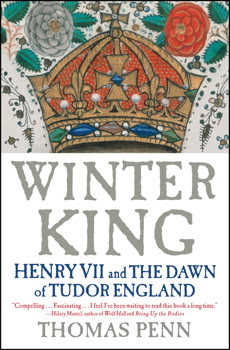
A little earlier in the summer, seeing Colm Feore as Richard III at Stratford sent me looking for a historical backgrounder on Shakespeare's villain.  Sure, Shakepeare was writing for the Tudors who controlled what could be said and seen in his day, and sure, he made up most of his drama, as a playwright should. But a recent biography by Chris Skidmore convinced me he had the essentials down: Richard was surely one murderous son of a bitch, and lethally dangerous to be around. His only saving grace was that everyone else of consequence in War of the Roses England was just as awful. if he didn't whack them, they'd have whacked him in a heartbeat.  Did, in the end.  Skidmore's is a clunky uncreative piece of work, though it has the evidence you need. A much better read on the period is The Winter King, Thomas Penn's biography of Richard's killer, Henry VII, founder of anothe line of murderous psychos, the Tudor dynasty.

Any reads to match these from Canadianists? I may have some more summer reading reports to come.

Update August 10:  I see the standard history of the Civil War, McPherson's Battle Cry of Freedom, says briefly of Lincoln's railroad voyage, "This tour may have been a mistake." And Widmer does have to keep finding genius in some pretty anodyne speeches, dismissed by McPherson as "platitudes and trivia."

 
Follow @CmedMoore