Showing posts sorted by date for query Cundill. Sort by relevance Show all posts

Wednesday, September 30, 2026

Book Notes and Prize Watch: City of Toronto, Dafoe, Cundill, Cherniak, and Kostash

 At last weekend's legal history gathering, I reconnected with a longtime acquaintance, Carolyn Strange, the Canadian scholar who is now the very accomplished professor of history at Australian National University.  

And I learned that her 2025 book Fatal Confession: A Girl's Murder, a Man's Execution and the Fitton case, co-published by the University of British Columbia Press (in its 'Landmarks in Canadian Law' series) and the Osgoode Society for Legal History, is a shortlisted title for the City of Toronto Book Award -- the only nonfiction work alongside four novels.

I also met and chatted with Earl Cherniak, hale and vigorous in his 'nineties, whose forthcoming book In The Courts (with praise from me on the back cover) records his extraordinary career as a civil litigator in many Canadian courts and tribunals at all levels and across the country.  To quote my own blurb, it is an account of:

a long successful career in civil litigation in Canada between 1960 and 2025 [demonstrating] how lawyers, judges, courts, and law firms have transformed both the law and the practice of civil litigation during his lifetime.

Legal historians will take note of the evolution of the law and legal practice as he documents it. I suspect it may be more widely read by litigators and intending litigators, as virtually the whole book is Cherniak's detailed and opiniated insiders' recounting of many hard-fought trials and appeals large and small, and how he won them or why he lost them. 

About the same time, I saw news of the five-book shortlist for the John Dafoe Prize  (at right, winner October 13, profiles of nominees on the website until then)  and the three-book finalists for the Cundill Prize in History (winner announced in Montreal October 30) which includes Canadian Jonathan Cheng's biography of Kim Il Sung, the ur-dictator of North Korea.

And while we are tallying all these honours, how about the Distinguished Alumni Award from the University of Alberta to my friend and nonfiction guru Myrna Ann Kostash, BA '65?  Can an honorary degree be far behind, U of A?


Thursday, September 03, 2026

Prize Watch: Dafoe and Cundill longlists

It's getting to be book prize season, and both the John W. Dafoe Prize (Canadian) and the Cundill Prize (international)  have nominee lists out.  The Dafoe longlist is ten, the Cundill "shortlist" is eight.

The JW Dafoe Book Prize ("awarded to the best book on Canada, Canadians, and/or Canada’s place in the world published in the previous calendar year")  once again rather buries its longlist deep in its website -- but you can find it here.  in "news.  Last year's winner was Gerald Friesen's The Honorable John W. Norquay,

The Cundill Prize shortlist is here.  The Cundill, run by McGill University, with a mostly American jury and a prize of  $US75,000, is "awarded annually to the book that embodies historical scholarship, originality, literary quality and broad appeal."
There are a couple of Canadians in the running this year:  Jonathan Cheng for Shattered Messiah and Eric Jennings of the University of Toronto, for Vanilla.

We'll get back to these as the Dafoe shortlist and winner and the Cundill finalists and winner are announced.

Wednesday, November 12, 2025

Prize Watch: Cundill Prize to Lyndal Roper

Lyndal Roper's Summer of Fire and Blood: the German Peasants' War was announced recently as the 2025 winner of the Montreal-based Cundill Prize for the best history book published in English.

Summer of Fire and Blood is the very model of a Cundill winner.  That is, it is a big, widely-acclaimed narrative history on a topic both substantial and relatively neglected (at least in English), readable but deeply researched, from a distinguished professor at a leading university (Roper, an Australian, is Regius Professor at Oxford, and the first woman ever to hold that chair -- Hugh Trevor-Roper may be rolling in his grave), and published by a major press  -- though in this case not actually an academic press by Basic Books).

Roper makes much of the simultaneous explosion of the Protestant Reformation and the Peasants' Revolt in Germany,  both of which were at fever pitch in the early 1520s.  It's not quite that the reformation inspired the peasants or that the peasants inspired the reformation, but how they overlapped and influenced each other.  Luther's demand that Christians be allowed to think for themselves, keep their pastors accountable, and read and pray in their own language definitely resonated with the peasants, in ways Luther, a mine owner's son and friend to many German princes, came to loathe and denounce).  The peasants had issues and crises of their own that made them receptive to religious reform as well as social revolution.

Spoiler alert (and I haven't got to the end yet myself):  it doesn't end well for the peasants, as pretty much always in peasant revolts.

Update November 17:  I was clever enough to read the tealeaves and borrow this from our public library before it won.  But it's a big book, and I was not diligent enough to finish reading it before the renewal date came up. And with the news out, they would not let me renew: too many requests in line.

Thursday, September 18, 2025

Hot Histories at the Cundill


I figure, who but the author cares about the tenth or fifteenth book on a "short" list? CBC Books had a twenty-five title shortlist recently.

But the Cundill Prize's short list (8 this year) is sometimes the most interesting thing it issues.  The Cundill goes looking for the best book about history published in English in the past year, and it gathers a crew of mostly Ivy League and Oxbridge historians to pick 'em.  Their selection usually offers a look at what some credible observers consider to represent some of the world's best historical writing at this moment.  When they get down to the winner, well, we may or may not be interested in its particular topic.  But there's gotta be something in the longlist that sparks some interest.

This year's eight books, introduced by previous winner Ada Ferrer:  

Ada Ferrer, Chair of the Jury, said: “The eight books on our list are all quite different from one another, but all share some essential characteristics: analytical sharpness, engaging writing, and a firm belief that what the past reveals must be urgently understood. The committee is so proud to present this slate of eight books to the world.”
The only one I have heard any review comment about is Roper on the German Peasants' War.  Winner: October 30.

Saturday, November 23, 2024

Book Notes: Canada in the post -World War II Tokyo War Crimes Tribunal

I've been reading in Gary Bass's Judgment at Tokyo: World War II on Trial and the Making of Modern Asia, a finalist for the Cundill History Prize 2024. There was a Canadian on the panel of judges at the Tokyo trial of Japan's accused war criminals, and I naturally wanted to find out a bit about him.

 He was E. Stuart McDougall (1886-1957, a judge of the Quebec court of appeal and very briefly a Quebec cabinet minister in the 1930s.) Bass has almost nothing to say about him except to note that he, along with the Australian and New Zealand judges, worked in close concert with the British judge and formed the core of the majority consensus on the tribunal. The closest Bass comes to anything about McDougall personally is his comment that in the sweltering summer heat of Tokyo, "the Canadian judge, acclimatized to Montreal temperatures, was especially miserable."

Americans! If a place is north of the border, it surely can know nothing of summer heat.

More about the book itself shortly.  

Update, November 28: The war crimes trial of the Japanese leadership after World War Two was a good deal less successful than the Nuremburg trials that preceded it.  The Japanese defence argued effectively against the charge of waging aggressive war, not only by arguing that such a crime did not exist in international law, but also by arguing that Japan's war aim -- building up its imperial holdings in Asia -- mirrored what the prosecuting powers had always done and continued to do even as the trial went on. And in response the charges of war crimes and atrocities, the Japanese could simply point to Hiroshima. The judge from India strongly endorsed these defences and argued for the acquittal of all the defendants. 

Bass's method is to focus closely on the trial itself, almost a day by day and judgment by judgment recitation.  The part of his title "... and the making of modern Asia" is developed only briefly, in an epilogue.  (The executions of those convicted are given a great deal more space.) It is easy to grasp how the debates at the trial and among the judges would be picked up in anti-imperialist movements across Asia and the rest of the colonized world, but that is mostly implied rather than worked out in detail.

I was impressed by the evidence Bass's book provides of what might be called the historical-industrial complex, faced with materials that took "years and years to get through."  Bass is not a specialist in Japanese history and acknowledges he does not read Japanese or Chinese, But he was able to assign researchers to translate everything of possible interest (rather than make notes or summaries) in the Japanese and Chinese archives, and he read all the translations whether he used them or not.  That takes a well-funded scholar!

Update, December 2:  Gary Bass gets in touch to tell me, gently: 

You had an amusing complaint that provincial Americans don’t know about Canadian temperatures. As it happens, I’m Canadian and grew up in Toronto (also have US citizenship), and have some basis for writing that Montréal summers are milder than those in Tokyo.

I grew in Vancouver and still find summers in both Toronto and  Montréal pretty steamy and sticky.  But I've never been to Tokyo, so I defer to his experience.


Friday, November 01, 2024

Prize Watch: Cundill to Kathleen DuVal


Kathleen DuVal, historian of indigenous America, has been announced as the 2024 winner of the Cundill Prize for History for Native Nations: A Millennium in North America.  As far as I can tell, DuVal is not indigenous, but the citation says she has been working on its account of a thousand years of indigenous history in North America for over twenty-five years.

Runners-up were Gary J. Bass for Judgment at Tokyo, on the post World War Two trial of Japanese war crimes, and Dylan Pennington for Before the Movement, on antecedents to the Civil Rights movement of the 1960s.

I'm not reviewing the Cundill shortlist for the Literary Review of Canada this year, so you will have to form your own opinions of these works.

For consolation, here's one of my previous group reviews, on a particularly interesting (I thought) group of histories.

Update, November 6:  I have to dissent from Ken White's recent suggestion, in his ever-lively booktrade SubStack "ShuSh," that the Cundill Prize is too academically-insular and needs more input from generalist nonfiction writers/jurors. Generalist nonfiction writer that I am at heart, I have to say nonfiction book prizes are a dime a dozen, even in Canada. Big, ambitious, deeply researched historical writing need the kind of attention that major book prizes can provide. The Cundill is one of the few in the world that hits that niche.  There was a journalistic tilt to last year's nominees, and it was not their best year.

Tuesday, October 08, 2024

Prize Watch: The GG Nonfiction Nominees UPDATED; and the Cundill History Prize shortlist

The Cundill finalists for 2024

The Canada Council has announced the shortlists for its Governor-General's Literary Awards. The nonfiction list is... mixed.  Heavy on memoir and strong in indigenous context, it has a couple of issue- oriented books, though nothing that would count as history (again).

[Update, October 10:  A friend of the blog writes:
I caught your blog post and laughed out loud at this line: “…it has a couple of issue- oriented books, though nothing that would count as history (again).”

It’s sooo discouraging.

It’s a bit different on the French side, and I’m not sure why. Different juries, I guess.]

Strangely, the GGbooks website presents cover photos of the nominated titles, but no description or jury statements about why they were nominated, nothing about the authors at all, no links. Three PenguinRandom titles, two from indie Canadian presses. On a quick glance, Winipek and The Age of Insecurity (the 2023 Massey Lectures) look substantial, but it's a literary prize: here's hoping the jurors have been assessing on that basis.

Two of the books use that lazy trope "the age of ....[fill in the blank]" but that might be on the publishers.  Congratulations to all the nominees,

  • Danny Ramadan, Crooked Teeth: A Gay Syrian Refugee Memoir
  • Helen Knott, Becoming a Matriarch
  • Petra Molnar, The Walls Have Eyes: Surviving Migration in the Age of Surveillance
  • Astra Taylor, The Age of Insecurity: Coming Together as Things Fall Apart
  • Nigaan Sinclair, Winipek: Visions of Canada from an Indigenous Centre

Over to the Cundill History Prize which announced its three finalists recently.  Looks like a list of big serious straight-up history books this year -- a good thing for that neglected category! Three American nominees for a global prize, however.
Judgement at Tokyo: World War II on Trial and the Making of Modern Asia by Gary J. Bass – A landmark history of the post-World War II trials of Japan’s leaders as war criminals, which has shaped relationships throughout modern Asia.
Native Nations: A Millennium in North America by Kathleen DuVal – A sweeping 1000-year history of the power of Indigenous North America, from ancient cities to fights for sovereignty that continue today.
Before the Movement: The Hidden History of Black Civil Rights by Dylan C. Penningroth – Stretching from the last decades of slavery to the 1970s, Before the Movement is an account of Black legal lives that looks beyond the Constitution and the criminal justice system, to recover a rich, broader vision of Black life. 

Friday, May 10, 2024

The austere passion of the historian


Still catching up on my reading, I was delighted to find in the May 2024 Literary Review of Canada a thoughtful letter by Robert Girvan of Toronto about my Cundill books review from the Jan/Feb 2024 issue.  Reader engagement -- always appreciated!

And this is not the thumbs-up/thumbs-down sort of response. Robert Girvan engages at length with my observations (find his letter at the foot of the article) about what one might call the personal turn in academic writing -- substantial scholarly books in which the personal interests and commitments of the author become an integral part of the writing, rather than something to be sussed out from their acknowledgments and endnotes. 

He offers valuable caution about "overly personal involvement with one's subject" in historical work. I resist his description of one of the reviewed books as "wondrous fiction," but his arguments against agenda-driven history deserves attention. And he provides a great quotation about "the historian, with the austere passion for fact, proof, evidence, which are central to his [sic] vocation...." 

Friday, March 15, 2024

Tiya Miles: A Cundill Prize Event in Montreal


The Cundill Prize announces Tiya Miles, author of the 2022 Cundill History Prize winner All That She Carried, giving a talk and an interview with Nahlah Ayed at McGill University on April 3. 

This is what I wrote about All That She Carried  -- full title: All That She Carried: The Journey of Ashley’s Sack, a Black Family Keepsake in my Literary Review of Canada review early in 2023.

Thursday, January 18, 2024

Errata

My annual review of the Cundill History prize finalists appeared on the Literary Review of Canada website late in December, and can still be found there. (Though if it is paywalled, you may have to wait another month or so.)

Right now the print copies -  it's the January-February issue -- are going out to subscribers and magazine racks. But I've just been warned by the staff that some glitch at the printers has meant the print edition has the first page and the third page of my review complete, but with the second page somehow replaced by other copy from a previous issue.  

The Review promises to provide a proper text of the review next month.  Meanwhile, the full review remains available and complete on the website -- to which I recommend you.

Considering the subject of errors, I might just add that the January issue has an abundance of historically related review and copious ads for new historical works -- just to undermine the odd and erroneous notion that Canadian history is dead, or still dead, or dead again, or whatever it is they keep saying.

Thursday, December 28, 2023

New at the Literary Review of Canada: me on the Cundill History Prize finalists


Nice to lie about enjoying fruitcake and chocolate and reading Fire Weather and A Christmas Carol and new cookbooks and all, while The Literary Review of Canada is busy publishing "In the Spotlight," 
my review of the 2023 Cundill History Prize finalists. 

The books this year are Tania Branigan's Red Memory, about consequences of China's Great Proletarian Cultural Revolution;

Kate Cooper's Queens of a Fallen World, about the roots of Augustinian theology, sort of; 

and James Morton Turner's Charged, which is both a history of batteries and a powerful exploration of what the low carbon energy revolution will work and what it will require. 

Friday, November 10, 2023

Prize Watch: The GGs and the Cundill

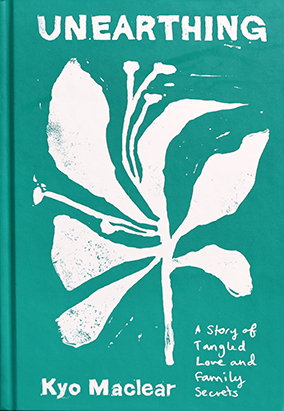
The Governor-General's Literary Awards winners were announced the other night. For Nonfiction in English, the winner was Kyo Maclear for Unearthing, a family memoir/investigation. Maclear's earlier book, Birds Art Life, was also widely praised a few years ago.

It will be said that the winner and all the finalists are memoirs (again), and it's not impossible questions will be raised (again) about blinkers on what the Canada Council considers literary nonfiction.

Gendered Islamophobia: My Journey With a Scar(f) by Monia Mazigh )Mawenzi House Publishers);
Invisible Boy: A Memoir of Self-Discovery by Harrison Mooney (HarperCollins Canada);
Message in a Bottle: Ocean Dispatches from a Seabird Biologist by Holly Hogan (Knopf Canada);  
Unbroken by Angela Sterritt (Greystone Books);
Unearthing by Kyo Maclear (Knopf Canada).

And they are. But the list also suggest even for books on political, scientific, historical, and other large topics, literary times and trends encourage books with a substantial personal engagement by and about the author. 

Meanwhile, the Cundill Prize in History also announced its 2023 winner: Red Memory: Living Remembering and Forgetting China's Cultural Revolution by Tania Branigan.  My review of the finalists will be in the Literary Review of Canada soon, so I won't say more, except that this year's jury has interesting views on what a history book is or should be.  


Tuesday, February 21, 2023

New at the Literary Review and Canada's History

This month's Literary Review of Canada includes my review of the winner and short-listed books of the 2022 Cundill Prize in history. From contemporary Russia to Cuba across five hundred years to the American South in slavery time, much big history to ponder. Plus Tim Cook on Acadians at war, Newfoundland shipwrecks, an appreciation of Moshie Safdie,, some political memoirs, big trees in BC and much else

Nice to see my closing lines on the state of nonfiction narrative getting some traction on Twitter too.


Nothing from me in this month's Canada's History, which arrived while I was away.  But much good stuff on the end of capital punishment, commandos at war, the history of crokinole (!) and more. Cover story on the evolution of Caribbean-Canadian fashion.  I'll be back soon


Friday, December 02, 2022

Prize Watch: Balsillie and the Cundill for Lorinc and Miles

Nice to see the Balsillie Prize for Public Policy presented by the Writers' Trust to veteran Toronto journalist and heritage and civic policy activist for his book Dream States: Smart Cities, Technology, and the Pursuit of Urban Utopias.  Good also to see the venerable small press Coach House getting the win along with its author.


Meanwhile the Cundill Prize in History was presented in Montreal last night to Tiya Miles for All That She Carried: The Journal of Ashley's Sack, a history based on a small fragment of material culture and its testimony to the horrors of slavery.  I'm doing a review of the Cundill shortlist and winner for the Literary Review of Canada, so I won't say more, but this is an intensely vivid and moving book for a work of history, (by a Harvard prof, no less). Miles is the first Black winner of the Cundill, I believe.


Friday, October 07, 2022

Prize Watch: The Cundill Shortlist


For the Cundill Prize in History, "short" in a shortlist means eight titles.

J.P. Daughton, In The Forest of No Joy: The Congo Ocean Railway and the Tragedy of French Colonialism  W. W. Norton & Company

Ada Ferrer, Cuba: An American History Scribner

Henrietta Harrison The Perils of Interpreting:The Extraordinary Lives of Two Translators between Qing China and the British Empire Princeton University Press

Harald Jähner Translated by Shaun Whiteside Aftermath: Life in the Fallout of the Third Reich 1945-1955 Ebury, PRH

Tiya Miles All That She Carried: The Journey of Ashley's Sack A Black Family Keepsake Random House

Mae Ngai The Chinese Question: The Gold Rushes and Global Politics W. W. Norton & Company

M.E. Sarotte Not One Inch: America, Russia, and the Making of Post-Cold War Stalemate Yale University Press

Vladislav M. Zubok Collapse: The Fall of the Soviet Union Yale University Press

For the last two years, I have reviewed the Cundill Finalists (three titles from the shortlist) in the Literary Review of Canada.  I'm happy to say I'm doing that again this year.  Finalists to be announced October 20, winner December 1, and the review soon afterwards.


Monday, January 03, 2022

This month at the Literary Review of Canada: me, actually

One of the reviewed
books
So you are sitting there digesting all that eggnog and Christmas cake, and someone else is getting out their first publication of 2022.

Which is to say that the Literary Review of Canada for January-February is now out, with "Building Worlds," my review of the 2021 Cundill History Prize nominees, included. 

Since the prize announcement was only made last December 2, you have to conclude that while the LRC may sometimes seem a little academic, its publishing timelines can be a lot faster than normal academic ones. (And so were mine, in this case anyway.) The issue also has a lengthy piece by Heather Ramsay on the British Columbia floods of November.

And much else, including a depressing review by Jeffrey Simpson declaring that Jody Wilson-Raybould's memoir shows her to have been an uppity young woman who did not have sufficient respect for her elders and betters in Ottawa. (Contrary viewpoint here.) 

Monday, December 06, 2021

Best histories of 2021 from various sources UPDATED


There's an list of impressive looking books in Smithsonian History's tally of the best American and world histories published in 2021.

And from Britain's History Today, another 2021 best-of list, this one assembled by asking a lot of historians about their personal choices for the year. No overlap with the Smithsonians. (I'd say consensus on "best history" is rare most years.)

Last week in Montreal, the Cundill History Prize, for the best recent history book in English, was awarded to Marjoleine Kars for Blood on the River: The Untold Story of the Berbice Slave Revolt. The Cundill short list and finalists are available here. I'm reviewing the final three for the Literary Review of Canada soon.

This blog should put its mind to the best Canadian histories of the year. Nominations gratefully received! Canada's History, online and in the mag, offers an extensive book and gift buyers' guide to things Canadiana. A subscription always makes a good gift.

Update, December 9:  A short smart Best Of list from Paul Lay, the very well informed editor of Britain's History Today magazine, has been published at the Five Books website. Finally, a hint of overlap in nominations: Lay includes Marie Favereau's The Horde: How the Mongols Changed the World, a finalist for the Cundill Prize. 

Five Books has a second Best History list: the shortlist of the Wolfson Prize for the best histories published in Britain for general readers  It includes Brit/Canadian Rebecca Clifford's: Survivors: Children's Lives after the Holocaust, the other title among the Cundill finalists. The Wolfson winner was Black Spartacus, a biography of Toussaint Louverture by Sudhir Hazareesingh.

Wednesday, October 20, 2021

Prize Watch: The Cundill Prize in History - updated


Today the Cundill Prize in History announced the three  -- all female -- finalists for its 2021 award:

 Or as announcement host Dan Snow put it, "Eurasian empires, the holocaust, and slavery -- what else are we talking about these days?"

The jury for the prize -- Michael Ignatieff (chair), Eric Foner, Henrietta Harrison, Sunil Khilnani, and Jennifer L Morgan -- will have a decision on December 2. Not too long afterwards I'll have a review of the finalists in the Literary Review of Canada.

Gotta say: the "short" list had some pretty interesting titles, too.

Update, October 22:  The Cundill Prize seemed unaware or uninterested the other day, but one of its nominees, Rebecca Clifford, has solid Canadian connections. Raised in Kingston, she graduated from Queen's University and taught English in Japan and worked for Foreign Affairs in China before winning a doctoral scholarship to Oxford University.  She now teaches at a British university. 

Friday, March 12, 2021

Covid and the point of history

I saw a comment the other day that I can't recover right now. The gist of it was: considering how much interest we have now in the 1919 pandemic, what will be judged most important about 2020 a century from now: this pandemic, or climate change and environmental destruction?

What reminded me of that was a post on History News Network by a young American classicist named Sarah Christine Teets. While caring for a newborn and a small child, she's been pondering what Thucydides wrote about the Athenian plague of 430 BCE.

Here’s a brief explanation of the passage, usually referred to by the number 2.48.3. After Thucydides described the initial outbreak of disease and asserted that medical science was utterly useless against it, he introduced his description of the symptoms with the following: “I will say how it happened, and whoever studies this, if the plague ever strikes again, because he knows something in advance, would be particularly able to not be ignorant; these things I will make clear, since I myself got sick and saw others suffering it.” 

She goes on to argue that this is the kind of statement often taken to mean that if we learned from history we might avoid its mistakes. But Thucydides, she points out, believed there was no wisdom that would have averted the plague: history offered no solution. For the lesson to be learned from Thucydides, she quotes a fellow scholar, Sarah Bond, on another value of history:

There is absolute worth in remembering the past, but let us not cast it as something we do to keep us from repeating the mistakes in the historical record. This is rarely the case. Vonnegut noted: “We’re doomed to repeat the past no matter what. That’s what it is to be alive.”

What we can do is use historical literacy to create perpetual empathy towards humanity & to instill in us a hunger to understand, to inquire, & to document. That is the worth of history. And it is empathy which we can & should repeat into the future.

There is "useful" history. Most of the highly technical and quantitative economic policy that we will rely on to keep the world economy rightside up during and after this pandemic is based entirely on careful modelling and analyzing of past successes and failures in economic policy-making. Much of law, you might say, is built upon endless review of a long history of past lawmaking.

But Teets makes an important point.The empathy argument may the main thing that keeps people returning to the history of Covid-19, as to the Athens of 2500 years ago.  

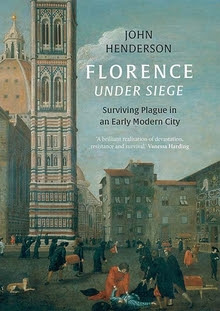
I've been reading a recent history (Cundill Prize longlister, in fact) of the Florentine plague of 1630: Florence Under Siege, by John Henderson. Henderson mentions that the 1630 outbreak there is notable not only for Boccaccio's Decameron (empathy!) but also because the measures Florence took to fight the plague became models for how Europe tried to deal with successive epidemics for the next several hundred years: specialized hospitals, plague cemetaries, isolation and quarantine, border controls, limits on trade and movement. Nothing worked very well, of course, and except for the vaccines, it all sounds rather like the world's struggles with Covid-19. 

Societies have sought historical lessons with which to respond to plagues, that is. History hasn't actually provided solutions, and maybe shouldn't be expected to.       

Monday, February 22, 2021

this month at the LRC: moi! (and some others)


Much good material in the Literary Review of Canada for March, but I have to start off with myself.  They let me do a group review of the finalists for the 2020 Cundill Prize in History, a global prize for the best works in history published in English, Prize-giving was in December; review published in February! 

I get to write about: William Dalrymple's The Anarchy, about how the East India Company -- a "Walmart with armies" -- conquered and wrecked India in the late 18th century; and Camilla Townsend's Fifth Sun, an exploration of how indigenous annals, written in the western alphabet but using the Nahuatl language of the people we call the "Aztecs," recorded the Nahua's own history from a couple of centuries before Cortes's conquest to the century after; and Vincent Brown's Tacky's Revolt, an account of rebel slaves in 8th century Jamaica that draws on everything from cutting-edge historical techniques to graphic-arts treatments of cartography to turn the focus from the enslavers' accounts to the otherwise unrecorded rebels.

These are three histories of colonization, but also three histories about what historians do, or can do.  I recommend the review, if I may: (For the moment you may have to be an LRC subscriber; it's paywalled.) 

Dalrymple, from an aristocratic Scots family, evokes oppressed India. Townsend, a white professor raised in New York City, seeks the Nahuatl beneath the overpowering narratives of their conquerors. Brown, an African American scholar and filmmaker raised in San Diego, California, explores the intricate loyalties of eighteenth-century Africans enslaved in the Caribbean. In the twenty-first century, when many argue that no one from privilege can or should speak for the colonized and oppressed, some might ask if these are all case studies in appropriation.

Townsend gives the best reply. She emphasizes, even embraces, the difficulties of cross-cultural understanding. She suggests, in not quite so many words, that in writing history, what we call cultural appropriation is unavoidable and essential. Even one’s own ancestors of two hundred years past are almost unfathomably strange to anyone alive today. If historians will not make the effort to bridge the chasms, who will? History, Townsend does say, is exciting not in spite of these challenges but because of them. The Nahuatl annalists, she declares, wanted posterity to hear them, and they said so clearly in their writings: “Do we ourselves not become both wiser and stronger every time we grasp the perspective of people whom we once dismissed?”

Also in the March LRC: Jack Granatstein on Margaret Macmillan's War -- a terrific review, though I can't buy the initial special-pleading whine about how military history gets no respect, and Canadians hate their own history, and all that. Heather Menzies on a Metis poet's effort to find her ancestors in scraps and tags of evidence. Mark Lovewell on the recent dramas at Rideau Hall. Bruce Campbell looks into Alberta's current travails. John Lownsborough reads the diary of 19th Century CPR builder Dukesang Wong. And more...   


Follow @CmedMoore