Showing posts with label historical ideas. Show all posts

Friday, May 10, 2024

The austere passion of the historian


Still catching up on my reading, I was delighted to find in the May 2024 Literary Review of Canada a thoughtful letter by Robert Girvan of Toronto about my Cundill books review from the Jan/Feb 2024 issue.  Reader engagement -- always appreciated!

And this is not the thumbs-up/thumbs-down sort of response. Robert Girvan engages at length with my observations (find his letter at the foot of the article) about what one might call the personal turn in academic writing -- substantial scholarly books in which the personal interests and commitments of the author become an integral part of the writing, rather than something to be sussed out from their acknowledgments and endnotes. 

He offers valuable caution about "overly personal involvement with one's subject" in historical work. I resist his description of one of the reviewed books as "wondrous fiction," but his arguments against agenda-driven history deserves attention. And he provides a great quotation about "the historian, with the austere passion for fact, proof, evidence, which are central to his [sic] vocation...." 

Friday, January 07, 2022

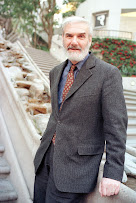
Jonathan Spence (1936-2021) RIP, historian of China


Jonathan Spence, the Yale University scholar of Chinese history, died recently at eighty-five, as noted in this New York Times obituary.

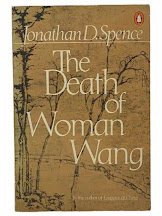
Many years ago I interviewed Professor Spence for an Ideas documentary. I was primarily interested in a small book of his called The Death of Woman Wang, about the life and death by murder of a poor, obscure 17th century Chinese woman. His previous book had been a thick biography of one of the great Chinese emperors, and I asked him about the contrast, expecting, I guess, something about the value of balancing social history and political history, the poor as well as the great.

Instead, he said that when he wrote about the emperor, he had recently received his doctorate, published some notable scholarship, and become tenured at Yale, and so he was interested in power and influence and such matters. When he turned to Woman Wang, he said, he was married and a parent, so his interests had turned to family and personal matters.


It was the first, or at least the most articulate, statement I had heard about the personal issues and concerns that historians may bring to their work, and the autobiographical elements that may be buried in historical work more often than we recognize. 

The Death of Woman Wang is not mentioned in the obituary, I see; the emperor book is.  

The Ideas series, "Four New Historians," looked into big books about little people, you might say. It was based on my conversations with Emmanuel LeRoy Ladurie (about Montaillou), Carlo Ginzberg (about The Cheese and The Worms), Robert Darnton (The Great Cat Massacre), and Spence. In retrospect, I think it was a pretty good program, and maybe I should have written it up. (Where?)  Deep in the CBC Archives now, I guess. 

Thursday, November 05, 2009

Claude Levi-Strauss was still alive?

Seeing his obituary did take me aback. I guess I had assumed he had died forty years ago. But he stuck around until he was a couple of weeks shy of 101, and then he slipped away with a private death and private funeral before anyone knew.

ALD has a raft of obits. But the New York Times one, also picked up in the Globe & Mail print edition (jeez, this gets complicated, just setting up the links)has a pretty good description of the difference between L-S's structuralism and the post-structuralism that so soon challenged and eclipsed it. ("Dad," says my English major daughter, "'deconstructionism' is a better label than 'post-structuralism'") Nice how much the two schools resemble and recapitulate the modernism/post-modernism polarity. The one determined to be hard-edged and scientific and global, so that a mind or a skyscraper will obey the same set of rules whether it is Brazil, Hong Kong or Paris. The other soft and indeterminate and local, so that nothing is every quite certain and things adapt to their context.

It's the "post-" movements that are much friendlier to the importance of history, sure. But look how I find myself considering the change: in Levi-Strauss's binaries.
 
Follow @CmedMoore