Showing posts with label slavery. Show all posts

Wednesday, January 03, 2024

Historians at the Order of Canada UPDATE: Shannon Prince


I now see that in my coverage of historians honoured with the Order of Canada recently, I did not just bury the lede, I missed it altogether.

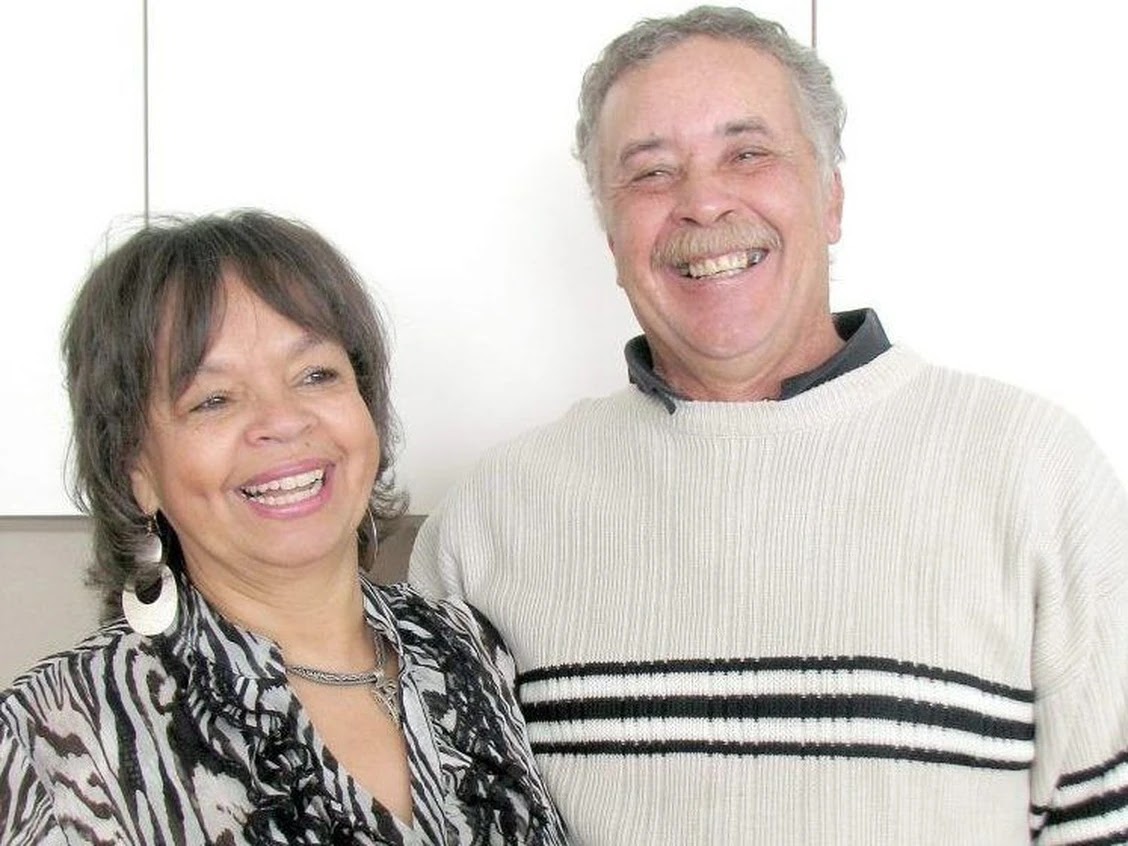
Bryan Prince, who I mentioned, was honoured alongside his wife and historical partner Shannon Prince, who I missed entirely. Husband and wife designations like these must be pretty rare.

The Sarnia Observer has a good local/national news story about the careers of the Princes, with much detail on Shannon Price's academic work in black history and her long record as curator of the Buxton National Historic Site.

Shannon, who retired last month as curator of Buxton National Historic Site and Museum after 25 years, said she was “completely shocked” and cried when she and her husband heard the latest news.

“We received an email from the secretary’s office to the Governor General,” she told The Daily News on Tuesday. “My first thought was that someone we know has been nominated and they gave us as a reference. She wanted to set up a phone call and that’s when she told us.”

... Shannon, an academic with contributions to the field of Underground Railroad research, has worked with York University, University of Toronto, Underground Railroad Freedom Center in Cincinnati, Millersville University, and several other historical organizations around the world

Bryan is an acclaimed author and researcher in his own right in the areas of slavery, abolition and the Underground Railroad.

On a related topic, Paul Krugman at the New York Times has a sweeping analysis comparing American slavery against  European serfdom and generally pondering the economic, class, and political underpinnings of labour exploitation across the world. (This gift link should be available to non-subscribers)  

Thursday, May 11, 2023

History of Canada and the American Civil War

Filmmaker and writer Julian Sher, who had a lively piece in the April-May 2023 Canada's History on a Canadian corner of the American Civil War, has also had a series of articles in the Globe and Mail on a similar topic.  He's a little more confrontational in the newspaper pieces, which expose Canadian complicity in the Confederacy's pro-slavery secessionist campaign.

He does makes a strong case for the pro-slavery views and support for the Confederacy of more than a few prominent Canadians. But I thought the series a little one-sided (as an editor titled it: "The American Civil War was Canada's Fight Too. And We Were on the Wrong Side."   It did seem to skimp on coverage of serious reasons why British North America had concerns about a heavily-armed United States with strong and enduring annexationist views regarding the provinces to the north. (He does acknowledge there were abundant Canadian supporters of the Northern cause, if briefly.)

So I was pleased to see a couple of letters to the editor making precisely this point, one signed by Alan McCullough of Ottawa, a friend of this blog. 

Sher's most vivid story of a Canadian Confederate ally concerns prominent Torontonian George Denison, who spared no effort to support the south and the cause of slavery.  Good to see the DBC Denison entry has this covered well, and notes that Denison's southern loyalties ruined his chances for military preferment in Canada. (There's still a Denison Avenue in downtown Toronto.)

Friday, August 21, 2020

The Civil War in Atlantic Canada

Maybe there will not be a Tallahassee Festival in Halifax any more.

CBC Nova Scotia has a well-reported history and journalism story about the origins of the Tallahassee name that adorns schools, community centres, and a festival along the Eastern Shore close to Halifax. Here's where the name association comes from:

The iron-sided [Confederate] steamer Tallahassee launched a raid against Union ships in the summer of 1864 and wrecked about 29 vessels before breaking its mast and running out of coal. In August, it sailed into Halifax harbour, which in the years before Canadian Confederation was a neutral British port.

Old salt Jock Flemming
The risky departure of the Tallahassee through the narrow, shallow Eastern Passage out of Halifax harbour -- to avoid Union warships expected just offshore -- became a legend of Nova Scotia shipping and sailing -- as so did Jock Flemming, the local pilot who achieved the feat of navigation.

Most of the information about the Tallahassee and its reception in Halifax comes from University of New Brunswick historian Greg Marquis and his book In Armageddon's Shadow: The Civil War and Canada's Maritime Provinces.  

On shore, the Halifax Journal urged its readers to remember "the treatment of defenceless Southern women and children by Yankee ruffians" while Halifax's Sun newspaper dismissed the Confederates as "thieves, felons and freebooters."
Marquis said his research found Halifax's elite citizens tended to support the South, while many others supported the North. "The people who fought for the Union far outnumbered anyone who fought for the Confederacy," Marquis told CBC News.

But a festival named for a ship committed to treason in defence of slavery? It seems to be going out of style in Halifax. Festival committee organizers are looking for a new name. Slavery scholar Charlene Nelson:

"This conversation about the Tallahassee is so timely because I think we are thinking about, 'Who do we honour in our society? Who's worthy of heroization?'" she said. "To put the name of something or a person on a school, on a rec centre, on a festival — we generally don't do that with people that we despise or histories that we despise."

By the way, Marquis' book that covers the Tallahassee incident turns out to be more than twenty years old (still in print and ebook too).  (That common complaint -- "It never gets mentioned in the history books!" -- so often turns out to mean, "We haven't read the history books.")  The whole story is new to me, and also to my informant, Eastern Passage boy Mark Reynolds  -- thanks, Mark.

Friday, January 03, 2020

American historians and journalists disagree. It's about slavery


For several months, the New York Times's 1619 Project has been attempting to convince Americans that their country's real foundational date is not 1776, but the year that the first African slaves were imported into the British colonies that later formed the United States.

Now some pushback from historians. Prominent ones, too (which is to say I have heard of most of them, and read at least three). Victoria Bynum of Texas State University, James M. McPherson and Sean Wilentz of Princeton University, James Oakes of the City University of New York and Gordon S. Wood of Brown University are the professors asking for corrections of fact.  The Times is having none of it, and standing by its reporting pretty much in toto.

The Washington Post has a summary of the disagreement.  (The Post has a serious paywall, and the story may be more accessible via the link in this History News Network story which is where I started.)

For some reason the historians' critique began on the World Socialist website, "founded on Trotskyite principles." Pretty sure these historians are not very Trot, but historical debate is where you find it, I guess.

Update, January 17, 2020:  the World Socialist website has a pretty impressive Historical section, including this section on "1619," which has many long interviews with historians.

Friday, November 09, 2018

George Brown Days 3: Talking to Americans

George Brown's advice about what the United States needs from us:
...when you get hold of a Yankee, drive it home to him; tell him his country is disgraced; wound his pride; tell him his pure institutions are a grand sham; send him home thoroughly ashamed of the black blot on his country's escutcheon. In steamboat, or railroad, or wherever you are, hunt up a Yankee and speak to him faithfully; there is no other man so sensitive as to what others think of him.
This is actually from an anti-slavery speech Brown gave in 1852.  The disgrace was slavery, which would endure another dozen years. But in these times,  it has a contemporary ring, except maybe for the sensitive part..

H/t Russ Chamberlayne

Wednesday, August 09, 2017

Toronto Dreams Project on Simcoe and Slavery


In Toronto, the August long weekend holiday Monday is called Simcoe Day in honour of John Graves Simcoe, first lieutenant governor of Upper Canada. The Toronto Dreams Project, a lively website by Adam Bunch, contributed a look at Simcoe's complicated relationship with slavery,
He saw no place for the practice in his new province. "The principles of the British Constitution do not admit of that slavery which Christianity condemns," he wrote before he officially took his post. "The moment I assume the Government of Upper Canada, under no modification will I assent to a law that discriminates by dishonest policy between natives of Africa, America or Europe."
But the legislative council Simcoe himself had appointed was dominated by slave-holders
He was forced into a compromise — the exact thing he had promised never to do. The new law didn't abolish slavery immediately; instead, it would be gradually phased out. No new slaves could be brought into Upper Canada, but any who were already here would spend the rest of their lives in slavery. Their children would be born into captivity, too; they wouldn't be free until they turned twenty-five. Finally, anyone who wanted to free a slave was discouraged from doing so: they would be forced to provide financial security to ensure the newly freed slave wouldn't be a drain on the resources of the state.
When he returned to Britain, he was assigned to lead troops in assisting the French royalist regime in Haiti to suppress the slaves' growing independence war there -- a task he eventually dropped out of.

Image: from Toronto Dreams Project.

Monday, February 27, 2017

The Black History of Thomas Jefferson


"Perfect"

Annette Gordon-Reed's The Hemings of Monticello, her exploration of the enslaved and freed Hemings family members and of Sally Hemings' long relationship with Thomas Jefferson, struck me as a masterful and almost unanswerable work of history, though indeed one requiring a good deal of judgment and interpretation of sources that were intentionally ambiguous from the start.

Not everyone is not yet ready to concede Gordon-Reed's case. History News Network, the American aggregator of history-related items (often politically related, too) publishes William G. Hyland Jr. defence of Jefferson. But Gordon-Reed has not much to worry about. The money 'graf of the defence:
Thomas Jefferson was raised as the perfect Virginia gentleman. The personality of the man who figures in the Hemings soap opera would be preposterously out of character for him.
Because it's understood no Virginia gentleman would never have laid a finger on a slave.

In other Black History month news, the Star reports on Measha Brueggergosman's encounter with the Book of Negroes, the 1783 register of black Americans, slave and free, embarking for Nova Scotia, including her ancestors. She's making an album on the subject.

Wednesday, March 04, 2015

Museum of Slavery


Black History Month is officially over, but this New York Times Magazine story on the first (!) museum in the United States devoted to slavery is not time-limited. Other restored plantations in its Louisiana neighbourhood emphasize the genteel life of the Big House, but the white lawyer who has restored Whitney Plantation has gone in another direction:
As a descendant of Irish laborers, he has no direct ties to slaveholders; still, in a departure from the views held by many Southern whites, Cummings considered the issue a personal one. “If ‘guilt’ is the best word to use, then yes, I feel guilt,” he said. “I mean, you start understanding that the wealth of this part of the world — wealth that has benefited me — was created by some half a million black people who just passed us by. How is it that we don’t acknowledge this?”

Tuesday, April 15, 2014

Prize Watch: Pulitzer in History to Alan Taylor


Alan Taylor, the American historian whose The Civil War of 1812 was the one really terrific book I saw that came out of the 1812 bicentennial (okay I missed a lot of them), has won the Pulitzer Prize in History.
Awarded to "The Internal Enemy: Slavery and War in Virginia, 1772-1832," by Alan Taylor (W.W. Norton), a meticulous and insightful account of why runaway slaves in the colonial era were drawn to the British side as potential liberators.
The problem of why enslaved persons preferred potential liberators over continued slavery seems like one of those questions Americans take seriously and everyone else says, well, duh. (Was Jefferson hypocritical about liberty? being another notable one.)  But Alan Taylor is a terrific historian, and I'm sure the Pulitzer jury discerned merit here. Indeed, the publishers' summary of what the book is about suggests a narrative a lot more substantial than the prize citation proposes:

Frederick Douglass recalled that slaves living along Chesapeake Bay longingly viewed sailing ships as "freedom’s swift-winged angels." In 1813 those angels appeared in the bay as British warships coming to punish the Americans for declaring war on the empire. Over many nights, hundreds of slaves paddled out to the warships seeking protection for their families from the ravages of slavery. The runaways pressured the British admirals into becoming liberators. As guides, pilots, sailors, and marines, the former slaves used their intimate knowledge of the countryside to transform the war. They enabled the British to escalate their onshore attacks and to capture and burn Washington, D.C. Tidewater masters had long dreaded their slaves as "an internal enemy." By mobilizing that enemy, the war ignited the deepest fears of Chesapeake slaveholders. It also alienated Virginians from a national government that had neglected their defense. Instead they turned south, their interests aligning more and more with their section. In 1820 Thomas Jefferson observed of sectionalism: "Like a firebell in the night [it] awakened and filled me with terror. I considered it at once the knell of the union." The notes of alarm in Jefferson's comment speak of the fear aroused by the recent crisis over slavery in his home state. His vision of a cataclysm to come proved prescient.
Last night Taylor, as it happened, was also one of the talking heads on the rebroadcast War of 1812 documentary A Desert between Us and Them.

Friday, March 14, 2014

More on Solomon Northup's Canadian connections


David Fiske, co-author of a new biography of the hero of 12 Years a Slave, saw the recent post here and has sent along a link to his own report on Samuel Bass, the Canadian carpenter played by Brad Pitt in the film.

Fiske's piece on Samuel Bass notes that the last known public appearance made by Northup was to have been an anti-slavery address in Streetsville (now Mississauga, Ont) in 1857 ... but it was prevented by rioting.

Solomon Northup: The Complete Story is published by Praeger and available here.

Fiske Eakin previously worked with Sue Eakin, the Louisiana historian whose 1968 edition of Northup's memoir, did much to revive interest in Northup. Eakin died in 2009 at the age of 90.
 
Follow @CmedMoore