Showing posts with label ethics. Show all posts

Tuesday, July 14, 2026

History of the Grimke family -- and the new book about them

Allan Levine draws my attention to a story in the New York Times about an emerging scandal in historical scholarship and publishing.

The Grimkes: The Legacy of Slavery in An American Family by Tufts University historian Kerry K. Greenridge starts with the Grimke sisters, Sarah and Angelina, daughters of a slave-owning plantation family in South Carolina who became famous for their abolitionist activity in the Northern states well before the Civil War.  But she also introduces the black Grimkes, who include three black sons of Sarah's and Angelina's plantation-owner brother; the three sons' mother, the enslaved woman Nancy Weston; and other black members of the extended Grimke family down to the twentieth century.

Published in 2024, The Grimkes became a much praised and widely read new study of slavery and freedom. Until lots of scholars of slavery began questioning the source notes for the book -- many of which they said could not be found in the cited archives -- and for uncredited borrowings from other historians.  Book and author are in trouble, the author is fighting back, and her university and publishers are distancing themselves from her. 

Full story in the New York Times: if I have done this right, non-subscribers to the Times should be able to access this gift link. 

Saturday, June 13, 2026

Plagiarism: A new history

Cory Doctorow or Michael Geist or someone may have already written an essay about why this phenomenon is a good thing.  But I found Who Is Blake Whiting? - The American Scholar disturbing in its implications for intellectual life, and you should too

Thursday, September 08, 2022

Active History makes news, gets results


The CBC reports that Western University in London, Ont., is seeking a court order authorizing it to rename a set of scholarships endowed by former history professor Kenneth Hilborn and named in his honour. Most of the story is driven by arguments made two years ago in the historians' website Active History.

Professor Hilborn taught in the History department at Western from 1961 to 1997.  At his death in 2013, aged 79, his estate bequeathed a million dollars to Western, including $750,000 to the history department for scholarships to history students.

In 2019 and again in 2020, when Western was supposed to host the Congress of the Humanities and Social Sciences (turned virtual by the pandemic), Active History ran stories, first by Asa McKercher, the second by Will Langford, about Hilborn's white supremacist and fringe-right views and whether Western University should be honouring his name with the scholarships he funded for undergraduate and graduate students.

A third Active History essay in response to Langford's, by Francine McKenzie of the Western History department, made the case that the department was justified in continuing the Hilborn awards despite Hilborn's views and actions, acting on the model of the Rhodes Scholarships, which endure despite general repudiation of their founder's racist and imperialist career.

The arguments aired in Active History by McKercher and Langford seem now to have borne fruit, with Western's decision to seek a name change. Active History describes itself as "a website that connects the work of historians with the wider public and the importance of the past to current events."  It has surely  fulfilled those aims in this case..

Thursday, August 12, 2021

On Genocide


I had not been following this, but the Canadian Historical Association issued a statement last Canada Day entitled "The History of Violence Against Indigenous Peoples Fully Warrants the Use of The Word “Genocide.”

There is now a Open Letter, signed by a number of historians (and welcoming other signatures), that questions whether the use of the word "genocide" is warranted. It also disputes the CHA's statement that, regarding genocidal intent," there is a broad consensus on this point among historical experts."  The letter is to appear in the Literary Review of Canada and Le Journal de Montreal, but can currently be found here.

On the central question, I think the CHA is correct: the description "genocide" is warranted. (There is a good statement why in Harry Laforme's 2019 article "Yes, Genocide.") 

On the second issue, casting doubt on the existence of broad consensus among historians, the open letter asserts that "by pretending that there is only one interpretation, the directors of the CHA are insulting and dismissing the scholars who have arrived at a different assessment" and that "in insisting that there is only one valid interpretation, the CHA’s current leadership has fundamentally broken the norms and expectations of professional scholarship."

I don't know. Aren't membership organizations permitted to take stands on issues of public concern? (I'm not a CHA member.)  Or is the CHA statement a discouragement, as the Open Letter puts it, to "lively debate amongst scholars, many of whom differ in their assessments of this question."

Update, August 13: Helen Webberley writes: 

For historians who disagreed with the use of the word “genocide”, what was their opposite view?

Thanks. Rather than attempt to paraphrase, I recommend the actual text of the dissenters, linked to above and again here. 

Update, August 26:  Stephen High, president of the Canadian Historical Association, has published an update, "Recognizing Genocide in Canada," on the CHA website. He notes that it was written for publication in the National Post, which had published three recent articles criticizing the CHA's stand on this matter, but it went unpublished there.

Monday, December 21, 2020

William Osler and Rick Hill

I used to have a copy of Michael Bliss's biography of William Osler, but it was one of the casualties of a big downsizing of my library I did a couple of years ago, so I haven't able to consult it after the Toronto Star began publicizing new exposures about Osler's racist statements and his donations of aboriginal skulls, (some labelled " dug up near Caledonia") to medical/anthropological collections, where they remain. (The Star stories make no reference to Bliss's book, though the article in the Canadian Medical Association Journal does, briefly.)  I recall Bliss found Osler a highly admirable personality, but I don't know if these aspects appeared in his account.

The Star's related story, about the half century of work by Rick Hill, the Six Nations historian, curator, and activist, in recovering and repatriating indigenous skeletal collections from around the world for respectful burial, reminds me of the tributes due to this remarkable historical scholar and activist, who ought to be honoured for his remarkable career beyond just when a headline story involves him. 


Thursday, October 15, 2020

More historical ethics

The Guardian reports on the disturbing case of a British historian being sued for having violated "the postmortem personality rights" of a now-deceased Holocaust survivor. A German court has ruled that the historian infringed against the dead survivor's dignity, and a descendant is now seeking damages.  Apparently postmortem personality rights are a thing in German law; that is, in Germany you can libel the dead.

It's a complicated story. The historian, Ana Hajkova, studies the experience of queer victims of the Holocaust. She became interested in the case of a woman prisoner of whom a female concentration camp guard is said by witnesses to have become enamoured. Hajkova had promised the daughter of the woman prisoner not to name the mother, but did. And Hajkova wrote that the guard and the prisoner had a sexual relationship, while the daughter denies there is real evidence of this.

So the historian seems to have been ... negligent? ... in dealing with interviewees, and perhaps also in carrying a story beyond what the sources confirm.  But the suggestion that historians are not free to do scholarship on people now dead without fearing legal challenge from descendants of their subjects is chilling.  It's not clear from the story whether "truth"  -- that is, establishing that evidence justified Hajkova's account -- would be a defence in a personality-right dispute. It's also not clear whether identifying a dead person as queer can be a posthumous offence against her dignity.  


Tuesday, March 17, 2020

Historians and national identity


There's a remarkable article, currently not paywalled, at the New York Review of Books website, on a debate in Germany about, of all things, the property entitlements of the Hohenzollern dynasty which abdicated the German throne in 1918.

The Weimar constitution of 1920s abolished aristocratic privilege but preserved aristocratic property.  In Soviet-bloc East Germany, however, aristocratic property became state property after 1945. Since 1990, Germany has entertained claims by old aristocratic families to restitution of their estates in the former East German. Including, astonishingly, claims by the descendants of the Hohenzollerns, who would regain some of Germany's major public palaces.

All that is weird enough. (There are Hohenzollerns? In 2020?)  But there is a public-interest escape hatch: the German constitution prohibits restitution to those who assisted the Nazis or the Communists.  

So now, both sides are rushing to hire prominent historians to write reports affirming that the Hohenzollerns were -- or were not -- Nazi sympathizers. (tl;dr: they were. Nazi supporters and facilitators and murderous anti-Semites to boot.) So commissioned briefs by professional historians become part of a national debate that is also an egregious attempt at a landgrab by some of the worst people in the world.   Yeesh.
Norbert Frei, another major expert on Nazi Germany, in an article in the Süddeutsche Zeitung, accused the Hohenzollern family of “a brute reinterpretation of history” that “distorts historical facts, blurs responsibilities, and destroys critical historical awareness.” In the Frankfurter Allgemeine Zeitung, Richard J. Evans, Regius Professor of History Emeritus at Cambridge, criticized his colleagues for not reflecting more carefully before accepting offers to produce expert reports.

Monday, May 16, 2016

Is your work just grist for fictioneering?


The terrific Toronto cultural journalist Kate Taylor last weekend covered the troubling court case involving the documentarian Judy Maltz. Maltz had researched and produced a film, No.4 Street of Our Lady, about the experience of her Jewish family and how it was protected and ultimately saved, by a Ukrainian Catholic woman, Franciszca Halamajowa, during the Holocaust

A would be novelist in Toronto saw the film and wrote a children's novel, using Maltz's research and information and giving the characters their original names, but changing and re-inventing their stories at will. She then published the book without any credit or notice to her source.

Recently the Federal Court of Canada ruled that Maltz had no right of action here, and that not even her moral rights, let along her copyright, had been violated.

I suspect this decision is debatable in law. I'm even more inclined to think it violates the ethical standards of writing and publishing. I was pleased to read historian Jack Granatstein testifying on behalf of the dignity of authorship:
In court, historian Jack Granatstein had argued for Maltz’s side that it was inappropriate for the book not to credit the documentary for detailed pieces of original research, such as information drawn from a soldier’s diary entry, but it wasn’t an argument that carried the day.
In academia, it is considered crucial to acknowledge the source of any ideas or original facts, but copyright is a much narrower beast.
I suspect, however, that many academically-based historians would not be inclined to defend their work in this way. Academic publishing and academic culture strongly encourage authors to surrender their rights and interests and accept anything that is said to disseminate historical work. Too many academics are far too deferential with regard to their rights of authorship, even when they are able to forgo their financial interests in their work.

CAUT, the professors' union, is so deeply invested in the right of universities and education ministers to pirate even copyrighted work in order to ease institutional budgeting, that is hard to imagine it supporting the lonely stand that Jack Granatstein took.

Friday, July 10, 2015

Corruption in the Franklin ships' search?


The Canadaland journalism site has a very disturbing post about journalist Paul Watson's resignation from the Toronto Star amid allegations that significant details about the discovery of HMS Erebus have been falsified, and that archaeologistsand other historical experts with Parks Canada continue to be silenced and sidelined.

For Watson, this is a journalism story. But it also a story about the possible corruption of a significant Canadian historical inquiry for other purposes. It's about us too.

I hope Paul Watson will be getting some brown envelopes or private meetings with public service historians.  This blog does not have the resources to dig the way Watson will.  But if you want to contact me, for your own safety, don't use an official email or telephone.


Thursday, May 01, 2014

Ethics for Oral Historians


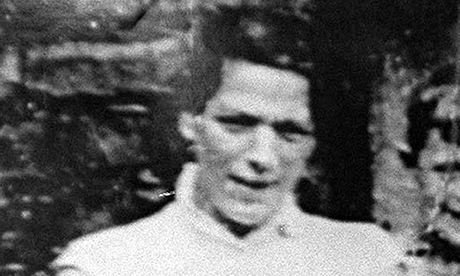
McConville: kidnapped in front of her family, murdered.
The police questioning of Gerry Adams, president of Ireland's Sinn Fein, in connection with the loathsome 1972 murder of Jean McConville, should be raising anxiety among historians who have ever conducted an confidential oral history interview.

In 2001, scholars at Boston College undertook a series of historical interviews with participants in Ireland's Troubles of the 1970s.  [Update, June 5, 2014: the researchers were independent of Boston College; its library agreed to be the custodian of their recordings] Interviewees were given an unequivocal guarantee that the interviews would remain closed and confidential during their lifetimes, and as a result BC's "Belfast Project" assembled an irreplaceable archive of first person testimony about the history of that conflict.  All sides agree that without the guarantee of confidentiality, this evidence about what actually went on would never have come into existence.

But the researchers stored the tapes with their university.

Then the British government asked the American government to secure the tapes to assist British police in their inquiries. The American government required Boston College to hand over the tapes. Boston College complied -- against the desperate attempts of the scholars themselves to preserve the confidentiality upon which their scholarly project had been built.  Now the charges.

Chris Bray, an American historian who has been working for three years to highlight the threat to oral history scholarship these events constitute, can now say "I told you so."  He also points out that as part of the peace process in Ireland, the British government secretly promised permanent immunity from prosecution to almost 200 IRA leaders and members.  One IRA man facing trial because of the Belfast Project tapes recently had his case discharged by a British judge because he had been given that promise -- suggesting the subpoenas were issued in the service of a political campaign rather than a genuine judicial proceeding.

If you seek my views on the IRA and Gerry Adams, search this blog for either of those terms. I'm not an admirer or defender, let us say. But if you are an oral historian and you have ever promised anyone some measure of confidentiality in exchange for historical evidence, you should be thinking about where you have the tapes stored. You probably do not have confessions of murder, but even it is merely politically embarrassing material you acquired, you may have an issue.  Journalists routinely risk jail rather than give up their sources, and their publishers generally back them to the hilt.  If Boston College's example is anything to go on, don't expect the same from your university

(Image: The Guardian online)

Update May 3:  The New York Times reports on this story, noting Boston College's assertions that they pursued all available legal action to fight the subpoenas
The college spent three years in court “trying not to turn over this information,” said Jack Dunn, a spokesman for the college....

After a final court ruling in September 2013, the college was forced to turn over 11 documents, having successfully argued the number down from the 85 originally sought.
The researchers, however, are quoted as saying Boston College "sold out them and their work."
The story also notes that the Belfast Project researcher interviewed both IRA and Ulster Defence League veterans.
Update, May 8:  Instead of standing up for academic integrity, the leaders of Boston College's History Department take a firm stand ... on saying "It wasn't us, don't blame us, we're innocent bystanders." 

Wednesday, February 08, 2012

Reviewer's ethics

Brit classicist Mary Beard has advice on reviewing, based on her review of Robert Hughes's book Rome, which was nominated for a "Hatchet" award in Britain (There's a Hatchet Award? Can we have one?):

I have never met Hughes, but if I were to have the pleasure, I would say just what I wrote to his face. And that has always been the ethical touchstone of a review. If you couldn't say it to the author, then it's a skewering, so don't.
The review is here, if you want to test principle against practice.

Thursday, June 16, 2011

Ethics of Oral History

Cliopatra is always worth reading, but Chris Bray's series of posts on the ethics of oral history must be hitting home with any historian who has ever turned on a recorders.  (There's one for June 15: "Moral Decency requires that I betray you", but there are earlier ones farther down.)  

Boston College oral historians interviewed IRA members in great detail about their history of murder and violence on a promise of lifetime confidentiality.  Now the police want a subpoena.  Quite a few commentators say, sure, okay, no problem, hand it over.

Monday, April 26, 2010

Historians having ethical issues

Don't do this.

Orlando Figes, British historian of Russia, here, writes anonymous reviews trashing his rivals, then threatens lawsuits, then lets his wife take the blame, then....

Update
: Now he says Stalin made him do it.

Update, April 29
: But this is weird: someone called Jonathan Jones thinks it's only those tedious profs who complain when someone "popular" trashes the books of rivals anonymously and threatens libel action when exposed.

Stephen Ambrose, American historian of presidents and war, here, seems to have made up his oral-history interviews.

Monday, April 19, 2010

'Nother reason why anonymity on the web has to go

Phillip Henscher discovers that the Amazon.com "reviewer" called "The Historian" who praised the works of one historian of Russia, Orlando Figes, and dismissed those of his rivals... is Orlando Figes's wife. The real point, he observes, is why Amazon allows anonymity in the first place.

(I follow lots of leads, including this one, from the amazing American history blog Cliopatra and particularly Ralph Luker's posts there -- too many, it seems, to credit them every time. I'm reminded to make acknowledgment because they just h/t'ed me.)

Update, April 22: It gets nastier, and lawyers tell newspapers to shut up.

Tuesday, March 16, 2010

Medieval History gets controversial

The number and range of lively medieval history blogs often surprises me. Now Cliopatria calls our attention to a dispute among medievalists as to the blogging ethics of some enterprising students who have turned their scholarly interest into a large (and ad-subsidized) medieval history newsblog, allegedly by reposting the work of others without attribution or linkage. The comments and responses are fascinating, with vigorous justification by the bloggers concerned and much prevarication about whether "academic" or "journalistic" standards and ethics should prevail in history blogging.

In the comments, Medieval News's principals defend their practices, but a look at their site suggests merit in the criticisms they face. Obvious linking opportunities are conspicuously absent in nearly every post. Here for instance is their report on a medieval symposium at Brock University next Friday. Useful -- but it lacks this easily available link to Brock's own announcement and contact info, which I found in a couple of minutes and which anyone interested in attending would want to have.

Linking isn't mandatory, I'd say, but credit and acknowledgment generally are. In any case, linking, as the unique characteristic that distinguishing blogging from most other media, ought to be seized not as an obligation but as an opportunity.

Thursday, March 11, 2010

Who writes history?


The wife of an admired American historian of baseball, now dead, demonstrates pretty convincingly she made a major contribution to "his" work and is honoured along with him by SABR, the baseball historians. She says, "He just couldn’t share credit. And I didn’t say anything at the time, because at the time, wives just didn’t do that.”

Tuesday, March 02, 2010

Discover Canada again

Most read story in the Globe & Mail online right now is the one about Heritage Minister James Moore's edits of the "Discover Canada" manuscript to remove references to gay rights. Amazing the legs that story has.

This story makes me glad I declined to get involved in what was obviously a political process. I'm also glad that historians who did participate -- working hard in good faith to make the thing better, I do believe -- allowed themselves to be identified. We make these choices to participate in politically-driven processes or not, and we ought to be open about them.

Sunday, February 28, 2010

Historians as expert witnesses

The Nation looks at historians who testify in the big tobacco lawsuits... on both sides.

Thursday, February 11, 2010

Ancient history, modern science

Heather Pringle at Time Machine has been posting about how sequencing the genome of a Neandertal has led to proposals to clone one, an idea she condemns with some powerful historical comparisons.

Meanwhile somebody is doing a similar genetic analysis on some poor guy who died in Greenland about 4000 years ago. Some of the same ick factor that Heather is talking about is needed here too.

But that world is coming.
 
Follow @CmedMoore