Showing posts sorted by date for query granatstein. Sort by relevance Show all posts

Thursday, January 16, 2025

History of honours and titles UPDATED

History and historians are well represented in the February 2025 Literary Review of Canada: e.g., Jack Granatstein and Donald Wright (reviewing), Tim Cook and Richard White (reviewed). My fave is Patrice Dutil's lively review of David Roberts' Boosters and Barkers (a book noted here last March, may I say). It's a study of how Canada financed its immense First World War expenditures -- especially by inventing the concept of war bonds, not addressed to banks and financial houses but to the great Canadian public as a patriotic duty.  

They were an enormous success. To the surprise of the bonds' inventors, Canada raised some $2.5 billion during the war (when a billion still meant something) from hundreds of thousands of individual Canadians.

Thomas White
Dutil admits reports that the book is an important study but not an "easy read." He focusses on the life and career of  one of its central figures, Thomas White, the Canadian finance minister during the war and the architect of the War Bonds -- and later of the income tax. Dutil, one historian who is unashamedly interested in Canadian politics and politicians of the late nineteenth and early twentieth century, observes that White is little known or remembered, and he uses the review to plunge into his life and its oddities: a Liberal and an Empire devotee who became a Conservative but could not stem the rising tide of Canada's ties to the United States. 

I liked it. If you don't read the book, read the review.

A peripheral thought: the article did get me thinking again about retrospective foreign honours. Should Canadian historians routinely note titles held by Canadians that they would not now receive? 

Dutil notes that White received a knighthood in 1916. No doubt White deserved recognition for his accomplishments as wartime Finance Minister, and "Sir Thomas White" makes the man seem dignified, and important. But by 1916 knighthoods and other titles had become controversial, even scandalous, in Canada. Joseph Flavelle, a non- politician made a baronet and then dubbed "the bacon baron," was pilloried for accepting the honour. The great corruption that too often surrounded the granting of titles would provoke the 1917-19 Nickle resolution against titles for Canadians, moved by one of White's fellow Conservative MPs.  

Long before then, it had become customary that most Canadian Liberal politicians declined knighthoods, while many minor Conservative luminaries continued to accept them. When historians juxtapose Sir Thomas White (knighted Conservative finance minister) against William Fielding (never knighted Liberal finance minister), are we putting a thumb on the scale by suggesting the former, by accepting a controversial title, was more worthy, more distinguished, than the latter who (according to his DCB biography) declined all such offers? 

Update, January 20: Charles Levi responds (and I thought I was the only one who might consider this an issue!)

Saw your post about "Sir Thomas White" and the telling comment "are we putting a thumb on the scale by suggesting the former, by accepting a controversial title, was more worthy, more distinguished, than the latter who declined all such offers?"
Yes, we are, and the problem continues to plague the history of the University of Toronto. I've spoken about this before, but this thing has added to the problems of James Loudon, the under-rated first President of the University of Toronto (and third president of University College). He's sandwiched between "Sir Daniel Wilson" and "Sir Robert Falconer", both of whom received late 20th century full biographies and also was highly criticized by Baron Flavelle, so all three of those biographies (by Bliss, Greenlee and a committee) just piled on Loudon while privileging and minimizing the serious errors of all three of the nobles. So Loudon (who had real flaws, to be sure) has not been treated fairly or in context.

James Loudon apparently was never offered a knighthood, so he could not decline it. As far as I recall, neither Sir Daniel or Sir Robert was knighted BECAUSE they were U of T Presidents, but for other reasons. Still, the knighthoods seem to count in their favour and against Loudon.

Tuesday, January 02, 2024

Today's Reading: Tom Peace explains that Canadian history is still not dead yet all over again once more

Good to start the new year with  Huron College/Western University historian Tom Peace and his thoughtful, sensible essay, "No One Killed Canadian History" at the Active History website

The fact of the matter is this: No one killed Canadian history. The crime never happened.

There were hundreds of excellent Canadian historians in the late-1990s, as there continues to be today. The field is broad, rich, and diverse.

At The National Post and the website The Hub, some other historians and commentators have recently been noting the twenty-fifth anniversary of Jack Granatstein's Who Killed Canadian History? and mourning how somehow the poor thing has been killed over again recently. 

No, it has not. 

Actually, if there's a quarter-century old CanHist classic that really deserves fresh attention, I'd like to think it's my own 1867: How the Fathers Made A Deal." Political history -- and proof that there is still room for political history  But that's just me, I guess.  (The link from the title is to one of my favourite review of it -- the Canadian Historical Review never got around to it.)

Monday, December 11, 2023

Patrice Dutil on the "absence" of history UPDATED

[December 13: See Patrice Dutil's response below my post. Further replies welcome.]

 
I happened to hear Larry Ostola interviewing Patrice Dutil on the Witness to Yesterday podcast the other day, when they were discussing Dutil’s new edited collection, Statesmen, Strategists & Diplomats: Canada’s Prime Ministers and the Making of Foreign Policy. 

In the Literary Review of Canada a few years ago, Jack Granatstein called Dutil’s previous edited collection, The Unexpected Louis St-Laurent, “one of the few recent edited collections held together by more than the binding.” The podcast discussion of Statesmen… confirms that the coherence of that collection was no accident. Dutil describes how an editor should create a collection of essays. In the case of Statesmen, he goaded his invited contributors into focusing on issues he identified, sent them questionnaires for judging the prime ministers on predetermined criteria, and generally wielded a strong editorial hand to ensure the collection had more order and consistency than such volumes generally display. Obviously this is hard on the contributor who had planned to submit some halfbaked piece on a vaguely related topic, but it does make for essay collections that are actually worth reading. Would-be editors, take note.

This Patrice Dutil – call him Dutil One -- is a well-organized guy. He knows what the historical/cultural scene needs and is not shy about making it happen. He founded the Literary Review in which Granatstein later reviewed him. While leading the Champlain Society, he put the organization back on its financial feet, enlarged its membership, and modernized its programs. He also launched the Witness to Yesterday podcast on which he was interviewed. His own scholarship, meanwhile, ranges from nineteenth-century Quebec politics to the roots of modern public administration, and his books range widely across the Canadian political past. I admire him hugely. (He’s also a friend of mine.)

But there’s this other Patrice Dutil – Deuxtil? -- who perplexes me. Because I was also recently reading his essay, "Past Imperfect" in November’s Literary Review. That issue of the Review covered, among other things:

  • ·    the latest bestseller by historian Charlotte Gray;
  • ·      Ken Dryden’s history of suburban youth in the 1960s;
  • ·      an oral history of Montreal’s Haitian street gangs;
  • ·      RH Thomson’s meditation on First World War family history;
  • ·      Ken McGoogan’s sixth book on Arctic exploration history;
  • ·      A history of black Canadian athletes in the early 20th century. 
  • ·      Michael Crummey’s latest novel of Newfoundland history.

And then there is also the essay from the Deuxtil side to tell you none of these books really exists. Because Canadian history is dead. His topic sentence is “The absence of Canadian history is clear for those who have even a passing knowledge about it.” And the culprit is, well, “wokeness” and the spineless trend-seeking of policymakers and bureaucrats.

The claims of Deuxtil strike me as, well, implausible. Simply to juxtapose them against the contrary evidence, as above, seems to undermine them almost fatally. Still, dead?

“[By the 1990s] all the provinces had washed Canadian history out of the high school curriculum.” Really? My kids went through the Toronto public school system in the 1990s and 2000s. They got lots of history, even when it was labelled social studies or something else. Just because every grownup says, “They never taught us that in school!” does not actually mean they weren’t taught that in school.

“Only the disregard of history can explain the removal of most of the monuments to Sir John A. Macdonald.” Only the disregard of history? Didn’t learning some history -- of the operations of the Indian Act, the neglect of treaty obligations, the consequences of the residential school system – also play a part in those decisions? Deuxtil can disagree with the conclusions people draw, but that’s hardly evidence of history being “disregarded.” Monuments once noticed only by pigeons now provoke lively discussion everywhere.

University presses … are practically the only ones still willing to publish Canadian history.  But non-academic presses published pretty much all the history books reviewed in the LRC alongside Patrice’s essay. The other day the society that publishes Canada's History magazine brought out its annual Book and Gift Guide to promote literally hundreds of historical works from academic and non-academic presses all over the country. Also in November, it sponsored an event at Rideau Hall in Ottawa to honour history teachers doing inspirational work in schools across the country  -- though Deuxtil assures us there are no history teachers in schools across the country.

“To compare [the CBC’s] awareness of history with that of its counterparts in the United States and in Europe is to invite ridicule.” Well, watch “Real Time with Bill Maher” some Friday night: it is almost guaranteed he will abuse young Americans for their pitiful ignorance of their history. Americans constantly lament  their country’s ignorance of history. The Brits do the same, and in France ignorance of the past is a crise nationale in perpetuity. Every country has pundits who believe their youth to be uniquely ignorant of their nation’s glorious past.

Now, Deuxtil's concerns are not entirely ill-placed. I surely do share Patrice’s faith in the valuable things history can provide. It would indeed be good if Canadian history was more written about, and published more, and found in more bookstores, and read more, and taught more, and discussed more, and if all us practitioners were showered with more respect and more money by our grateful and admiring fellow citizens. Free lunches too, maybe.

But arguments about the parlous state of Canadian history in recent decades need to be put in some historical context. There’s history here that seems terribly absent from Deuxtil’s determination that the less-than-optimal conditions for a thriving historical conversation in Canada amounts to the death of history at the hands of wokeness.

A few decades ago, we entered into free trade agreements with the United States and the rest of the world. These offered fulsome “guarantees” of continued protection for Canadian culture. But very rapidly thereafter, all the major Canadian publishing houses became American-owned. The place of independent booksellers and the share of Canadian-authored titles in the Canadian book market both began a rapid decline soon after, from about twenty per cent to about five per cent. As the artist Charles Pachter used to say, what makes art universal is promotion and distribution. Shouldn’t control over decisions about the promotion and distribution of Canadian writing of all kinds be relevant to discussions of the decline, or “death,” of historical writing?  

Also: many Canadian provincial governments have for decades joined the political trend that promotes privatization, tax-cutting, and reduced public spending as the path to prosperity. Education budgets have been tightened -- so were health budgets and housing budgets, but let’s stick with education -- and priorities shifted toward job preparedness. Those policies have been tough on music programs and remedial math classes and the English curriculum, but yes, also on history teaching. The matter needing attention here is not some special plea for history. It’s the policy framework of educational spending by provincial governments. 

Sure, the CBC’s not what it might be  -- but should we put the blame solely on statue-removers and curriculum planners? The CBC’s current weaknesses need to be related to policy choices that have undermined Canadian telecommunications content in favour of private networks and unrestricted foreign streaming services. “It’s the state or the United States,” said a smart guy nearly a century ago who was worried about Canadians knowing enough about themselves.

To the extent the losses that Deuxtil mourns actually exist, these causes seem more consequential than cynical media or changes in some place names.    

But still: A country that has fallen asleep and forgotten its past? If it had, I would have had to find a new line of work decades ago. I’m still not dead yet. You aren’t either, Patrice. Let’s do lunch.

UPDATE, December 13:  Patrice has thoughts:

Old friend, I look forward to this discussion. You will see, after a long COVID separation, that I am still one. Thanks for your blog on my article in the November 2023 issue of the Literary Review of Canada. It was my attempt to salute the 25th anniversary of J.L. Granatstein’s Who Killed Canadian History? and it's continued relevance.

Now, you’re not happy with me and I welcome your challenge, but I think we’re on the same side of the tracks here. You don’t agree with me that history has been neglected in Canada or that the general ignorance of our past by our governing politicians has had a deplorable effect on our civic culture. I think you're wrong. We passed significant anniversaries in this country--the Great War, that claimed over 66,000 young lives a hundred years ago and, of course, the 150th anniversary of Confederation, without notice. Did I miss the documentary featuring Christopher Moore talking about what happened 150 years to create a country that, against all odds, has survived? Or, for that matter, your cross-country lecture series on the topic? As a society, we practically did nothing--nothing of genuine, lasting importance, for sure.

You point out that very issue in which my essay was published featured no less than seven articles on various aspects of Canadian history. The LRC no doubt delivered another excellent issue but you are pointing to the ONLY oasis in the desert of Canadian print culture. The LRC was pointedly created in 1991 for that very purpose. Now, is there a second such publication that does this? Many friends point out that Canada’s History seems to be doing just fine, so what’s the problem? Again, I delight in the continued existence of the old Beaver magazine, but I don’t know about its state of health. I hope it continues to thrive. Is there a third? I would also point out the Dorchester Review, another small journal that caters to more conservative tastes but that focuses on Canadian history tirelessly and that boldly challenges conventional thinking. Ok, we’re up to three. For me, that’s just not enough. 

Our newspapers don’t carry enough articles that are historically minded—by that I mean that they will carry commentary that stretches back to uncover precedents to what is currently happening. There's stuff on the internet, of course. But it's not reliable and its riches can only be sought after if there's an appetite for it. The appetite for a shared experience of history--a rich one that includes innovative museum exhibits, lively debates, and an ongoing conversation is just not available in the country. 

Let’s look at the  school curriculum. Sure, your children attended Ontario high schools, where a credit in Canadian History is a requirement to graduate. The same thing exists in Manitoba, and in Quebec (for grades 7-11). Elsewhere in Canada, our high school history is wrapped into “social” or “civic” studies. It’s just not enough, Chris. Students are not taught how to "think historically"--you know well that it is a habit of mind. Instead, they learn trivia--stuff they forget instantly. 

You seem to condone the vandalism and removal of the statues to Sir John A. Macdonald. I found this to be deeply sad. The monuments, school names, street names, building names, were renamed without any serious, informed debate and simply because a very small segment of the population militated for it (nobody else cared). I don’t understand why you don’t share my sadness. Did these people not read your 1867: How the Fathers made a Deal or your Three Weeks in Quebec? I know you have your doubts about Macdonald—I do too. But your books showed eloquently how Macdonald was at the centre of things. Your books were ignored. Canadian cities and towns are putting up as “public art” utter monstrosities instead. Canada is diminished by this thoughtless erasing of a man who was considered a hero in his day. How very unfair to that generation.

Onto books, now. It is now very difficult to publish history books outside university presses. Of course, many are, but we are far from the days when the much regretted Macmillan of Canada or McClelland and Stewart routinely published great books of history. There is just no market for Canadian history books. Have you seen the "Canadian History" section at Indigo? The world doesn't seem to need much of Canada, after all. Charlotte Gray has lamented the lack of support for freelance history writers. I agree. We need more research on this topic, though. 

Last, I just don’t see your point on the CBC’s appalling record in covering Canada’s history. I think it’s a deep shame. The CBC, because it has the money and the mandate—and I’m talking about its television networks, here, not radio, because I’ve heard you there a few times —  lost its way on this a long time ago. Show me a documentary—even an interview of Christopher Moore explaining his books on CBC-tv (or any other network outside TVOntario's niche The Agenda, and I’ll reconsider my views). Had it done its job right, I’d be assigning documentaries profiling you to my students. Heck, had the CBC done its job right, you with your Hollywood-handsome looks, would be hosting a weekly program. You should be the Canadian male equivalent of Lucy Worlsey on the BCC! I’ll note that the historians who actually make it to CBC radio are very few and far between. I’ve published ten books and never once have been invited to appear. Yes, I’m jealous, but I can live with it (God forgive me). Compare that to other public televisions in the US, France, Britain, Germany? You're pulling my leg.

You and I both agree that public policy has failed here. Just look at what is happening in Toronto regarding its Dundas Street. No other jurisdiction is looking to change the name Dundas because there is simply no evidence that he ever acted to delay the abolition of slavery. It was the complete opposite! This is the same city council that is now looking at the possibility of naming a neighbourhood stadium in honour of Rob Ford, the late mayor who embarrassed the city around the world with his shameless duplicity and incompetent management.

I’m convinced that Canadians of all regions and all stripes are eager to learn more about their history. The problem is indeed the curriculum makers and their politician enablers. Can the tide be turned? I see hope in the new Canadian Institute of Historical Education (CIHE.CA). These brave people—who are putting their dollars on the line, with no tax credits whatsoever—deserve support.

I want to point out that history--Canadian history in particular--is dying at the university level. People who focused on political history are retiring and they are not being replaced. That's your market, Christopher? For me, that's the core question: How do we rebuild the market and the appetite for Canadian history? It’s a conversation you and I need to have when we discuss our newest discoveries. Now pass the salt, my soup's getting cold.


Update, December 18:  Elsbeth Heaman comments:

Dear Patrice, I very much enjoyed your response to Christopher Moore and agree with several of your arguments (though not all, of course, thinking mine own little scholarly contribution was a real addition in 2017. Jack G. thought so too, you know, told me so!).

But I cannot resist observing that the call is coming from inside the house. I attach a screenshot of something I sent to my (11!) followers on Mastodon the other day. If the partisan-conservative political scientists are the vanguard of the attack on and erasure of history, as here suggested by their ignorance of your work on Macdonald, including the collection of essays that surely deserves some mention, then why blame left historians? Why not begin with your own Augean stable?!  

Happy holidays, hope you are well, I hope the covid distance you mention wasn’t a personal incapacitation.  


Monday, October 23, 2023

Book Notes, Granatstein reviews King or Chaos

David MacKenzie's new book King and Chaos: The 1935 Canadian General Election was published recently. I have not read it; I'm noting it mostly so I can quote a delicious line from Jack Granatstein's review of it in October's Literary Review of Canada.

Granatstein notes that this is one in a series of books on specific Canadian general elections, the previous ones all written by political scientists. He notes: 
This book is less committed to theory, has fewer charts, and is more straightforward in its approach. The ­series editors should be congratulated for asking a ­historian to write one of their titles. 

Thursday, October 20, 2022

Still not dead yet again

When the terrific Winnipeg journalist Annalee Greenberg was editor of The Beaver (now Canada's History), she kept on hand a standing headline, "Still Not Dead Yet." She would use it above each of the magazine's frequent notes about how Canadian history was thriving among Canadian readers, tv viewers, museum-goers, tourists, novelists and playwrights, heritage site visitors, and all the rest. 

Actually, she may have started the not-dead-yet tradition after the success of Jack Granatstein's Who Killed Canadian History?

My own variant on Annalee's headline was autobiographical: I was a freelance writer about Canadian history, and if the obituaries for that subject were true, I would long since have starved to death.

So I'm maybe a bit jaundiced about a book being published today on the dead-again theme: Trilby Kent's The Vanishing Past: Making a Case for the Future of History.

The thought of living exclusively in a blinkered present is scary. Scarier still is the thought of an entire generation, not to mention society, operating from a position of historical ignorance. And yet that is exactly the situation in which we find ourselves today.

The giveaway is the phrase "an entire generation." The Vanishing Past isn't about history somehow ceasing to exist after all.  It's a parent's complaint that there isn't enough history in the schools, and a declaration that what history is taught there is done all wrong.  

That is, it's about  education policy.

Since I don't teach, I don't engage much with this whole pedagogical debate presented as a survival crisis. Also I'm pretty confident that my kids got a decent historical education in the Toronto public school system and Ontario universities (and that other kids still can), despite what everyone always says. But if public debate on history curricula engages you, there's a new book for you.  


Wednesday, March 23, 2022

This month at the Literary Review of Canada

Having just posted about the dearth of CanHist book coverage these days, I have to note the current (April 2022) Literary Review of Canada, which does pretty well on that measure.

A featured article is Charlotte Gray's review of Cobalt: Cradle of the Demon Metals, Birth of A Mining Superpower by savant and MP Charlie Angus. There's a timely republication of Jeffrey Collins 2019 essay on Timothy Sayles' history of NATO, as well as Tim Cook's review of Michael Nieberg's After the Fall, a study of the Vichy crisis of 1940 and how it impacted the Anglo-American alliance.

Beth Haddon reviews Flora!, the memoirs of politician Flora Macdonald (with Geoffrey Stevens), and Michael Taube reviews Barry K. Wilson's life of Mackenzie Bowell -- noted here first, may I say. And Sandra Martin explores the oddities of cultural critic and assisted-suicide advocate John Hofsess. 

J.D.M. Stewart reviews Robert Wardhaugh's and Barry Ferguson's new history of the Rowell-Sirois Commission, the 1930s investigation of the trials and tribulations of confederation. Dan Dunsky considers the state of Canadian relations with China through three recent books, and Yuen Pao Woo considers Hollowed Halls, a new book that argues both Canadian foreign policy and the study of it are in the doldrums.

Speaking of doldrums, Jack Granatstein starts his review of two new books in Canadian military history by declaring, "As I have observed in these pages before, military history in our universities is in terminal decline."  I found this hard to accept the other time he said that -- of all the understudied fields in Canadian history, I doubt military history would make the top ten -- but at least a couple of of our impressive corps of academic military historians do get their books reviewed in his vigorous take-no-prisoners style.

So, reviewing of Canadian history may be struggling, but not so much at the LRC.

Update, March 24:  Helen Webberley responds from Australia:

I would really like to read Robert Wardhaugh's and Barry Ferguson's history of the Rowell-Sirois Commission, the 1930s investigation of the trials and tribulations of Confederation. Firstly I know the beginning of the Confederation process was uncertain, but by the 1930s, most of the issues should have been long sorted out.

Secondly the Australian states and territories Federated, after a long period of debate, all on the one day:1st January 1901. Were the issues in the two British countries similar?

The Wardlaugh-Ferguson book The Rowell-Sirois Commission and the Remaking of Canadian Federalism is available for order from here -- and/or some large Australian libraries should eventually have copies.  

Australia must be a more peaceable kingdom than Canada, constitutionally speaking! Far from being "sorted out," contestation over the issues has never stopped here. In the 1930s, the Rowell-Sirois problem was that the federal government held most of the taxation power and hence the revenues needed to address the depression, but the provinces had constitutional authority over most of the fields where spending was needed.  

Shared-cost programs do now exist, but this is very much still a live Canadian issue:  today the federal government has a plan to subsidize daycare nationally, but it can only do so by striking deals province by province. Medicare has long worked the same way, and no doubt the newly-announced commitment to adding dental care to medicare will require new federal-provincial negotiations. And wait until we are ready to abolish the monarchy -- what would be the price of provincial consent for that?

Were the issues similar in Canada and Australia?  It strikes me not very much, but I wish I knew a good book on Australian federation that would help with that. And, of course, as the author of the authoritative current account of Canadian confederation, I'd be glad to come and help Australia with that question for a modest retainer and some plane tickets.


Monday, March 07, 2022

John Duffy 1963-2022 RIP

I did not really know John Duffy, the political strategist and author of a history of Canadian elections called Fights of Our Lives. But I interviewed him about twenty years ago about that book and I remember him well.

Duffy worked as a political communications strategist, consultant to politicians at many levels, confidant to Paul Martin and other leaders, local, federal and provincial, and principal of a strategy consultancy called StrategyCorp. Mostly I think the horde of political strategy consultants constitute just about the worst thing existing in the Canadian political world, and the source of most of its corruption and stupidity. But I thought Fights of Our Lives was clever, smart, lively and perceptive to a degree not often matched in Canadian political writing, and John Duffy's knowledge of and enthusiasm for Canadian political history was impressive -- and infectious.

He thought the historical sense mattered in politics, too. In my notes from twenty years ago, he says:

That old saying “history is past politics” has been a straw man for historians to knock down for a long time. But there is a sort of underground political-history subculture in the political world. Historians like Bliss and Granatstein and Morton may think of themselves as isolated and without influence but they are not. History buffs may be a minority, but they are a significant one, an elite among the political community.... There is a sort of underground political-history subculture in the political world. The top guys have always had a sophisticated knowledge of the past.
 And: 

I really believe Chrétien learned his way of dealing with the Meech Lake Accord from thinking about Laurier. It was not until this book, when I really looked into Laurier’s “Sunny Ways” image and how he used it, that I understood how Chrétien used a folksy image to deal with Meech. Laurier’s was from Aesop’s fables, and Chrétien’s, when asked how he would deal with Meech, was, “Well, negotiating is like when a car gets into a snowbank. It takes a lot of rocking back and forth.” Meech was threatening both parties, and he wanted it to break the Tories before it broke his party, which is what Laurier wanted from the Manitoba Schools Question.

Fights of Our Lives' categorizations of such time-honoured electoral strategies as the Quebec Bridge and the Double Tribal Whipsaw still impress and entertain.

John Duffy was the son of the equally-engaging English professor Dennis Duffy, author of many studies of historical Canadian culture and literature, who survives him. Toronto Star on John Duffy


Thursday, September 23, 2021

This month at the Literary Review of Canada

Quite a few historians reviewed or reviewing in the current Literary Review of Canada. (Many items are limited to subscriber access)

Historian Donald Wright reviews a couple of books on environmental policy: Fossilized: Environmental Policy in Canada's Petro-Provinces by Angela Carter, and Solved, by former Toronto mayor David Miller, on cities' responses to climate change.

Journalist John Cruikshank reviews historian Eric Sager's Inequality in Canada: The History and Politics of an Idea along with Share the Wealth, by Gauvin and MacEwen. The former he calls a history of the idea of (economic) inequality; the latter is policy advocacy.  And Elaine Coburn reviews Joan Sangster's Demanding Equality: One Hundred Years of Canadian Feminism.

Historian Christopher Dummitt reviews historian Peter Price's Questions of Order, which might be called a sceptical history of the idea of confederation. A good deal of the article addresses what Dummitt calls the moral panic of historians attempting to address Indigenous/Canadian issues in ways Dummitt disapproves.

John Baglow reviews Ravi Malhotra and Benjamin Isitt's biography of early British Columbia radical Eugene Thornton Kingsley, Irene Gammell reviews a biography of Hanako Muraoka, the Japanese translator of Anne of Green Gables, and Marisa Grizenko reviews a biography of Joichim Foikis, Vancouver's "official" Town Fool of the 1960s.

Malcolm Gladwell's The Bomber Mafia has provoked its own firestorm of criticism among specialist historians of the air war during World War II, but Jack Granatstein's review is mostly admiring.  

(I was sorry to see Granatstein digging up in this review the old canard that the 1992 CBC documentary film "The Valour and the Horror" was marred by "many factual errors."  I've long ago discarded the material, but I well recall the historians' brief (not Granatstein's) where the widely-cited numbered list of "factual errors" include things like "the script has a typo on page X" and many more saying in effect, "I don't agree, so this is false." The Senate hearings that sought to coerce the CBC into spiking the documentary was not a shining moment for the Canadian historical profession, with some noble exceptions.)


Monday, February 22, 2021

this month at the LRC: moi! (and some others)


Much good material in the Literary Review of Canada for March, but I have to start off with myself.  They let me do a group review of the finalists for the 2020 Cundill Prize in History, a global prize for the best works in history published in English, Prize-giving was in December; review published in February! 

I get to write about: William Dalrymple's The Anarchy, about how the East India Company -- a "Walmart with armies" -- conquered and wrecked India in the late 18th century; and Camilla Townsend's Fifth Sun, an exploration of how indigenous annals, written in the western alphabet but using the Nahuatl language of the people we call the "Aztecs," recorded the Nahua's own history from a couple of centuries before Cortes's conquest to the century after; and Vincent Brown's Tacky's Revolt, an account of rebel slaves in 8th century Jamaica that draws on everything from cutting-edge historical techniques to graphic-arts treatments of cartography to turn the focus from the enslavers' accounts to the otherwise unrecorded rebels.

These are three histories of colonization, but also three histories about what historians do, or can do.  I recommend the review, if I may: (For the moment you may have to be an LRC subscriber; it's paywalled.) 

Dalrymple, from an aristocratic Scots family, evokes oppressed India. Townsend, a white professor raised in New York City, seeks the Nahuatl beneath the overpowering narratives of their conquerors. Brown, an African American scholar and filmmaker raised in San Diego, California, explores the intricate loyalties of eighteenth-century Africans enslaved in the Caribbean. In the twenty-first century, when many argue that no one from privilege can or should speak for the colonized and oppressed, some might ask if these are all case studies in appropriation.

Townsend gives the best reply. She emphasizes, even embraces, the difficulties of cross-cultural understanding. She suggests, in not quite so many words, that in writing history, what we call cultural appropriation is unavoidable and essential. Even one’s own ancestors of two hundred years past are almost unfathomably strange to anyone alive today. If historians will not make the effort to bridge the chasms, who will? History, Townsend does say, is exciting not in spite of these challenges but because of them. The Nahuatl annalists, she declares, wanted posterity to hear them, and they said so clearly in their writings: “Do we ourselves not become both wiser and stronger every time we grasp the perspective of people whom we once dismissed?”

Also in the March LRC: Jack Granatstein on Margaret Macmillan's War -- a terrific review, though I can't buy the initial special-pleading whine about how military history gets no respect, and Canadians hate their own history, and all that. Heather Menzies on a Metis poet's effort to find her ancestors in scraps and tags of evidence. Mark Lovewell on the recent dramas at Rideau Hall. Bruce Campbell looks into Alberta's current travails. John Lownsborough reads the diary of 19th Century CPR builder Dukesang Wong. And more...   


Monday, January 25, 2021

History at the LRC this month

One of those published volumes of diaries by the indiscreet diplomat Charles Richie includes a sardonic recounting of Richie's travels with Louis St-Laurent on the prime minister's round-the-world tour in 1954. There's a ludicrous incident where he has to lend the PM a pair of pants. Generally Ritchie despairs over how completely out of his depth his elderly, exhausted, crochety boss seems to be. That seems to have permanently shaped my image of St-Laurent.  

So I was surprised by Jack Granatstein's perspectives in his review -- in the current Literary Review of Canada -- of a new collection of essays, The Unexpected Louis St-Laurent: Politics and Policies for a Modern Canada, edited by Patrice Dutil. Granatstein quotes the sharp joke of St-Laurent's aide Jack Pickersgill: "St-Laurent made governing look so easy that Canadians believed anyone could do it -- and that's why they elected Diefenbaker." He does note the unhappy world tour, which he finds sapped the PM's energy in his final years of power, but he ends with the comment, "Louis St-Laurent looks more and more like a giant."  He admires this essay collection, too, "one of the few recent edited collections held together by more than the binding."

Also in this LRC, David Macfarlane reviews Greg Marquis's John Lennon, Yoko Ono, and the3 Year Canada was Cool, Graham Fraser draws our attention to the significance of Jolelyn Letourneau's La Condition Québécoise: une histoire dépaysante, and Margaret Conrad reviews environmental historian Alan MacEachern's history of the Mirimichi fire of 1825, "one of the most famous natural calamities of the nineteenth century."

But the must-read of the issue, for historians anyway, is Christopher Dummitt's review of three recent books about Louis Riel, in which  Dummitt casts a cold eye on two books that have been very widely admired, Jean Teillet's The Northwest is our Mother and Max Hamon's The Audacity of His Enterprise. Dummitt is particularly sharp in his takedown of the straw-man style of argument in which works written decades or even centuries ago are attacked as if they represented the modern historical consensus on the Métis and Riel.

[Is it worth saying I have read the LRC and its reviews, not all the books mentioned here? Done]


Wednesday, October 07, 2020

New history from UT Press


Starting a fall roundup from some of the publishers, here are some of the new CanHist titles coming or recently arrived from University of Toronto Press. Old masters and new faces, recent and ancient times, subjects from politics, law, economy, immigration, indigenous....  Full details on all these and more here.

  • Heidi Bohaker, Doodem and Council Fire   Anishinaabe governance history
  • J.L. Granatstein, Canada at War   War and diplomacy from the unstoppable Jack
  • Donald B. Smith, Seen but Not Seen    Indigenous people "as seen" by 19th C colonists
  • Allyson Stevenson, Intimate Integration.    The sixties scoop.
  • Daniel S. Kaufmann, ed., No Better Home    Jewish and Canadian Identity
  • Margaret Conrad, At the Ocean's Edge    New Nova Scotia history to 1867.
  • Nelson Wiseman, Political Odysseys    History of political parties in Canada
  • Edward J. Hedican, After the Famine   Irish farm settlers in Ontario post 1845
  • Barry Wright and Susan Binnie, ed., Canadian State Trials III 1841-1914. Fenians, Riel, more
  • Lachlan MacKinnon, Closing Sysco    The decline of Cape Breton steelmaking
  • Carolyn Strange, The Death Penalty and Sex Murder in Canadian History

Wednesday, October 31, 2018

Historians talking in Toronto


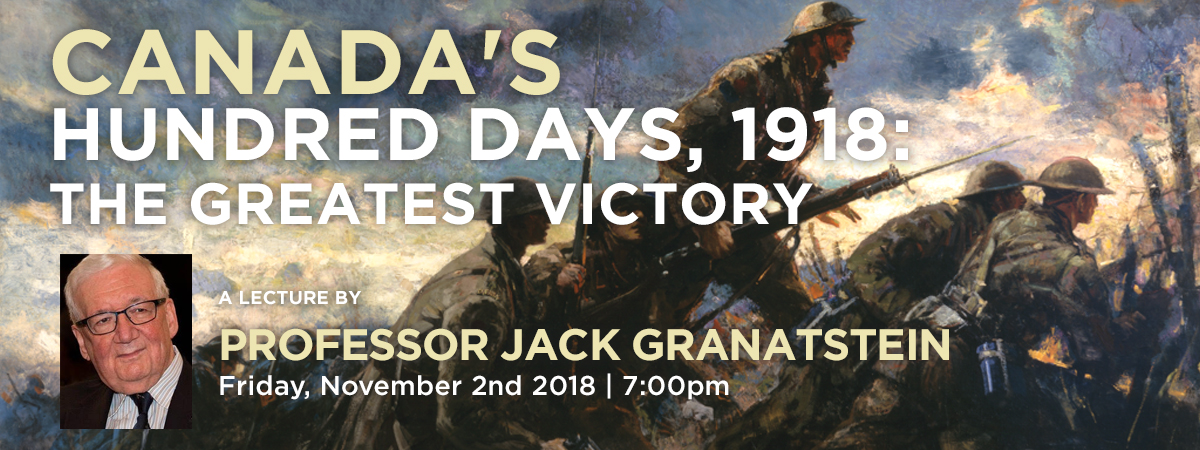
Friends of this blog in Toronto may want to know about the Yorkminster Park Speakers Series, which covers a wide range of topics, but includes a significant number of historians most seasons, including Jack Granatstein later this week, Randall Hansen in February, and Patrice Dutil in March.

Update, same day:  Speaking of historians speaking in Toronto: the Beth Tzedec Synagogue presents Allan Levine November 13. Allan will be launching Seeking the Fabled City: The Canadian Jewish Experience.  From the McClelland & Stewart website:
Seeking the Fabled City is a story that unfolds over 250 years--from the decade after the conquest of New France in 1759, when small numbers of Sephardic Jews of Spanish and Portuguese descent arrived in British North America, through the great wave of Russian and Eastern European Jewish immigration at the turn of the twentieth century, to the present....

Thursday, October 11, 2018

Maclean's on the First World War


I must say that when I saw Maclean's was going to publish a Remembrance Day issue with 66,349 different covers, each one with the name of an identified individual Canadian casualty of the First World War, my first reaction was surprise:  does Maclean's still sell 66,000 individual hard copies of any issue?  I can't remember the last time I have seen one.

But since it evidently does, I'd say its a commendable contribution to the closing of the First World War centenary.  And since I do see Maclean's online, let me also give a shout-out to Jack Granatstein, who has been contributing since the late summer a relentless series of articles detailing the grim and bloody battles that constituted the Hundred Days campaign culminating in the Armistice.  Canadian troops made their greatest advances of the war during the Hundred Days -- and suffered 25% of all their casualties suffered during nearly four years in action.  Say this for Jack G:  he delivers.

Tuesday, April 25, 2017

Book Notes: UTP's Canada 150 collection


University of Toronto Press notes the Canadian sesquicentennial with a Canada 150 list of books "that bear witness to the depth and breadth of the nation’s history and the diversity of its peoples." Quite a lot of history on the thirty-title list, and a lot of historians and historically minded scholars:

Irving Abella, Eric Arthur, Janet Ajzenstat, Jean Barman, Michael Bliss, John Borrows, Phillip Buckner, Sean Cadigan, Ramsay Cook, Donald Creighton, Paula Draper, Gerald Friesen, J.L. Granatstein, Allan Greer, Franca Iacovetta, Harold Innis, Bruce Kidd, Patricia McMahon, Kenneth McNaught, Marc Milner, J.R. Miller, Stephen Otto, Arthur Ray, John Reid, Paul Romney, Robert Sharpe, David E. Smith, Veronica Strong-Boag, Robert Ventresca, James St.G Walker.

Not having published many of my, ahem, major works with UTP, I thought I could examine this list quite dispassionately. Until I came to Donald Creighton, who makes the list on the strength of The Empire of the St Lawrence -- "foreword by Christopher Moore."  Blush/gloat: how about them coattails!
.

Tuesday, April 11, 2017

Vimy@100 +2 days


Sunday's much televised Vimy commemorations were impressive, though Jamie Swift observed on As it Happens that they seemed much more about patriotism and service than about peace and mourning.
During those [1938] ceremonies, Winnipeg settler Charlotte Susan Wood, who lost all five of her sons to war, and her youngest to Vimy, laid a wreath at London's Westminster Abbey. In that moment, she reportedly asked King Edward VIII: "Why did so many have to die?"
"Please God, Mrs. Wood, it shall never happen again," he responded.

Those kinds of stories have been "noticeably absent in the past few days around the Vimy centenary," Swift said.

"That questioning, that why, that I think Walter Allward shared and so many others shared, seems to have been airbrushed from the commemoration," Swift said.
Still I was struck that Jack Granatstein and Tim Cook and, as far as I saw, every historian involved with the centenary specifically rejected the claim that "Canada was born at Vimy."  That is a consequence of a couple of decades of historical discussion, now decisively closed, I think, at least among historians. (Anniversaries can be teaching moments.)


Tuesday, October 11, 2016

Capturing Hill 70 and the state of Canadian military history


UBC Press has just released Capturing Hill 70: Canada's Forgotten Battle of the First World War, edited by Douglas Delaney and Serge Durflinger, and with contributions by seven other Canadian military historians.

I know because I just received a copy, and I received a copy because I read it in page proof and supplied a backcover comment. I called it "a meticulous work of battle history" and said it "showcases all the strengths of Canadian military history today."

Still sounds about right to me.  By August 1917, a competently led battle on the Western Front was a weird mix of complicated, mathematical engineering and insensate horror.  Capturing Hill 70 does not neglect the latter, but the 'meticulous' part is how its authors analyse the former: how staffs organized "battle procedure," the slide-rule calculation of artillery fire plans, the logistics of ammunition supply, even the application of railroad and tramway technology to casualty evacuation.  It ain't trumpets-and-drum history, but it casts a powerful spotlight on modern warfare a century ago, and it is well done.

The only part of Capturing Hill 70 I didn't much admire was the "Forgotten" in the subtitle, and the undertone grumbling here and there that suggests that military history in Canada 1) is neglected, 2) has not had enough written about it, 3) is insufficiently memorialized, and generally 4) doesn't get the respect it deserves.

This has been a theme of military historians at least since Jack Granatstein wrote Who Killed Canadian History? And maybe they need to get over themselves.  (By the way, Granatstein contributes a superb article here on manpower issues and the conscription crisis behind Hill 70, with the vital data powerfully deployed in a short space.).

Let's be clear.  There is a substantial corps of good, well-trained, well-organized and productive military historians in Canada. They have lots of access to publication, and they are prolific. They have access to notable centres of military history, not only in universities but at the War Museum, the forces' Directorate of History, the military colleges, and various private foundations. The bookshelves are full of military history, and the documentary films pour forth unceasingly.  These complaints of neglected and forgotten military history have a poor little rich kid sound.

I'm talking here about military history, but the same applies to a lot of Canadian history fields and subfields.  Any historian can make a case that his or her particular specialty deserves more respect and attention and should have had more published about it.  Frankly, it's pretty much always a waste of time. If you think your subject is understudied, then do your work. And stop bitching.  You probably have it pretty good.      

Thursday, August 25, 2016

Granatstein: Books and honours


Is it news if Jack Granatstein has a new book out?

The Weight of Command, just out from UBC Press, is a collection of interviews Granatstein conducted over many years with senior Canadian military commanders of the Second World War and/or those who knew them and served with them.

Meanwhile friends of Jack and of the Canadian War Museum will gather there on September 13, when the Museum inaugurates the J.L. Granatstein Reading Room of its library/archives.

Update, September 6:  we hear this event has been postponed.

Monday, May 16, 2016

Is your work just grist for fictioneering?


The terrific Toronto cultural journalist Kate Taylor last weekend covered the troubling court case involving the documentarian Judy Maltz. Maltz had researched and produced a film, No.4 Street of Our Lady, about the experience of her Jewish family and how it was protected and ultimately saved, by a Ukrainian Catholic woman, Franciszca Halamajowa, during the Holocaust

A would be novelist in Toronto saw the film and wrote a children's novel, using Maltz's research and information and giving the characters their original names, but changing and re-inventing their stories at will. She then published the book without any credit or notice to her source.

Recently the Federal Court of Canada ruled that Maltz had no right of action here, and that not even her moral rights, let along her copyright, had been violated.

I suspect this decision is debatable in law. I'm even more inclined to think it violates the ethical standards of writing and publishing. I was pleased to read historian Jack Granatstein testifying on behalf of the dignity of authorship:
In court, historian Jack Granatstein had argued for Maltz’s side that it was inappropriate for the book not to credit the documentary for detailed pieces of original research, such as information drawn from a soldier’s diary entry, but it wasn’t an argument that carried the day.
In academia, it is considered crucial to acknowledge the source of any ideas or original facts, but copyright is a much narrower beast.
I suspect, however, that many academically-based historians would not be inclined to defend their work in this way. Academic publishing and academic culture strongly encourage authors to surrender their rights and interests and accept anything that is said to disseminate historical work. Too many academics are far too deferential with regard to their rights of authorship, even when they are able to forgo their financial interests in their work.

CAUT, the professors' union, is so deeply invested in the right of universities and education ministers to pirate even copyrighted work in order to ease institutional budgeting, that is hard to imagine it supporting the lonely stand that Jack Granatstein took.

Tuesday, January 05, 2016

History Books of 2015


Not such a banner year for Canadian history or historians, I would say, after looking over some lists of notable books of 2015. No real buzz-making title (say, Gwyn on Macdonald, a few years ago) or stirrer of controversy (Dashuk's Clearing the Plains) or obviously authoritative work of scholarship.  The important book surely ought to be the Report of the Truth and Reconciliation Commission. I fear it will not be widely read or in the end even followed very much in the long run, but maybe we should not judge history books that way.

The most noticed titles seem to have been Rosemary Sullivan's biography Stalin's Daughter and Dean Jobb's Empire of Deception about the early 20th century swindler Leo Koretz.

Stalin's Daughter got a ton of critical praise and won the Hilary Weston prize, among other nominations. Empire of Deception made several notables books of 2015 lists, including the Globe's, CBC Books' and the National Post's, and was shortlisted for the Hilary Weston Nonfiction Prize.

Stretching "history" a bit, we also might note from the Globe's Top 100 list Jacquie McNish and Sean Silcoff's study of the collapse of BlackBerry, Losing the Signal, and John Ibbitson's Stephen Harper. Critical reaction seemed divided among those who liked Ibbitson's rather sympathetic study of Harper and those who preferred Michael Harris's very unsympathetic Party of One.

It was a pretty good year in Canadian military history. Tim Cook completed his two-volume study of Canadians Fighting the Second World War with Fight to the Finish.  Doing the First and Second Wars in two big volumes each since 2007 is a remarkable achievement of research and writing that has been pretty widely recognized, but maybe with this last one book journalists were beginning to say, oh, another Tim Cook book. It seemed a little less widely noted, though it was much present in pre-Christmas bookstores. Jack Granatstein, equally prolific (and for decades!), also had a new military history about Canadians in the Second World War, Best Little Army in the World.  And Granatstein's sometime co-author David Bercuson provided a one-volume Second World War history, Our Finest Hour. David O'Keefe's One Day in August, about Dieppe, was nominated for the Charles Taylor Prize.

Prize winners and nominees -- note the presence of women:
  • Rosemary Sullivan's Weston for Stalin's Daughter, as mentioned above
  • Jean Barman won the CHA's John A. Macdonald Prize for French Canadians, Furs, and Indigenous Women in the Making of the Pacific Northwest and its original interpretation of early west-coast history.
  • Daniel Macfarlane won the Ontario History Chalmers Award for Negotiating a River, his study of the St Lawrence Seaway.
  • Susan Pederson won the Cundill Prize for The Guardians, on the League of Nations.
  • Elizabeth Fenn won a Pulitzer in History for Encounters at the Heart of the World, a history of the Mandan nation of central North America.
  • Legal historian Constance Backhouse won the Molson Prize for her body of work.
  • Edward Metatawabin was nominated for a G-G for Up Ghost River, to my mind the best and most substantial of the residential schools memoirs that are beginning to appear.
  • Lawrence Hill received the Pierre Berton Award for popular Canadian history for his novel of slavery and loyalism, The Book of Negroes.
I'm thinking the late-breaking international history book that we ought to be reading is Mary Beard's big new history of Rome, SPQR.  Unfortunately it was sold out in Toronto and wider ("even online!" reported my outraged daughter) in December, so I have not yet received my Christmas gift copy.

I should acknowledge my own book this year, Three Weeks in Quebec City, made no award lists, no notable book lists, and no bestseller lists, and was pretty much buzz-free, apart from here.  But it got excellent reviews in venues as various as the Globe, the Literary Review, and Geist.  I tell myself it is quietly making its way by word-of-mouth among those who need to read it. (Actually some evidence of that! 1867, my previous book on confederation, couldn't even get a review in the CHR, but has gradually become pretty much the standard work on the subject)

Feel free to think the same about your own works, neglected here or elsewhere!  Corrections and additions and suggestions from your own reading gratefully received.

Update, January 6, 2016:  A lot of history on the recently released Hill Times 100 Top Political Books of 2015 -- including even Three Weeks in Quebec City.


Tuesday, December 15, 2015

Benedict Anderson (1936-2015 RIP) and the Imagined Nation


Triumph of imagination?

I came late to the work and ideas of Benedict Anderson, who died recently. I became aware of him about the same time as I noticed the vanishing Canadianist.  It seemed that a lot of history professors in Canadian universities who once would have been labelled as Canadianists had become political historians or labour historians or historians of women or whatever. Someone explained to me that after Anderson published Imagined Communities in 1983, scholars and their departments went looking for other labels. They had became less keen on linking their professional identities to something imaginary.

But it seemed to me plausible enough to accept Canada as an imagined community, "a political nation, politically created," as I recall Jack Granatstein saying somewhere. The fact that its coming into existence with its present boundaries and structures was not inevitable or entirely "organic" did not need to mean it was less a nation. Indeed, the question of how it was imagined into being and into continuing existence suddenly seemed more, not less, worthy of study.

So I was happy to see, in this obituary appreciation of Benedict Anderson in the American New Republic, the argument that Anderson admired nationalism's potential to be "an integrative imaginative process that allows us to feel solidarity for strangers."
In an age when it is so common for progressive, cosmopolitan intellectuals (particularly in Europe?) to insist on the near-pathological character of nationalism, its roots in fear and hatred of the Other, and its affinities with racism, it is useful to remind ourselves that nations inspire love, and often profoundly self-sacrificing love,” Anderson wrote in Imagined Communities. “The cultural products of nationalism—poetry, prose fiction, music, plastic arts—show this love very clearly in thousands of different forms and styles.”
Exactly.
 
Follow @CmedMoore