Showing posts with label genealogy. Show all posts

Wednesday, September 23, 2026

Back to Blogging: museums, books, elections, universities

Back home and with thoughts.

The Maritimes -- never had a bad holiday there. One of our projects this time was chasing sites where my wife's Acadian ancestors had lived and died in various obscure corners of New Brunswick and Quebec. Surprising, the fun to be had in arriving in a small town and chasing down its original cemetery, its "old" cemetery, its current cemetery, and its various memorials, and actually finding headstones of great-grandparents, buildings they went to school in, and so on. Much aided digitally, of course, but in the end being there matters, too.  And great seafood everywhere.

Also, I could not help reflecting pretty much everywhere on the qualitative improvement in small and local museums. Fifty years ago a lot of these, even the charming ones, were basically lineage shrines, haphazardly filled with stuff out of people's basements explained on cheaply printed labels reflecting, shall we say, an unsophisticated historical consciousness. (Come to think of it, the seafood restaurants were often not so great then either.)

No more. I was impressed in several places: the Institute Lefebvre in Memramcook, the Village Historique Acadien near Caraquet, Parks Canada's Restigouche historic site, and particularly the Museum of Quebec Acadians in Bonaventure, Qc. A lot of people have gone through museology courses and programs in the last fifty years, and it shows. Museum funding may have become more sophisticated too. I was educated and entertained and impressed by the professionalism of each of these in their own way. 

The fall book season is upon us.  Two books whose imminent arrival caught my eye are Matthew Hayday's biography Joe Clark, Progressive, Conservative, Canadian (McGill-Queens UP), and Truth before Reconciliation: Confronting Residential School Denialism (Manitoba UP) edited by Sean Carleton and Niigaanwewidam James Sinclair.  More about them and other books, I hope, before long.

David Eby's election call in British Columbia, two years early and prompted by a crisis in the opposition that is already over, reminds me how badly governed almost all our provinces are at present.  It's the kind of decision that is driven by the triumph of the pollster-strategist-political gamester mentality that is so powerful in Canadian politics.  

Not that I want Eby's government defeated, given the alternative, but if it is, it will be richly deserved. 

Higher education strategy is not one of my preoccupations, but I seem to come back to Alex Usher's Higher Education Strategy blog surprisingly often.  Currently he has a lively conversation posted with the historian behind what sounds like a lively book on the history of the university, William Whyte's The University: A History in Stone, Silk, and Blood.

Okay, itch to blog scratched for the moment.


Thursday, July 23, 2026

Acadian genealogists and citizenship by Ancestry.com WITH AN UPDATE


I believe I have some sort of entitlement-by-ancestry to Irish citizenship (and the European Union rights that would come with it).And Britain is so eager to claim me as British that I'm not even allowed to visit that country unless I make myself a British subject first.  But I have not sought either of those statuses, believing my Canadian passport should suffice.  

I'm not a fan of the trend to encourage people to collect multiple passports and citizenships -- including Canada's new openness to granting citizenship to foreigners with some distant Canadian ancestor adorning their family tree. If they will give you a second or third passport, eventually they will get in line to tax you, or conscript you, or something.

But Acadian genealogists and historians are claiming that if Canada is prepared to give citizenship to people with distant Canadian roots, they should apply their rules evenly -- and not throw out the Canadian documentation that foreign citizens with Acadian roots have been using to support their claim to Canadian citizenship.

Canada declares it will only accept Canadian documentation to prove Canadian ancestry.  Which seems fair.  But according to historian Maurice Basque and other Acadian historians and genealogists, Canada must accept Acadian parish registers that went south with Acadian deportees in 1755 as legitimate Canadian evidence, even if they have been held in Louisiana or French archives ever since.  

One of those whose citizenship certificate was suspended in June is an Acadian whose family settled in Louisiana, and has lived there since.

She received citizenship this year after the passing of the new federal law. 
But IRCC determined she may not be entitled to Canadian citizenship after all because she included in her application family records held in France and the U.S.

She had traced an ancestor born in 1730 in Acadia, sending IRCC their baptism certificate from Baton Rouge’s Archives and Records Center in Louisiana, which was an extract from the record of St. Charles Aux Mines Catholic Church in Acadia.

Surely it would make sense for Canada to say that a Canadian connection that was interrupted almost 300 years ago should not entitle someone with no other connection to Canada to acquire Canadian citizenship. But if the country has already made the commitment to unlimited ancestry, surely it has to be consistent about it.

Meanwhile, business for genealogical consultants (and document forgers, maybe) must be booming.  

UPDATE, 25 July 2026:  Toni Walker comments from Iowa: 

More to the point you could have just said "I don't want foreigners immigrating to MY country". Instead you wrote a blog post using many more words to say the same thing. Nothing else to write about that day?

Toni,  thank you for getting in touch. But either I have been spectacularly unclear or you have misunderstood the topic here. Actually I am vigorously in favour of 'foreigners immigrating to my country.'

There is barely an immigration issue here at all. Let me take another shot at this, and I hope you will bear with me.

Canada recently revised its citizenship rules (not its immigration rules) to make it easier for people who live in and hold citizenship in other countries -- but who have a Canadian grandparent or other family relation who once lived in Canada -- to apply for and receive Canadian citizenship in addition to whatever other citizenship they already hold.

I think it is fair to assume, and generally expected by those who amended the law, that most of those who pursue this path and acquire Canadian citizenship will remain living where they are and simply remain living where they are. For most it will be a second citizenship, perhaps a second passport, and a sentimental link to that remembered ancestor. 

No matter how many non-Canadians living in the USA or France or Poland or Australia or wherever acquire Canadian citizenship on the basis of their relationship to an ancestor who lived in Canada centuries ago, I doubt that more than a handful will want to move to Canada -- any more than the many proud Canadians who hold British or European or American or Israeli citizenships are about to move to those countries.

My post above was that having a three-hundred year old Canadian ancestor seems to me dubious grounds for citizenship, quite apart from the difficulties in assembling the evidence that would be needed to prove the relationship.   

As to immigration, I'd be delighted if people who do use the new ancestral grounds to gain Canadian citizenship also seek to immigrate here. Immigration is great for this country and always has been. Canada has been immeasurably enriched by immigration. I believe we should continue welcoming immigrants in large numbers -- and welcome those who have no ancestral connection to Canada as well as those who do.  


Wednesday, July 02, 2025

Honours Watch: Historians at the Order of Canada

A few historically relevant careers honoured in the Canada Day appointments to the Order of Canada yesterday:  

Robert Janes, eminent museologist active in return of Indigenous heritage materials,

David Pelly, Arctic ethnologist and writer, 

and (my personal favourite) Stephen White, the great Acadian genealogist. White was a New England Acadian (no doubt with some Leblancs in his own family tree) and was practising law when the Centre d'Etudes Acadiennes in Moncton recruited him to run its Acadian genealogy project in the 1970s, leading to the publication in 1999 of the essential reference on the subject, the Dictionnaire généalogique des familles acadiennes.  (How many genealogists have received an Order of Canada?  Probably some.)

Among writers and litterateurs generally, not a long list this time: novelist Miriam Toews, poet Sky Dancer Louise Halfe, and francophone children's writer Marianne Dubuc.

Wednesday, March 26, 2025

History of spitting in an envelope

What's your DNA worth?

Is a commercial DNA-genealogical site part of history-news coverage?  Sure.  I've been working on a DCB biography recently and while the subject I'm writing about has nothing to do with my own family tree, I have found Ancestry very useful not only for confirming basic birth-death-parentage data but for tossing out all kinds of other details: foreign travel, voters lists, leads on newspaper references....

But the news of 23andMe's impending bankruptcy, and the potential sale of all its confidential DNA from millions of customers, not only makes me glad I have always preferred text-record genealogy over the spit-into-our-envelope kind.

23andMe has always been more interested in the medical aspects of DNA testing than the who's your granny part -- and got into trouble with regulators over some of its medical claims.  But it has always been kinda dedicated to the enriching-the-founder part as well. Anne Wojcicki is the ex-wife of Google founder Sergei Brin, and apparently very much part of the Silicon Valley billionaire set and mindset.

In 2021 she took 23andMe, which she founded in the early 2000s, public. It raised $6 billion and instantly made her fabulously wealthy in her own right. But barely three years later its value had fallen to 2% of what it was at the launch. Wojcicki now offers to take it private and "buy it back" -- at pennies on the dollar, one assumes. One point the business pages are not raising much: is this much different that the crypto pump and dump scams that any conscious person should already know to avoid? They do, however, urge 23andMe customers to rush to delete all their data there before it is sold to the highest bidder. 

Maybe don't willingly entrust your DNA to Silicon Valley. The Mormons have some odd ideas about using genealogy to baptise their dead ancestors and such, but so far Ancestry seems to have been pretty straight about its genealogy services, at least by comparison.

Thursday, August 31, 2023

1931 Census of Canada ... coming, coming


The complete 1931 census of Canada, with copious details of interest to historical researchers, genealogists, and many others, was released to Library and Archives Canada June 1, 2023.  It's available.  

But it's not yet available available.  

You cannot yet put in a name and have the data pop up, either on Library and Archives Canada web presence or at online commercial services such as Ancestry.ca.  That will first require completion of a lot of digitizing and organizing. Involvement of the commercial services in this process will speed the process beyond what the LAC budget would permit.

LAC has posted and is updating a pretty good state-of-progress page on the making-available of the 1931 data.  Pending the digitizing process, you cannot yet search Grannie's census data just by typing her name in a search box. Did she own a radio? That was a new question on the 1931 census.  

You can now look at any particular page of the census as filled in by the census-taker.  But, for the time being, you need to know the province, district, sub-district and so on in which a persons in whom you are interested lived in 1931.

LAC hopes that as early as this fall users will be able to run digital searches by name using the LAC Census Search. And presumably in the participating commercial genealogy sites too.

The Discover Blog -- official blog of the LAC -- has been posting useful information about how to use the 1931 census data as available now and as will be eventually.  Odd detail:  people on reserves were not enumerated with other Canadian residents.  A separate Reserve census was taken alongside the other one.  The data are available -- just not on the same pages as their non-reserve neighbours.

My family was not in Canada in 1931 (or 1941 or 1951, for that matter). But there are a bunch of 1931 people I'm looking forward to running through an Ancestry search ASAP. 

Update, September 1:  Helen Webberley comments from Melbourne, Australia:

My mother’s first cousins left Russia for Winnipeg in 1925 and the same time as the rest of the family came to Melbourne. Even though I am sure Winnipeg was not a major city at the time, I will look forward to learning more about  their lives in 1931.

Winnipeg not a major city then?  It had a population of c130,000 and growing rapidly, large industrial base, key service depot of the CPR, centre of the grain trade, gateway to the golden west....

On the other hand I see Melbourne had already exceeded a million in population by then.


Friday, November 05, 2021

Wartime films and records for November 11

 
Ancestry.ca announces that until Remembrance Day it is making available free substantial collections of Canadian Second World War records, images, and newsreels.

Leading up to Remembrance Day, Ancestry Canada is providing free access to new and existing Canadian World War II record collections. These new collections include 2,500 images and more than 100 newsreels depicting scenes from combat and routine life during WWII.

For the first time, the collections are indexed, making it easier for Canadians to directly search visual war footage by name and connect these visual records to family trees on Ancestry. The footage in the collections provides a unique perspective into how our ancestors lived and experienced the war.

They will doubtless want some kind of trial membership in exchange for the access, and then they will market subscriptions to you mercilessly. I admit I have become hooked on the ease of researching the basic life details of just about anybody through Ancestry, but it can be accessed via public or academic libraries for occasional use.   

Update, same day: Also, the Canadian War Museum has a lot of online and onsite Remembrance Day programming to offer.  No subscription there.

Wednesday, February 03, 2021

History of Indigenous genealogy

This Globe story about Indigenous people researching their family trees, makes one think that the abominable levels of surveillance and control that our government has mantained for 150 years over the lives of Indigenous peoples has one curious upside -- in the archives.Indigenous people and librarians have been working together to mine the highly detailed (not to say invasive) Indigenous personal records Indian Affairs collected and filed at LAC  -- in order to provide ancestry and family tree information to people long separated from their families and roots.

The Connections to Kith and Kin program [at Vancouver Public Library -- not a national program!] pairs skilled archivists with community members to help comb the often-overlooked mountain of Indigenous records maintained by Library and Archives Canada. These records are often more extensive and invasive than those kept on non-Indigenous Canadians, but the documents offer Mr. Delorme and others an opportunity to collect the broken links of their lineage and piece them back together.

Bureaucrats diligently documented births, deaths, baptisms, trap-line permits and even grocery bills of Indigenous people around the country. The LAC collection is vast, comprising, according to brochures, “250 linear kilometres of government and private textual records,” along with thousands of hours of audio recordings, millions of books and five billion megabytes of digital files.

I've dabbled enough in genealogical records, of my own family and others, to know something of the power of recovering this kind of intensely personal information from cold official files -- and I come from people fairly well informed about their family trees to begin with.   


Friday, May 08, 2020

Genealogy in isolation


The publicists for Ancestry.ca have been reminding me of the seminars and workshops Ancestry Canada is running during our shut-in time, covering subjects of specifically Canadian genealogical interest.  Here's deets on a couple that are upcoming. It doesn't say any Ancestry membership is required.  I kinda like the title "We Must Have Swum Over."

Date: Tuesday, May 12

Time: 10:00 a.m. EDT
Where: Ancestry Canada Facebook Page (https://www.facebook.com/AncestryCA/)
Session Name: Researching British Home Children
Description: From the late 1860s right up to 1948, over 100,000 children of all ages were sent to Canada from the United Kingdom. Known as the British Home Children, they are the ancestors of an estimated 10% of Canada’s current population. Join us as genealogist Gloria Tubman shares her advice and guidance on identifying the British Home Children in your family tree, and walks us through the resources available for uncovering their stories.
Speaker Biography: Gloria Tubman, herself a granddaughter of a home child, has been researching British Home Children for over 28 years and authored A Genealogists’ Guide to Researching BRITISH HOME CHILDREN.  Her areas of genealogical and historical research include British Home Children, Quebec, Ottawa Valley, and has led to research for “Who Do You Think You Are?”  She is a co-instructor of a genealogy course at the Ottawa Stake Family History Centre and a volunteer at  Genealogy Drop-In co-hosted by the Ottawa Branch Ontario Ancestors and the Ottawa Public Library.  She is a member of Ottawa Branch Council, Ontario Ancestors, and BIFHSGO. 


Date: Thursday, May 14
Time: 12:00 p.m. EDT
Where: Ancestry Canada Facebook Page (https://www.facebook.com/AncestryCA/)
Session Name: We Must Have Swam Over - Research Strategies, Tips and Tricks for Finding Your Immigrant Ancestors
Description: Finding your immigrant ancestors can be tricky. Join us as Cara MacDonald, Manager of Reference Services at the Canadian Museum of Immigration at Pier 21, shares her research process and tips for locating those hard to find immigration records. From the "why" behind being unable to locate difficult records to effective wildcard searching and gathering information from non-immigration sources, this workshop will help take your genealogy skills to the next level.
Speaker Bio: Cara MacDonald is the head genealogist and Manager of Reference Services at the Scotiabank Family History Centre at the Canadian Museum of Immigration at Pier 21. She has been employed at the museum for 12 years, providing a variety of genealogical research services with expertise in immigration records.  Cara holds a diploma in Library and Information Technology and a PLCGS in Canadian Records and Librarianship from the National Institute of Genealogical Studies. She is currently working towards her certificate in Eastern European Records.

Thursday, April 30, 2020

The genealogy of Covid-19?


Ancestry

Here is an odd one. Ancestry, the online genealogy giant, announces it is participating in the campaign to fight the Covid-19 virus.

By searching to see if your ancestors had it? No. It seems to be a plan to engage those who have taken the Ancestry DNA testing, so that data from the vast DNA databases can be made available to medical researchers who are using DNA to study the new virus.

All a bit above my pay grade, but you can see the announcement here.


Monday, November 25, 2019

Is DNA travel a thing?


Royal Mile, Edinburgh:  ancestors hereabouts too.
I was intrigued by a recent email from a travel company promoting 'DNA travel'.  "Insight Guides declares DNA travel to be the next big thing." Got to exotic places, meet interesting people, and .. collect their spit for DNA testing?

Not exactly.  The link I was sent to was pretty standard explore-your-roots travel promotion, actually, particularly intended for North Americans of European ancestry. Having not long ago been photographed standing by my great-grandfather's County Galway gravestone, I can't say I'm immune to the appeal.  The "DNA" labelling must be  a sign of how digital genealogy and family DNA testing have become a large part of the 21st century's sense of the past.

Wednesday, December 05, 2018

Cool history watch: digitizing New France


I've done a little work on New France. I've mostly assumed that while there were some Protestants in New France, they were mostly merchants from the port cities of western France and pretty transient between the colony and the metropole. Maybe not entirely, it seems.

At Borelia, by way of Unwritten Histories, Stephanie Pettigrew goes deep into digital databases of individuals who married in New France but were baptised in old France and starts finding out a truly unwritten history: colonists of New France who may have made a Catholic marriage but had been baptised Protestant back home. This post may be a teaser -- no numbers yet, no lists of names, but at least one vivid example. Some Quebeckers may be about to start exclaiming: 'Stie, calisse, on etait protestant!

Image result for gifts
Update:  Speaking of Unwritten Histories, their annual guide to holiday gifts for historians is out -- and terrific.  (Might quibble a bit on the rule only allowing books from university presses by Ph.Ds  -- to my eye that eliminates most of the good ones!)

Tuesday, February 14, 2017

History of Deep Roots


When I saw an image of Tyrone Tootoosis, the Cree cultural leader who died recently, I thought, "Gee, that guy looks like Poundmaker."


Then they put up this photo of Poundmaker, and explained that Tootoosis actually is of his family.  It actually is not that long ago.

Star-Phoenix has a story about Tyrone Tootoosis's life and work.  Cree Literacy Network has more.

Saturday, February 06, 2016

Guess I'll go out to Alberta online


Some years ago, I did a little piece of work for Ancestry, the online genealogy company, and got a year's membership comped. Which I used, quite happily, to do various odds and ends of looking up people and censuses and such, and also constructing a family tree starting with our children and going well back on both sides.

That experience may have skewed my views, but I kinda like online genealogy services.  Sure the public records ought to be free, and not sold by private subscription,  But basically the public records remain free.  What you get for your private-subscription money is a lot of digitizing and indexing and don't-leave-your-desk instant access, most of which the public repositories that hold the records are unlikely to provide very soon.

Case in point:  I got an email from Ancestry the other day, reporting that they have just made accessible Dominion Lands Act homesteading records of Alberta 1870-1930  -- records available elsewhere for sure, but not something I've ever pursued, and now suddenly a few clicks away inside Ancestry.  As it happens, my late father-in-law was born on an Alberta homestead. I did the few clicks, and there's an image of the document where his father, George Joseph Brophy, Ontario-born, resident in Calgary, farmer, put his signature on his claim to 160 acres in 1909:  Blackie, Alberta, "right out on the bald-headed prairie," as someone from High River told us when we once went there.

No Brophys have lived anywhere near that homestead for about 85 years, and it isn't anything previously unknown to the family, but maybe I will get props from my in-laws: 'Hey, look at this document I found."

There's a lot out there. I can see why it's popular.


Tuesday, November 10, 2015

Free Access to Ancestry's miltary records collection until November11


Ancestry.ca has been digitizing, indexing, and making available vast quantities of Canadian military records through its (controversial) deal with Library and Archives Canada.  You can still access the material via LAC, if you have the time and patience and archival smarts, but for members Ancestry makes the same material accessible pretty quickly and easily.

Until November 12 you can look into what they have as much as you like, including service files of 29,000 Canadians killed in service during World War II.

More info and access from Ancestry here.

Wednesday, October 21, 2015

Who is spying on your ancestry?


Still thinking about scraping a few cells from the inside of your mouth and getting an mtDNA check on where your family was hanging out in the last ten thousand years or so.  (Well, yes, kinda.)

But you may be sharing the results with CSIS or the RCMP, according to this scary, all too predictable story about American police forces' interest in Ancestry and 23andMe's genetic databases.

H/t: HNN

Friday, September 04, 2015

Free access to Ancestry records on Labour Day Weekend

Ancestry.ca announces that its 21 million strong collection of Canadian immigration records, usually by subscription only, will be generally available over the Labour Day weekend.

Monday, November 10, 2014

Gone for soldiers? Dunno

Ancestry.ca, the commercial genealogical website, has been offering free access to a big collection of military/genealogical records -- but just to the end of tomorrow, Remembrance Day.

Ancestry promotes its Remembrance Day promotion by news of a survey that, it says, reveals "more than a third of Canadians unaware if they had ancestors who participated in either of the World Wars." Ancestry does not provide the survey itself, or data on its methodology and accuracy, so it is hard to know just what kind of question produced this "don't know" response.  

But it suggests a fresh twist on the old question "(What) did you do in the war, daddy?"

Thursday, March 13, 2014

Online Irish genealogy


Instead of getting plastered on green beer this St Patrick's day, you could spending your time hunched over a screen doing genealogy.  Ancestry.ca announces free access to a slew of Irish-related family records between now and March 21 at this link here.

Also Irish-y is Thomas Keaneally's new play about Irish convicts on their way to Australia, which Bruce Chatwick of History News Network (right here) (  seems to be down at this moment -- google it) thinks is pretty terrific historical drama.

Image source (via Google images)

Wednesday, November 27, 2013

Challenge to home DNA ancestry testing?


Don't try this at home?
If you have not yet had your mtDNA sequenced in order to trace your family lineage all the way back to the Rift Valley of Africa 75,000 years ago (neither have I), you could face complications.

The American Food and Drug Administration has ordered 23andme, one of the leading providers of home DNA test kit services, to stop selling and marketing its services.

The problem is not that 23andme might tell you your ancestors are not who you thought they were. The problem is that the same analysis that attempts to track your ancestry can also attempt to identify genetic predispositions you may have -- to cancer, diabetes, heart disease, or Huntington's. The FDA sees that as being roughly akin to practising medicine without a licence.

If 23andme tells you you have a 50% probability of having West African ancestors in the last 300 years when mom always told you the family is 100% western European, that's genealogy.  But if the same report convinces you that any children you bear have a good chance of inheriting a fatal disease, that's medical advice. When errors are surprisingly frequent and statistical probabilities can be misinterpreted, the selling of medical advice to anyone who sends in some saliva causes regulatory alarms to ring.

The FDA sees the DNA test not as an ancestry testing device but as a medical device. In a classic old-rules meets new economy smackdown, it doesn't want anyone practising medicine over the internet.

What is this gonna do to the ancestry tracing trend?  Hmmmm.

(Image from Guardian Online story here.)

Wednesday, November 13, 2013

Prize watch: nonfiction GG to Sandra Djwa


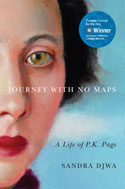
The winner
West Coast English prof Sandra Djwa won the Governor General's literary award in nonfiction today for Journey With No Maps, a biography of poet and painter P. K.Page. Full list of GG winners here. I haven't read the book, but Djwa's earlier biography of another poet, F.R. Scott, was also admired. Sign of the times: Djwa's book was published by a university press, after the big foreign-owned Canadian trade book publishers all passed on it.

I was rather hoping for the only book on the nonfiction list I have actually read, and also the most "historical"  title on the shortlist.That's Carolyn Abraham's memoir The Juggler's Children: A Journey into Family, Legend, and the Genes that Bind Us. Abraham, a journalist, grew up in southern Ontario in a family where a look in the mirror told them they were mixed-"race" of some kind but where the official line was that they were "English."

First quizzing her relatives and then plunging pretty deeply into commercial DNA-tracing services, Abraham begins to sort out where she comes from. It becomes a research-quest story, with her parents, husband, siblings, and sources becoming engaging characters in the story. And it turns out to be one hell of an ancestry: Anglo-Indian with some Chinese (he was the juggler) along one line, and Jamaican on the other.

It's a well told story, with jaunts to south India and the Jamaican north shore, but particularly as the family gradually faces up to what seems pretty likely to the rest of us from the start:  if they are mixed-race and Jamaican, there is going to be a slave-owning father and an enslaved and probably unwilling mother in the line somewhere.
Not the winner,

A science writer, Abraham is good on the technical and practical complications of the DNA testing industry. But she is even more engaged with the ethical complications of DNA testing. The tests don't always confirm the family legends, let us say, and once known they cannot become unknown. This becomes particularly salient when Abraham begins participating in the social media services the DNA testing companies provide. She gets to email other clients from all over the world with a matching DNA profile, most of whom are saying "How the hell am I related to you?"

It sounds like fun, scraping the inside of your cheek and getting back your ancestry. Just as DNA testing looks likely to take over the world,.Abraham sets out both the attractions and the complications. Abraham's website for the book is here.
 
Follow @CmedMoore