Showing posts with label History blogs. Show all posts

Tuesday, July 07, 2026

A political scientist and a historian step up

I have mixed feelings about Substack and how it commodified and monetized the old blogosphere.  But my inbox today had three Canadian Substacks I was glad to see.

The historian turned security analyst Wesley Wark has a powerful piece on something Mark Carney might achieve, or at least try to achieve, at the NATO conference in Ankara: pull Orange Hitler back toward the side of Ukraine. ("Ballistic Terror wesleywark@substack.com)  

Wark had another powerful post yesterday, about the barbaric Russian destruction of the Mariupol Theatre and all the unhoused people sheltering in it

And a little closer to home, Emmett Macfarlane fulminates against the stupid and self-defeating decision of the prime minister to make the Canadian Senate once more a patronage house.  

Carney’s record so far is revealing. He has abandoned climate policy, he is cutting important institutions and programs, from mental health and disease prevention to international aid to Library and Archives Canada, and he plays partisan institutional games with the best of them. The 2025 election was framed around Justin Trudeau’s unpopularity. Once Trudeau resigned, voters surged to Carney, not only because of the Trump threat but because they didn’t want Pierre Poilievre. It’s becoming increasingly clear, that in avoiding Poilievre, Canadian voters did not get a Economist Party PM. What they got was basically Oxford-educated Stephen Harper.

Our CEO prime minister, a millionaire who has spent his career among billionaires, thinks anything he does not know already is not worth knowing, and in the process demonstrates his blinkered ignorance of the needs and requirements of parliamentary government.  Take a stick to him, Macfarlane. 

Macfarlane notes he has some insider status here -- he advised the Trudeau government on the non-partisan Senate ideas. For the details see his book on the Senate, Constitutional Pariah Probably the only good book ever written about the Senate.

I have some, well, adjacent if not inside claims here.  It has been suggested that my 1867 and Three Weeks in Quebec City established the idea (later taken up by the Supreme Court of Canada, that the only thing the confederation makers required of the senate was that it be weak.  See this article for a summary.

Tuesday, April 14, 2026

History of Unwritten Histories at Active History

Active History is taking note of the tenth anniversary (and also the end of) the blog called Unwritten Histories. UH's authors have been reposting some of their fave posts at Active History as a farewell from their site.

Unwritten Histories may have been on my History Blogs of Note for a while; certainly I remember reading it. I admired its "Guide to Resources"  and "Canadian History Roundup" posts. It was also a support blog for emerging historians, particularly women, struggling with graduate school and the search for employment (not my own situation at all, but an admirable service):

When I started Unwritten Histories, it was due to frustration and anger after having worked at a history department for three years, only to not even get an interview when the first permanent Canadian History job came up. At that point, I had been working as a sessional instructor for over 5 years, and I was exhausted. In one memorable semester, I had to get up at 5:30 am to take a coach bus and then a shuttle bus to teach an 8 am class two cities over from where I lived. The trip took two hours.  After that class was over at 11, I had to wait 3 hours (because of conflicting bus schedules) before taking the same trip in reverse, to teach another 3 hours class from 6 to 9. I still don’t know how I did it. All I knew was that, after finding out I didn’t get the interview, it felt like my entire career had been a waste of time and I needed a new plan. 

I'm side-eyeing that tenth anniversary announcement a little bit. UH launched in 2016, went silent in 2020, and now returns to claim ten years -- as it closes down. I'm entitled to quibble, I think; this blog has been running since (checks notes) 2004 and has barely missed a week. But history blogs, particularly Canadian ones, are always scarce, and Andrea Eidinger and Stephanie Pettigrew gave a lot to this one.  

And good to note Active History remains very active and worth looking at. Here, for instance, is a note about its year-long Indian Act 150 series -- the Indian Act having been given royal assent on April 12, 1876. 

Tuesday, October 28, 2025

A moment in the history of blogging


Here's a little moment in blogging history. At the 
American politics/history blog  blog Lawyers, Guns, and Money, historian Erik Loomis has been posting entries in a series called "Erik Visits An American Grave" since August 2013, when he had a few hours to spare in Pittsburgh and went to visit the grave of industrialist Henry Frick, "arguably the most cartoonishly super-evil villain in American history."

He has kept at it, let us say. Today he posted the 2000th in his graveside biography series. Two thousand posts in little more than a decade, in his spare time.  

You can find the list of 2000 American (and some other) biographies here (the first 1200 or so) and here.  He says about it today:

I generally hate navel gazing, but the grave series hitting 2,000 posts is kind of a moment to think about this project. ... I started this as what I considered the dumbest idea I ever had. And then it became a massive part of my career. A few things about it. First, there is nothing like this in the history of the internet.  

Loomis welcomes financial support for his project.  See practically any of his posts at LGM for details.  Congratulations, Erik Loomis.  (Maybe all blogs start with a dumb idea.)  

Wednesday, May 28, 2025

We are the Derek Gee of Canadian History Blogs


Christopher Moore's History News --
 the site you are reading right now -- has been ranked #3 in a new listing of 25 Best Canadian History Blogs compiled by the web-analysis site FeedSpot.

 3. Christopher Moore's History News

Christopher Moore's History NewsBlog https://christophermoorehistory.blogspot.com/ + Follow Blog
A shelf of historical essays and articles. I am Christopher Moore. I'm a writer. I'm a historian. Some days I'm a public speaker. Sometimes I'm drawn into cultural politics. 
Email ****@bell.net
Location Toronto, Ontario, Canada

Derek Gee, meanwhile, has moved up to fourth overall in the Giro. 


Wednesday, October 02, 2024

History Sites Come and Go

Borealia's canoe: out of the water for a while

Borealia, the Early Canadian History blog from (but not exclusively about) Atlantic Canada, has announced a sabbatical. For the time being, I've deleted it from the list of History Blogs at right. The editors say:

It has now been almost a decade since Borealia was launched with the intention of amplifying scholarship on northern North America before the twentieth century. We hoped it would be a forum where historians of different sub-fields could make connections, and to bring this great work to educators, non-specialists, and an interested general readership. We are grateful for the community of contributors and readers who have encouraged us and made this a worthwhile venture.

Much has changed in the landscape of digital scholarship and social media since 2015, yet we remain convinced of the ongoing value of an online forum of the sort Borealia aspires to be.

But ten years is a long time, and for a variety of entirely normal professional and personal reasons, we need a break. We have decided to take a year-long sabbatical, until summer 2025.

 Well, I can understand all that.  Best wishes to all who have served -- and may again!

Most of the sites listed at the left have been been going quite a while, but all still seem to be active -- and I do use my own links to look around from time to time.

Podcasts have been the new blogs for quite some time now. So my list is now titled "History Sites of Note", not History Blogs, and I'm about to add to the list a few history-centered podcasting sites. (Update, October 4:  Additions now started.)

Tuesday, April 02, 2024

Scandal of the Archives at Active History


Story of the week, for serious archives rats, at least, has to be Allan Greer's essay for Active History.

Recently I had occasion to visit Library and Archives Canada. Marching up Wellington Street, I noticed my heart beating a little faster as the historical juices began flowing through my researcher’s veins. Even at the time, I recognized this pulse of excitement as a throw-back, a residual thrill from a time long ago when I was an eager graduate student discovering the wonders of dusty manuscripts; more recent visits to the federal archives had been anything but thrilling.

Okay, you know that feeling or you don't, but I guess a fair few of the readers here know exactly what Allan Greer is talking about: "Thrilling" and archival research together in a paragraph, know what I mean? Yes.

But...  As Greer's last sentence signals, it's not a story about the warm fuzzy side of historical research. The story is called "The Scandal of the Archives." 

Archives don’t simply store and conserve documents, they structure and organize them, carefully recording the provenance of government records, collections of private papers, films, recordings, images, etc. LAC has always been very good at this and generations of archivists built up an infrastructure of guides and finding aids, but instead of using these resources to curate their online collections, the archives seem determined to hide the results of their past efforts from the eyes of researchers.

The last time or two I was at Library and Archives Canada, I thought it must be my fault. I just didn't seem to know how the system worked anymore. But Allan's account is authoritative and persuasive: it's not you. It's not even digitization. It's that the whole archiving system there doesn't work well any more. Read it and weep. 

Thanks, Active History. I hope LAC will respond and that this investigation will continue.  

Update, April 3 I must follow "historians' Twitter" because I saw quite a bit of commentary about this essay: Thomas Peace, Shirley Tillotson, JDM Stewart Stephanie Pettigrew....

Shirley Tillotson thought it was about failed digitizing, and Pettigrew argues it's just underfunding. But I thought Greer's point was larger than either of those. Big problems with digitization, yes, and money, too, no doubt. But I thought he was telling us those are mostly symptoms of an archives increasingly run by managers driven by the pursuit of popular attention and numbers counts and ever-rising statistics to report. 

An archives is about storing documents and making them available (sure, to genealogists and journalists and civil servants and lots of others besides historians).  But still making sure the documents are preserved and made available. If an archives cannot provide the record of, say, microfilm numbers that makes the document findable, that's not making available -- whether the searcher is in the building or in British Columbia, whether they are a tenured prof or someone searching their grandmother.

Monday, December 16, 2019

Blogs and podcasts suggested by readers of this blog


"I would follow more history blogs if I knew about them," said one reader. 

On the recent survey, I invited readers of this blog to mention related websites, blogs, and podcasts they follow. There are quite a few. Some are on my bloglist at right, many are not. Mention here doesn't mean I know or can recommend them myself.  But you could spend the holidays pursuing these if you need some diversion. 

 Blogs already listed on my bloglist that readers recommended are Active History, Acadiensis blog, Borealia, the Osgoode Society legal history blog, Unwritten Histories, Dusty Bookcase, the Ormsby Review, Otter, the Champlain Society (blogs and podcast), Andrew Smith's The Past Speaks, and Daniel Francis's blog. (Links at right)

In the Canadian studies area, readers mentioned "Canadian Studies" (which I was unable to identify), SamaraBlog from the Samara Centre for Democracy, Dooney's Cafe ("for the Stan Persky posts"), and Toronto Then and Now.

Several genealogy/family history sites were recommended, notably Gail Dever's Canadian genealogy blog Genealogy a la Carte.  On a quick look, I can see why: it's frequent and lively. The rest look like a pretty good survey on where to start with online genealogy discussions: Ontario Ancestors Blog Loyalist TrailsEastman's Online Genealogy, JD Reid's Anglo-Celtic Connections, the Genealogy Guys, Finding Your Canadian Story, DNA Explained - Genetic Genealogy.

From the Canadian Broadcasting Centre empire, readers mentioned Eleanor Wachtel's podcast, Ideas, Tapestry, The Current, The Secret Life of Canada, and "various CBC sites."  Seek 'em out by name or from the CBC website.

I also heard about international blogs and sites, not all strictly "historical": Wait But Why (which does look like fun), the New Yorker Today, the Bella dePaulo blog (mostly personal psychology, it seems), @twitterstorians on Twitter, Reviews in History, Nursing Clio (blog and podcast, I think), The BS Historian  ("sceptical analysis of "pseudohistory"), the Backstory podcast, The History Blog, the Leakey Foundation Origin Stories, Mary Beard's A Don's Life ("until it was paywalled"), Vox, The Weeds (from Vox), BBC's History of the World in 100 Objects podcast, The Conversation, BBC Science in Action, Inside Science, BoingBoing, and Apollo "the international art magazine." 

Plus several literary history blogs: Laurentiana, Great War Fiction, Reading 1900-1950, Lesser-Known Writers, Word Wenches.   

Monday, May 14, 2018

History of wine and Samuel Pepys


Through the invisible bloggers' underground, I've been recommended a new blog on the history (and philosophy and science!) of wine.

A Most Particular Taste by Toronto wine writer Stéphane Beauroy takes its title from a 1663 comment by Samuel Pepys, blogger avant la lettre, about a bottle of Chateau Haut-Brion.

Which reminds me that Pepys's diary is itself a blog, where you can read the current day's entries, all exhaustively annotated and commented on by a loving crew of Pepysians. The online diary has not stopped, as I reported long ago, but appears to be permanently cycling back to the beginning when it reaches the end.

Friday, December 01, 2017

SSRN and the SCC: history in court


I'm genuinely curious here: does a Top Ten rating at SSRN mean something?  Or is it more like one of those "You have been selected for our Who's Who of Genuinely Fabulous People, and for just $500....?  A paper of mine is currently top ten over the last 60 days in SSRN's Trade Policy category, and I'm not sure how much to gloat.  (At least SSRN is not asking for money)

Probably not much. The popularity of the essay surely comes because the Comeau case has been pending at the Supreme Court of Canada, and pretty much every trade and constitutional lawyer in Canada is currently representing an intervening party. That must be driving some downloads! 

Fellow blogger Andrew Smith reviewed the Comeau issue here yesterday at his blog, and takes note of various contributions to the debate, including his own and mine.

Andrew, who was an expert witness in the Comeau case, has the difficult task of defending the proposition, more or less, that the confederation makers were genuine ideological free traders and did not believe in federalism. As a result, he says, "There are many statements with which I disagree that appear in Christopher Moore’s paper."  True dat!

Wednesday, September 30, 2015

History gets active in the United States


Democratic Party presidential aspirant Bernie Sanders, responding to the Black Lives Matter campaign against police killings of black Americans, recently declared that the United States was founded "on racist principles."

To which the rest of the world would probably have said, "Duh!"  But the Princeton University historian Sean Wilentz, a strong supporter of Democratic frontrunner Hillary Clinton, responded with a New York Times op-ed declaring that it was not so and proclaiming that the idea of the United States founded on racial slavery is "a myth."
Yes, slavery was a powerful institution in 1787. Yes, most white Americans presumed African inferiority. And in 1787, proslavery delegates to the Constitutional Convention in Philadelphia fought to inscribe the principle of property in humans in the Constitution. But on this matter the slaveholders were crushed.
Turns out that in the United States, the history blogosphere lives. There has been an outpouring of online responses from historians to Wilentz's argument.  The blog We're History, by a collective of Americanists, has been all over it, and at History News Network, Matthew Pinsker offers Wilentz's initial response to his critics and links to other Wilentz statements on slavery and the constitution -- as well as to Pinsker's own blog posts on how to teach the subject and the controversy.

Wilentz attributes opposition to his position mostly to
scholars and activists on the left who are rightly angry at America’s racist past.
and he may be right that the history bloggers who have seized on the issue are not a representative sample of the political affiliations of all American historians. And few of his critics have access to the op-ed pages of the New York Times, probably.  Still good to see the liveliness of the HistBlog down there and the engagement of historians in live issues.

Photo: from We're History

Tuesday, September 29, 2015

Pere Charlevoix returns


On est ravi de voir que Charlevoix, blogue (bilingue) de la Nouvelle-France, vit encore. Et avec de bonnes nouvelles:
As of early September, Archives Canada-France has risen from its ashes, with a new interface and under a new name: Archives de la Nouvelle-France.

Thursday, September 24, 2015

Borealia, blog on early Canada

The restaurant: they do a thing with mussels in a steamy globe that is historic

Daniel Francis draws my attention to Borealia, a new group blog dedicated to the proposition that Canadian history pre-confederation really is worthy of (more) attention.  Word!

Google Borealia, and despite the difference in spelling, so far the blog is getting killed in the rankings by Boralia, the very hip, very wonderful, and rather expensive small restaurant on Ossington Street in Toronto dedicated to eating Canada. They do a tasting menu that offers high-chef allusions to pemmican, maple syrup, Red Fife wheat, Winnipeg goldeye, Malpeque oysters, cedar-planked salmon, and generally whatever seems indigenous and terrific in Canadian diets of the past.  (I was going to factcheck some Louisbourg reference in the menu, but the staff was busy and now I've forgotten anyway.)  They ought to cater every CanHist event ever held.

Meanwhile, link and push Borealia the blog up the rankings a bit!

Monday, August 24, 2015

History of journalism: Historicist on Frederick Griffin's Soviet Union tour


Many of the historically-inclined blogs I look through are more or less on hiatus. It's August. Who can blame them?

But the blog of Toronto history, Historicist (at the news site Torontoist) keeps up its unrelenting weekly schedule. Every Saturday Historicist presents a new piece of Toronto-related history, always lengthy and original, copiously researched, well-annotated, skillfully illustrated, usually by Kevin Plummer, Jamie Bradburn or David Wencer.

This week's was (as often) new to me: It's Plummer on a Toronto Star reporter, Frederick Griffin, and the stories Griffin delivered to the paper during a long tour of the Soviet Union in 1932. There have been a number of hostile exposes about western reporters who were duped or worse by Stalin's Russia.  Plummer keeps his balance, noting what Griffin criticized (or could not see) as well as what he admired. He quotes Griffin saying, “Weigh the terrors of the dictatorship of Stalin [...]against the terrors of czarism and they won’t even begin to tip the pressed down scales.” but he also has Griffin noting evidence of coercion and regimentation, and finally declaring:
My views don’t matter; your views don’t matter. Your views or my views will not change the facts of Soviet Russia one iota or alter the course of the Communists there by a hair’s breadth. Your fear or my fear, your hatred or my hatred, should not blind us to the facts. I have sought to speak not as a visionary or a theorist, but as a dealer in facts. What is happening over there in Russia is not fable, but history.
Nice work, Historicist.

Thursday, May 14, 2015

'Nother one bites the dust

Tenured Radical, one of my go-to histblogs, is packing it in
the success of the blog has taken me places, places that I need to go without this particular blog if I am to prosper: a terrific job, new publishing opportunities, and projects in the digital humanities, to name a few.
The success of this blog, I have to say, has taken me pretty much noplace. (Only in America, I guess). But since I never expect it would, I suppose I can carry on.

Meanwhile see some new links on the blog list at right.  

Friday, December 12, 2014

History blog reaches mainstream media


No, not mine.  HNN, the US-based history blog that delivers a daily feed of historical and political commentary by historians, is now picked up and distributed online by the Time magazine.
This post is in partnership with the History News Network, the website that puts the news into historical perspective. The article below was originally published at HNN.
Time, of course, is much reduced from its glory days.  Still and all...

Friday, August 22, 2014

That other referendum


Maybe it's the (English) Canadian in me, or the fact that many of my lowland Scots ancestors thrived on building the British empire in places like Shanghai and Hong Kong and New Zealand and Rhodesia. But I have zero sympathy for the ScotNat independence movement  -- or maybe "independence" movement, for they say they want to keep the Queen and the pound and, you know, all the useful things about being Brits.

Now, federalism, that's another matter. We should start taking the structure of the United Kingdom seriously when England has a local legislature to match the ones in Scotland, Wales, and Northern Ireland.

But for a moment this piece on the History News Network brought out the rebellious Scot in me. James Winn, an American biographer of Queen Anne, uses the tercentenary of her death in 1714 to argue that since Anne was a true Scot and uniting Scotland and England "was her most significant political achievement," the Scots ought to stay with Britain in deference to her.

Anne was about as Scottish as the Simpsons' school janitor. And by 1707 parliamentarians ruled in both England and Scotland (that's why her Stuart forbears were tossed out!). Queen Anne had not much more to do with the union of 1707 than Queen Elizabeth has to do with the independence referendum of 2014.

HNN, noting that it has been going since 2001, offers links to its ten most popular articles ever. "Most looked at" does not correlate with best, I'd say, but in fact HNN does have an impressively diverse range of contributions if you go looking a bit, and even their top ten hits are not all about US presidents.  

Tuesday, August 12, 2014

Notches: History of Sexuality blog


Notches, new to my bloglist (at right), is a recently launched international collaborative blog on the history of sexuality, with some significant Canadian participation.
Notches was established in order to get people inside and outside the academy thinking about sex and sexualities in the past and in the present. It has a number of regular contributors, who consider the history of sexuality in its broadest sense: the way it is connected to the history of gender, society, politics, economies, and cultures, and the way it informs current issues.

Monday, June 09, 2014

Prize watch: Historicist at the Magazine Awards

Who knew a history blog could get... noticed?

Historicist, the weekly blog of Toronto history at the website Torontoist, won Best Blog at the Canadian Magazine Awards last Friday.  Props to Jamie Blackburn, Kevin Plummer, and David Wencer for all the love and attention they lavish on it.

Last week the magazine editors association awarded Canada's History the runner-up in the Best Magazine of its size.

Wednesday, November 06, 2013

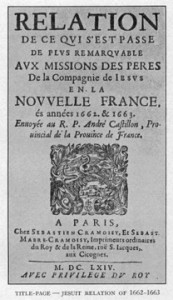
Labelle on Thwaites's Jesuit Relations Centenary


Active History has a nice piece up from Kathryn Magee Labelle, making the hundredth anniversary of the death of Reuben Gold Thwaites an opportunity to riff on the charms of his translation and publication of The Jesuit Relations, still a prime gateway-drug drawing people into New France and aboriginal history studies.

Wednesday, January 02, 2013

Not really a year end review

In some of Charles Ritchie's published diaries, particularly the later ones when he holds ambassadorships in Europe and New York, there are stretches of days where the only entry is "Work."

That would make for pretty dull posts here (as would "not working," my situation since December 21), but I know what he means. It's why there is no review of the year in Canadian history or of the best books, or anything in that vein.

But I do want to note, at a time when several of the leading American history blogs have either folded or are looking a little tired, that it has been a good year for Canadian history blogs. Which is to say, there actually are some. It is particularly encouraging that a handful of academic Canadian historians have begun to blog.  Active History has gradually developed a crew of contributors who are often surprising and original. Active History is definitely the best group blog in Canadian history at the moment (and only partly for lack of competition).  Happily some of its contributors are launching their own blogs, some of which may yet flourish.

The Canadian Legal History blog should be invaluable to anyone working in that field -- good work, Mary Stokes.  Surely there ought to be a lot more of that kind of specialist blog -- don't you people ever talk to each other.

Andrew Smith's The Past Speaks has gone a bit Brit and business-history in the past year, but he's still worth watching.  And we've seen two giant steps in history blogging in 2012.

I suspect that Charlevoix, the recently-begun pseudonymous blog about the history of New France, may also be a group production, and it is kinda fun to speculate about just who they might all be. But so far Charlevoix is frequent, original, wide-ranging, and willing to take its subject both seriously and not seriously -- bravo.

A couple of times this year Everyday History and this blog have ended up "covering" more-or-less the same story or event -- which I think is a wonderful development, as it means this one is no longer the ONLY blog covering Canadian history in general. It used to be pretty safe to assume that if this blog was interested in something, no other blog in the world was.

Everyday History spawned in me the odd thought that I could now give up blogging without the whole field of Canhist blogging abruptly going dark. I hadn't even realized I was carrying that weight until I felt it lifting from me.

Not that I'm promising to retire this blog this year, but I do note that even the strongest blogs seem to have limited lives. Most of the blogs I was most interested in when I started this one have either ceased or have morphed beyond recognition. The ten-year blog seems to be an aberration, and this one is approaching that age. Happily the field seems to be starting to bloom.  But Christopher Dummitt, you are this blog's nominee for Canhist blogging's rookie of the year -- and a most-valuable player nominee at the same time.

(Mention of other Canhist blogs welcome.)

Update:  Despite what I said above about American histblogs, Tenured Radical has an interesting review of her "new media discoveries" for 2012.

 
Follow @CmedMoore