Wednesday, February 27, 2013

Book notes: Taylor's Civil War of 1812


I know it was published in 2010 (handsome paperback edition 2011), and it had the buzz back last spring when War of 1812 commemoration was news. But I just got around to reading Alan Taylor's The Civil War of 1812, and my admiration has been growing steadily.

Much has been made of Taylor's argument that the War of 1812 is best understood as a continuation of the pro-British/anti-British civil war aspects of the American Revolution, but with many more divided constituencies drawn in: American for the war and against the War; Upper Canadians for the Brits and against the Brits; Irish filling the ranks of the British regiments but also providing a powerful anti-British constituency in the United States; Brits who want to desert to the Americans and Americans willing to deal with the British; and First Nations, African-Americans and other minorities endlessly divided in their reactions.

Taylor makes that case -- about the civil-war nature of the war -- effectively.  But this is a hell of a history book even if you don't take much interest in that thesis.  Taylor, rather unusually, I think, has taught himself a lot about both sides in the conflict and as a result his account of the origins of the war is one of the best and clearest I have ever seen. Indeed, once he gets to the actual war, my interest flagged a bit, as he is compelled to march us through one squalid skirmish after another. (All by the way, on the Upper Canadian side of the war; he isn't interested at all in the naval contest on the Atlantic Coast, except as a cause of the war.)  Even on a smallish detail, he's much more coherent on why Joseph Willcocks went from the Upper Canadian legislature to leading an American partisan regiment than is, say, the usually indispensable DCB.

I am ceaselessly impressed by his wealth of quotation and the range of his sources. Sometimes you can just read a history book without much concern for what the subject is, in simple admiration at the technical historical virtuosity that is on display. This is one. Taylor's Civil War is a pretty serious read, though indeed his method is almost entirely based on traditional diplomatic and military history narrative -- not a statistical table in the book, but his footnotes are awesomely comprehensive. I'm becoming a fan.

I see Everyday History has its own fave-rave posted today, on a very different book on another subject entirely.

Update, March 6.  Chris Raible, who knows Upper Canadian history, writes:
I've been praising Alan Taylor for years - from his Cooper's Town, his Penguin American Colonies, his Divided Ground books and his many articles including one on Late Loyalists. Welcome aboard. 

Monday, February 25, 2013

Historians: don't get between filmmakers and their principles


In the movie Lincoln, when the crucial vote is going down, two congressmen from Connecticut vote against the anti-slavery amendment. In a column about history and the movies, Maureen Dowd reports that a Connecticut politician has pointed out that the congressmen in question were fierce abolitionists. The northern votes against abolition in fact came from representatives of Lincoln's own state of Illinois. A historical advisor to the film also pointed out the error during the filming; it was just a misunderstanding by the scriptwriter. Since Steven Spielberg has offered to give copies of Lincoln to every high school in the US to help them teach history, the modern congressman suggests maybe they should correct this little error first.

Scriptwriter Tony Kushner is offended by this attack on his integrity:
in historical movies, as opposed to history books where you go for “a blow-by-blow account,” it is completely acceptable to “manipulate a small detail in the service of a greater historical truth." 
So no change.  Kushner says that won’t happen, because this is a “made-up issue” and a matter of “principle.” 

Best Oscar line last night? In the Memoriam section, when Nora Ephron said, "The hardest part about writing ... is the writing." I laughed, anyway.

(Image: en.paperblog.com)

Friday, February 22, 2013

The history job market: Like being dragged away to Canada?

The academic job market is an exercise in captivity, and I am still its prisoner.
An American grad student in history blogs about her experiences trying to move from student academic to employed academic, and takes as her pseudonym "Eunice Williams,"  the Puritan child dragged away from Deerfield, Massachusetts, in 1704 to a life among the Mohawk. (h/t History News Network)

Thursday, February 21, 2013

Today's pensee

If you asked my colleagues:  what is the purpose of history, or what is the nature of history, or what is history about, you would get a pretty blank stare.  The difference between good historians and bad historians is that the good ones can manage without an answer to such questions, and the bad ones cannot.
-- Tony Judt, Talking the Twentieth Century

Wednesday, February 20, 2013

Blogserious -- conviction and $200,000 fine for blog posts


A cautionary note for bloggers: your blog ain't always the playpen it probably feels like most of the time. An Ontario court recently awarded a lawyer for Sun Media a $200,000 judgment for comments made about him on an anonymous blog.  Actually, the convicted blogger has maintained his anonymity, stood by his statements, and (so far) avoided the sanctions.

Good luck with that.  And while we need some reform to libel law, it's important for bloggers to understand that they are responsible for what they say in public, and that the sanctions for irresponsible blogging can be serious.

Deep down in the weeds of the story, there are some hints this all flows from disputes between litigious and techsavvy lawyers.  Still: don't try this at home, history bloggers.

Tuesday, February 19, 2013

Fifty years of the English Working Class


H-Canada takes note of a forthcoming symposium Harvard University is hosting on the fiftieth anniversary of E.P. Thompson's The Making of the English Working Class, first published in 1963.

I didn't read it when it was new.  But it still seemed pretty new when I read it, so I had one of those, "Aaagh, fifty years!" reactions. The book deserves to live, I would say, for that sentence about the "enormous condescension of posterity" (google it) alone.

I recall a symposium a few years ago in Montreal, "Twenty Years after Habitants et Marchands de Montreal by Louise Dechene."  I wonder what other Canadian histories have, or deserve to have, retrospectives twenty or fifty years on.

Still in print from Random House, evidentlly, though I'm not crazy about that cover on a book about the early nineteenth century.

Friday, February 15, 2013

Hilary Mantel on the royals

Friday funnies:  Hilary Mantel applies her quirky intelligence and lively prose to the monarchy:
I used to think that the interesting issue was whether we should have a monarchy or not. But now I think that question is rather like, should we have pandas or not? Our current royal family doesn’t have the difficulties in breeding that pandas do, but pandas and royal persons alike are expensive to conserve and ill-adapted to any modern environment. But aren’t they interesting? Aren’t they nice to look at? Some people find them endearing; some pity them for their precarious situation; everybody stares at them, and however airy the enclosure they inhabit, it’s still a cage.
Update, February 20:  Who knew?  From the reptile press to the prime ministers, Britain has gone all crazy over this article.

Monday, February 11, 2013

New telly dons

On History Television tonight, archaeologist Ron Williamson, growing into his role negotiating the lurid and the serious in Canadian history and archaeology, presents a lively version of his excavation of  hanged men buried in the backyard of Toronto's old Don Jail -- including George Bennett, killer of confederation maker George Brown:  The Hangman's Graveyard.  A rebroadcast actually, but I missed it first time, so it's news to me.

And on TVO tonight, historian Helen Castor takes her shot at TV celebrity with She-Wolves, a series of docs on the early queens of England.  This one's news to me because demon publicist Alyssa Schimmel of acornmedia made it her business to bring it to my attention.

Public History in Ottawa

The (American) National Council for Public History brings its AGM to Ottawa April 17-20, with a program heavily influenced by the Canadians on the program committee, and welcoming participants.  Info, program and registration details here.

History Today on Richard III


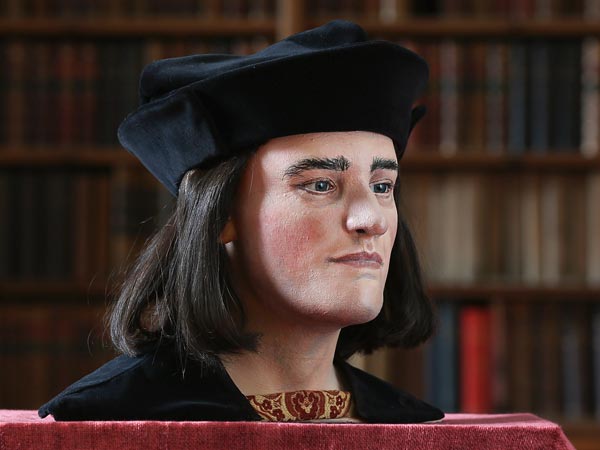
Amid a lot of "ain't it cool?" commentary on the Richard III excavation and identification (it is cool!), Sean Lang of History Today gets tough minded about what it says about Richard III.  Hint: Tudors will like it more than Ricardians.

History stories that make you go Hmmmmmm

Mike Dash runs a terrific history blog at the Smithsonian website, always presenting odd histories with very solid documentation.  So if anyone deserves to be believed on this story of a Siberian family that lived in complete isolation for forty years until contacted by geological explorers, it's him.

But it still has a bit of that feel of the Japanese soldier who missed the end of the war by decades, or the absolutely uncontacted tribe in the Amazon.   Hmmmmm.

Gotta say something the same about the plans of the British government to recreate, for the hundredth anniversary, the brief truce said to have been established by British and German soldiers in the trenches at Christmas 1914.  The story grows more and more poignant with every retelling, and no doubt next year's $100 million recreation will be right over the top -- if we can use that phrase in this context.

Now there do seem to be some accounts by eyewitnesses of a cease fire and some fraternization across the trench lines, any record in the British or German military sources...?  But is there any solid historical evidence for the spontaneous outbreak of peace we are about to see celebrated.  I'd be glad to know..  Hmmmmmm

Friday, February 08, 2013

Not too sweet history


Some how this sounds more appealing than another session on reconceptualizing historians' discourse of otherness in the 20th Century:

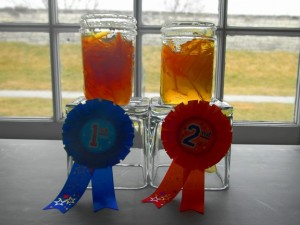
The Culinary Historians of Canada, with Fort York in Toronto, present the sixth annual Mad for Marmalade conference on Saturday, February 23, all day at Fort York:  refreshments, workshops, citrus lunch, speakers, marketplace and marmalade competition.  Details and registration here.

Samara on parliament, continued

I'm very grateful to Alison Loat of Samara for a long and thoughtful comment my post of yesterday about their latest report.  Her entire response follows.

Thank you for reading and writing on Samara’s last report.  I’m always glad when people read and talk about our work, even if they don’t like it! 
I’m writing in hopes you can both acknowledge and correct errors in the post.  In particular: Samara is not a foundation.  We are a charitable organization.  These are two different legal structures with different purposes. 
 Samara’s annual spend is about $700,000 and we have a national mandate.  While this is still real money, it’s notable that we are one of the smaller organizations doing the sort of work we do (e.g. we’re significantly smaller than nearly every nationally-known think tank and other civically-minded organizations such as the Historica-Dominion Institute or Maytree).   So to characterize us as having “tons of money” requires clarification and context.
 “Funding half the political scientists in the country.”  We do share our work and data with political scientists, graduate and undergraduate students at about 15 universities (there are about 25-30 academics involved; far from half of the country’s stock – although we welcome hearing from any others who are interested).  We do this because our goal is to advance greater understanding of and participation in our democratic system, and universities are one place where this can happen.  Our reports are on syllabuses, our data have been used by academics to advance their own research and teaching, and a few graduate students are building on our findings in their own dissertations.  We are also working on a book with UBC Press and many of our academic collaborators are involved. Most would say these are good things!

[CM: Indeed they are!]
We do provide small stipends from time-to-time to professors or research assistants to help us with our work (e.g., coding of data).  This helps ensure we are methodologically sound. Most think tanks work closely with the academy in different ways (e.g., IRPP, CD Howe); this is not unusual. It is, however, very different from “funding” them.
We also hire an outside public opinion research firm as we do not have this expertise in house.  Again, this is normal practice for many firms and organizations.
 The absence of discussion on accountability: Accountability is a theme Samara has raised numerous times, including in our MP exit interview reports, in regular op-eds and blogs and in many media interviews.  Perhaps we should have placed greater emphasis on it in this report; however, as you likely read, we are hosting a month-long series called “Redesigning Parliament” where contributors, including MPs and others, are asked to suggest ways that Parliament could be made more relevant to the public.  You can follow that project here and you will see discussion of restoring greater accountability.  As well, we’re inviting additional submissions and there is open commenting available, so please feel free to add anything you’d like.
While accountability is certainly central, it’s not always easily understood, particularly for people who aren’t political scientist or experts on Parliament. As such, we do provide space for discussion on other ways that Parliament can be made more relevant, as, in our views, there are many other small, easily-implementable ideas that are also worthy of discussion and may ultimately help get more people interested in the very important topic of our Parliament and democratic life. 
Thank you again for taking the time to read and comment on Samara’s work.

War of 1812 commemoration: anyone listening?

Canadian Press recently ran a snarky story reporting that the most commonly visited page on the government's website on the War of 1812 bicentennial was the home page -- closely followed by the "exit" page.

Ha ha.

But deep in the story, it is noted that the "exit" page actually refers to users clinking on links to other War of 1812 sites, noted on but not run by the government site.  Many of the 'exits," indeed, were to eighteentwelve.ca, a bicentennial site run by the Historica-Dominion Institute.

The report also shows that marketing works. During an ad blitz run by the government of Canada during the London summer Olympics, visits to the government's site -- and exits to other War of 1812 sites -- increased by about seven times.

Thursday, February 07, 2013

Dubious history watch: Samara on Canadian democracy

Same as the old boss

The Samara Foundation, with a ton of money, some tony off-Yorkville premises in Toronto, and an admirable commitment to saving democracy in Canada, continues to deliver reports that combine masses of original data with ... well, with bland pap and determined avoidance of serious issues.

The latest, Lost in Translation (downloadable here) ingeniously measures the degree to which the concerns of the House of Commons match the concerns of Canadians, at least as expressed in polling data.  (Judging by the new quantitative data every Samara report has, the foundation must be funding half the political scientists in the country.) The work of the House fails Canadians, Samara declares, and it is
not because the House debate is often confrontational, but rather because it is without real weight. On this point, a former party leader observed in a public speech, “it’s a kind of empty, pointless debating chamber because it’s all stitched up in advance by party leaders.”
This provokes the serious question: 
How can the House of Commons be better designed such that individual MPs are free to
raise and debate issues?  ... How then can the voice of the MP be enhanced?
Abruptly, having identified the question, the report turns to mush. It raises three options for enhancing the role of MPs and caucus. But none of them concerns the accountability of leaders to caucus ... which is the only issue that matters. Samara seems, indeed, to have accepted in advance that leaders cannot be accountable to caucus; that it must always be the other way round.

Exactly the same will to turn away the moment the vital question is raised is evident in this recent Maclean's editorial.  Maclean's sees the problem more clearly than Samara: when caucus does not hire and fire party leaders, party leaders are unaccountable:
The fact is that democracy is not only a limited good, but adding more of it at one point in the political cycle can mean less of it somewhere else. This ought to be clear from Canadian history: when the authority of party leaders was given to conventions in the first place, it put the leader’s power on a footing independent of the consent of his elected caucus, and as a result our party leaders are much less accountable from week to week and month to month than their analogues in the U.K. This has led to the evolution, within our system, of presidential-style prime minister’s and premier’s offices full of very powerful unelected personnel. 
It's too bad that Maclean's thinks the comparison is with the UK, rather than with every other parliamentary democracy in the history of the world. But it does state what the issue is: the lack of accountability of Canadian leaders to elected representatives -- a situation inherent in the mass-party control over leadership selection -- is what prevents parliament from representing its constituents.

But somehow the rest of the editorial is a defence of delegated conventions (like the recent Ontario one that made Kathleen Wynne premier) over the now more common one-member-one-vote process -- even though the two are identical in the resulting independence of leaders from caucus control, and the resulting impotence of the elected members of our parliaments.

The more our politicians, intellectuals, and commentators know what the problem is, it seems, the more desperately we avoid considering the only possible solution.

Tuesday, February 05, 2013

Lunch with Stan Beardy

Talk about posts going viral. I had lunch with Stan Beardy today. Chief Beardy is the elected grand chief of 133 chiefs of the First Nations in Ontario. This post had come to his attention, and since he was in town (to meet Kathleen Wynne, actually), we got together on Queen Street.

One thing you don't hear much about treaties, he told me, is there are two sides.

We talked about the 250th anniversary, next October, of the Royal Proclamation of 1763, in which the Crown committed itself to treaty relations with the First Nations of British North America. The government of Canada does not seem to have commemoration of that in its schedule. But it needs to be observed.

Monday, February 04, 2013

Jack Layton Records at Ryerson University Archives

Hi everyone!

Long time no type. I've just recently the pleasure of being involved in archival work on the Jack Layton records at Ryerson University Archives and Special Collections. The opportunity comes to me through a course practicum out of the University of Toronto's Faculty of Information. I thought I'd share some of the great work that has been done with the collection so far. In addition to an online exhibit, Remembering Jack Layton, there is also a small but mighty onsite exhibit of the Layton collection at the Ryerson University Archives. Layton began his academic career at Ryerson University in 1974, teaching government and city politics courses. He would stay with the school until 1984.

With the donation Ryerson University has created lecture series and chair in memory of Layton and his time at the university.

Like all of us, I have numerous ideas for articles and books floating around in the jumbled net that is my academic mind. I would love someday to research and write on the history of public mourning in Canada, triggered by the spontaneous events following Layton's death.

Anyway, enjoy the online exhibits and do make it to the in-house exhibit if you've time and interest. The archives staff are knowledgeable and excited about the collection.

Layton while a professor at Ryerson.
Taken from: http://news.library.ryerson.ca/jacklayton/gallery.php
Myer Siemiatycki and Jack Layton at Ryerson, 1979. Taken from: http://news.library.ryerson.ca/jacklayton/gallery.php
Cheers!

Jordan

History of the penny coin


Can't go soon enough to suit me, but CBC.ca offers a little obit for the Canadian penny.  Born (at least for Central Canadians) in 1858, another production of the progressive and effective legislature of the United Canadas, which also gave you... confederation.

Photo: from cbc.ca

Prize watch: nominations in public history sought

The Canadian Historical Association's committee on public history invites nominations for its third annual prize in public history, to be announced at the CHA meetings in Victoria this spring.  More details here at the H-Canada website.  The criteria are flexible:

Works in public history completed in 2012 are eligible for consideration and may include: books (monographs, edited collections of essays, or published works of comparable scope); exhibitions and/or exhibition catalogues; documentary films; web sites; and other products representing scholarship in the field of public history. Works beyond the field of Canadian History are welcome. All residents of Canada, or Canadian citizens living outside Canada, are eligible. The prize may be awarded to individuals or to groups of researchers where the principal researcher is a Canadian resident or citizen.
Nominations requested by 1 March, to the address supplied on the H-Canada notice.

Sunday, February 03, 2013

Stephen Harper's role in abolishing the monarchy

The more Canadians talk about the monarchy, the more the consensus is strengthened that Canada needs its own head of state. I've always thought the monarchist effusions of the Harper government, for all that they may rally the base and dismay the rest of us, are generally contributing to that evolution of opinion in Canada.

But now the government seems really to be pushing Canadians toward abolition. as Philippe Lagassé  demonstrates at the Maclean's website.

Monarchist lore always insists that the Crown is truly Canadian, not some leftover British anachronism. But the latest Harperian legislation on the crown declares that no, the Crown truly is British, and we just have some leftover, warmed-over hand-me-down version of it. Of course that is true enough, but it is not what monarchical preservationists often admit so clearly.

Update, February 4:  via Aaron Wherry, this is Australian constitutional scholar Anne Twomey's devastating analysis of the Canadian parliament's response to what seems to be growing into a succession crisis for the Canadian head of state. She demonstrates, in fact, that the Canadian legislation only means that Canada is consenting to Britain changing its line of succession -- not that they need or want our assent.  The Canadian malie-priority line of succession apparently remains unchanged.
 
Follow @CmedMoore