Monday, December 24, 2012

Tis the season ... The Nutcracker Suite


from original production of the Nutcracker in 1892
Photo of Stanislava Belinskaya as Clara (left), an unknown performer (center), & Vassily Stulkolin as Fritz (right) in the Imperial Ballet's original production of the Petipa/Ivanov/Tchaikovsky ballet "The Nutcracker". circu Dec 1892
[public domain]

Tchaikovsky's The Nutcracker Suite's 120th birthday was this past week. It was first performed Dec 18, 1892 at the Imperial Marinsky Theatre in St. Petersberg. The story was adapted from E.T.A. Hoffmann and supposedly Tchaikovsky wasn't impressed with nor happy to work on the story. Critics weren't impressed by the ballet or the acting, but the music was lauded, (though Tchaikovsky is reported to not have been happy with it).
    Tchaikovsky died less than a year later from cholera of all things - which interests me as I've been doing lots of research on diphtheria because of Mercy Coles (more here). There is an impressinve site for all things Tchaikovsky here.

Thursday, December 20, 2012

Exploring early Toronto online


Take an interest in early Toronto or in interactive historical mapping?

Wendy Smith invites visitors to a work in progress, the Toronto Park Lot Project, "an online interactive mapping project exploring the history of the earliest days of the Town of York, founded 1793 by John Graves Simcoe, first Lieutenant-Governor of Upper Canada."

Park Lots were large chunks of real estate in what is now central Toronto, parcelled out to favoured individuals who it was hoped would become the landed gentry of the new community.  Now Smith's interactive map explores everything that happened thereafter.  


Wednesday, December 19, 2012

Do you think it is easy to write history books?

A political blog called Calgary Grit puts that provocative title on a posting about the latest (non) developments regarding Stephen Harper's long promised book on the history of hockey. Every year, it seems, his office says the book will be published in the coming year.

Know the feeling?

Update, December 20:  Shoulda remembered:  the blog of record on the history of Stephen Harper's ever-imminent hockey history is Brian Busby's Dusty Bookcase:  his year nine report is here.  Thanks Brian!

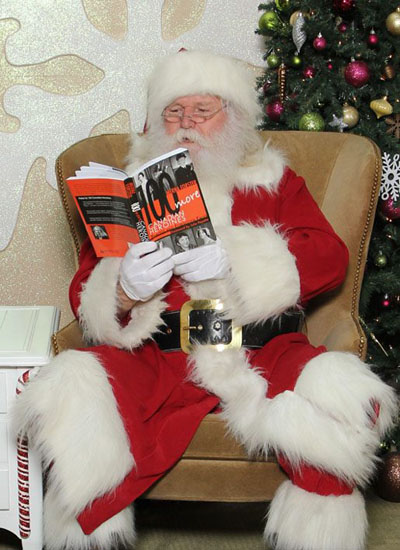
Heroines (with the e!) for Christmas


Merna Forster of heroines.ca sends news of :

1)  her new book 100 More Canadian Heroines

2)  the Christmas GiftGuide for Her, and

3)  her "free heroines.ca newsletter, which will be distributed occasionally throughout the year" starting in 2013. To subscribe.

Tuesday, December 18, 2012

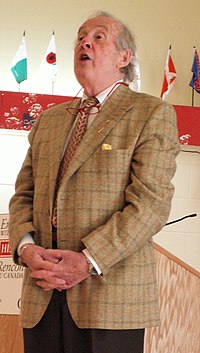
Laurier LaPierre 1929-2012 RIP


The obituaries, like this one, barely mention that he was a historian. Not unexpectedly, they put the emphasis on his roles as broadcaster and Senator, and as a gay activist, one who came out in the 1980s when it was even less easy to do so.  Even his Wikipedia entry lacks a listing of his publications.

But he began with a slew of closely researched historical publications on ... Joseph-Israel Tarte. (Who?)  He earned a Ph,D. in history, taught history at McGill before being launched into broadcasting and celebrity, and continued in recent years to publish history, including a book on the battles of 1759 and a biography of Wilfrid Laurier.

His parliamentary website biography does list his published works.

Monday, December 17, 2012

Pearson Papers Donated to Carleton University Archives

A little late but, here's an update on a project that I worked on at one point:

http://www.ottawacitizen.com/news/Diplomat+Geoffrey+Pearson+papers+donated+Carleton/7623957/story.html

Britain's best histories of 2012

History Today posts a very long shortlist for the best history books by (newish) British historians.  Impressive range of topics and time periods.  I've never heard of a single one of these books, and I wonder if any have had any promotion and distribution in North America.  There is a lot of history going on we never hear of!

Statute of Westminster anniversary


I see the date was December 11, not December 17, but The Canadian Encyclopedia Online marks the ratification of the Statute of Westminster in 1931 with an essay by Norman Hillmer, much of which focusses on the subject of his forthcoming biography, Canadian foreign policy architect Oscar Skelton.

Today's anniversary is the foundation of the Commonwealth Air Training Scheme just eight years later. Prime Minister King rather hoped it would be a substitute for Canadians actually having to fight in this new European war.  Fond hope!

Sunday, December 16, 2012

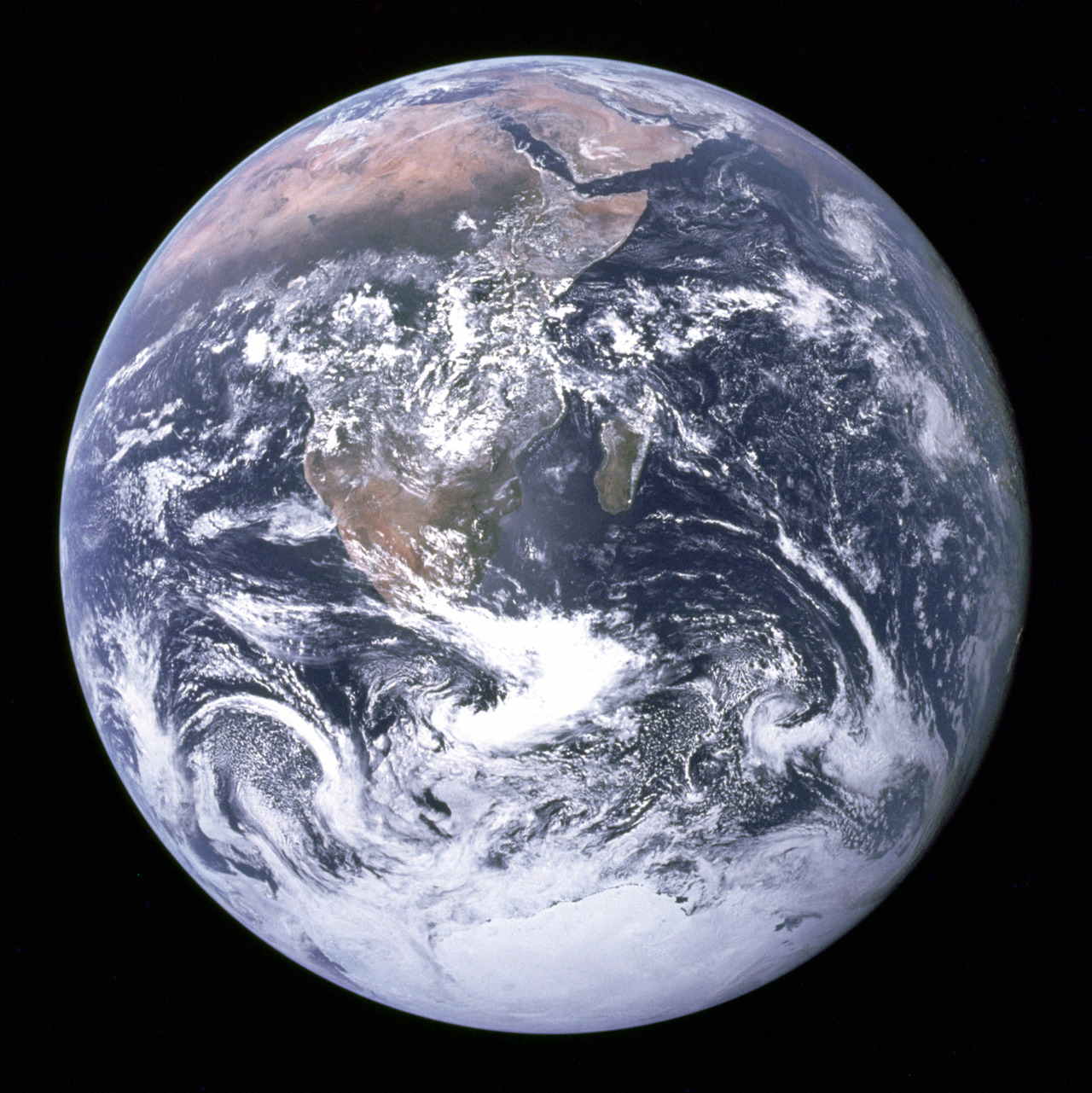
History of pale blue dot


This image is forty years old. Previously no one on Earth had ever see this place from this perspective

(Photo credit;  Apollo 17 crew.  Photo Source: Josh Hanson who also puts it in context.)

Friday, December 14, 2012

Best US History in 2012: Caro on Johnson


The History New Network poll of historians on the best history book of 2012 has come up with Robert Caro's The Passage of Power, the latest installment in his multi-volume biography of Lyndon Johnson.  If you only read one of Caro's volumes, I'd say read Master of the Senate, a quite astonishing analysis of how legislative power is amassed and used.  But this one, particularly the second half on the using of presidential power, is impressive itself.

Not such a great president, but a great subject for a biography

The New York Times covers the HNN results here.

Best Canadian history?  Time to come with a list, I guess.  Suggestions welcomed.

Wednesday, December 12, 2012

Kate Middleton's baby: federal or provincial responsibility?


My friend James Bowden loves parliamentary arcana and the monarchy almost equally. Right now, they seem to be pulling him in opposite directions. 

  At a recent commonwealth conference, the handful of countries (16) that still recognize the Queen as their head of state agreed that succession to her throne should not favour males (or Protestants), but should simply pass from eldest child to eldest child. Each of the nations concerned, however, needs to make that change itself, the queen being sixteen different monarchs in one.

James’s monarchist side approves of making the monarchy more palatable by removing some of its old tribal shibboleths.

But his parliamentary side observes: not so fast. It is not within Ottawa’s power, he and Philippe LagassĂ© argue, to abolish male privilege in the Canadian royal succession. That would be changing the nature of the crown – and that means a constitutional amendment requiring the consent of Parliament and all the provinces.  

I expect he is right about all that. So, given the difficulty of amending the constitution, are Canadians to be stuck with a monarchy that not only exists but remains sexist to boot?


Tuesday, December 11, 2012

Historical meme of the month: learning from "Lincoln"

Tax cuts for billionaires -- that'll bind up the nation's wounds
It seems to be everywhere: earnest advice not just to see Stephen Spielberg's film drama "Lincoln,"  but to learn from it, to go forth and DO LIKEWISE, be like Lincoln.

But every commentator sees being like Lincoln pretty much as doing what the commentator himself would do.

The latest is Preston Manning in Maclean's, who advises President Obama to be like Lincoln mostly by caving in to the Republican fiscal and economic agenda in the name of reconciliation.

Manning gives the impression that the congressional Republicans today are like the congressional Democrats and radical Republicans Lincoln sought to win over in 1865- they just need a little outreach from the president  He does not suggest that a better analogy for Boehner, Ryan, et al might be with the Confederates -- with whom Lincoln was not so conciliatory.

Monday, December 10, 2012

Politics when parliamentary democracy functions

Two weeks ago, when the UN vote on seating the Palestinian Authority at the United Nations was looming, Australian Prime Minister Julia Gillard intended that Australia would vote no, along with Canada, the US and a few other countries. Then parliamentary democracy took hold.  


Sydney Morning Herald provides the details:
Ms Gillard was told the cabinet would support whatever final decision she took because it was bound to support the leader but the same could not be said of the caucus.
''If you want to do it, the cabinet will back you but the caucus won't,'' a source quoted one minister as telling the Prime Minister.
Gillard's Labor party caucus prepared to take a formal vote to determine caucus policy on the issue. It became clear that Gillard's policy would lose: the caucus would not support a vote in favour of against [sorry!] seating the Palestinian delegation. Gillard agreed to change her position. After some negotiations between PM, cabinet, and caucus, a compromise was reached. The Australian delegation at the UN was instructed to abstain, and it did. [This paragraph has been revised - it originally reported an Australian "yes" vote was the result.]

This is how parliamentary democracy works. The cabinet is bound by cabinet solidarity -- and the Gillard cabinet followed that rule to the limit, since most cabinet ministers evidently disagreed with Gillard and preferred seating the Palestinians.  But the government is always accountable to the House majority, which in this case is the Labour Party parliamentary caucus.  And in real parliamentary democracies, this accountability is taken seriously.  

In Canada.... well, the most we ever get is some blinkered political columnist or leadership candidate going so far as to recommend that perhaps leaders could indulge their serfs backbenchers by allowing some "free" votes on unimportant matters some time in the future.

In a parliamentary democracy, the House majority rules.  If that doesn't apply, it must be something other than parliamentary democracy that is in operation.  Welcome to Canada.

Has anyone seen any coverage of this Australian story in Canadian political news? I may have missed it.  Canada's No vote at the UN was certainly widely covered and commented on.

(Photo: Sydney Morning Herald)

Prize Watch: Pierre Berton to DCB


The Pierre Berton Award for services to Canadian history for 2012 goes to The Dictionary of Canadian Biography.

The Berton has become a bit complicated.  Presented for years by Canada's National History Society (first recipient: Pierre), it has now also acquired the governor general's patronage.  So now it is announced as the "Governor General’s History Award for Popular Media: The Pierre Berton Award," which seems like an unfortunate bit of brand blurring.  But there it is.

Congratulations to the Dictionary of Canadian Biography.  I do still pull a copy off my bookshelf once in a while, but the go-to now is the online edition here

Sunday, December 09, 2012

Who won/lost 1812, continued...


Andrew Stewart writes, apropos our previous post below:
The emphasis on “who lost” the War of 1812 in this month’s lead article in  The Beaver Canada’s History, which you mention, is contested in a most thoughtful way by Six Nations historian Rick Hill –see the Woodland Cultural Centre’s exhibit and book War Clubs and Wampum Belts: Hodinohso:ni Experiences of the War of 1812 before it closes on 24 December. On this question, specifically, Rick Hill says (p. 85):
 “Our nations were not defeated, nor did they sign any articles of capitulation. The Treaty of Ghent that concluded the war guaranteed our nations any and all rights, privileges and possessions we had before the war…You can win a war and still lose your honour. In my mind, if there are any losers, it was our allies on both sides of the Niagara River. They failed to live up to their pledges made as a precondition to our involvement in this war.”

Friday, December 07, 2012

This Month in Canada's History mag

Speaking of Canada's History Society, the new December-January issue of its publication, The Beaver Canada's History Magazine, is now in your mailbox or on your magazine outlet's racks.  Continuing the War of 1812 series, this issue looks at, well, the title says "Who Won?" but the story mostly emphasizes who really lost big.

Nice Christmas idea: give someone a subscription. I've done it myself, and it works.  Subscription info here.

My own column this month celebrates Peter Waite, who published his first big book, The Life and Times of Confederation, in 1962, and his most recent, In Search of R.B. Bennett in 2012 -- just fifty years later.  Is this a record?

A little bit from the article on professorial life in the 1950s:

In the 1950s Professor Waite felt less pressure to publish a book based on his doctoral thesis than today’s aspiring professors do. “George Wilson [his department head] said to me, ‘I don’t want you rushing to write that thesis of yours into a book. I want you to travel in Europe.’  I was teaching ‘Plato to NATO,’ of course. So I spent my summers walking in Europe.”
And one of my favourite descriptions of historical work: Waite describing the research for Life and Times
In a brief memoir of that project, Waite vividly evoked what keeps a historian with a big topic going. “What was overwhelming was the exhilaration of it. One was driven to the newspapers, to the Parliamentary Library, to the St John’s library, to the hot little sheds on Pinnacle Street, Belleville, Ontario, not by the exigencies of a Ph.D., but by adrenalin.”
'Course if you had already filled in that subscription form, you would have this already. 

HIstory Forum this weekend


Joanna Dawson from Canada's History Society reminds me that this Sunday, December 9, they are hosting Canada's History Forum, the sixth annual, all day at the Canadian War Museum in Ottawa.

Looking ahead to the centennial of the First World War in 2014, this year’s event is titled “How should the Great War Be Remembered?” Led by Canada's top historians, educators, and heritage professionals, the forum will be a look into the plans, projects, and best practices for this important commemoration. The event is free to the public, and we will also be live-streaming the sessions.
More info here.

Thursday, December 06, 2012

New doc: Maritime Shipbuilding


CBC Television's "Land and Sea" presents, this Sunday, December 9, 2012 at 12 Noon (check your local listings, as they say), a new documentary: Maritime Shipbuilding, "a half hour documentary that reveals the seafaring history and the proud tradition that still lives on to this day."

Don't know much more about the film, but I love the photo (of Hantsport, N.S., now and then).  Thanks to Jessica Murray of Tell Tale Productions in Halifax for the heads-up and the film's writer and director Geoff D'Eon, who took the photo. They have others

Wednesday, December 05, 2012

Mayors in conflict of interest... a long history


I was thinking of linking Toronto (ex-?) mayor Rob Ford's adventures to those of John George Bowes, the Toronto mayor who brought off "the ten-thousand pounds job" in the 1850s, and had to retire temporarily from the mayoralty, though he soon regained it.

But Daniel Ross has done much better with a broad comparative study of mayoral conflicts across Canada, though more in recent decades than the mid-19th century.  That's at Active History, though Ross also has his own blog, Historian Daniel Ross.

Why historical geography is cool


Smithsonian Magazine profiles Anne Kelly Knowles, who does nifty things with GIS applications on places where history happened.

Applying GIS to history seems to tell us many of the kind of things you could have worked out anyway, if you wanted that much micro-detail. The application of historical teamwork seems like what's most innovative here: Kelly Knowles emphasizes what can be done by lots of people with different skills much more than the coolness of her tech.

And her forthcoming history of ironmongers in America sounds pretty impressive.

Cundill Prize 2012: Stephen Platt on China's wars


The $75,000 Cundill Prize in History was awarded the other day to Stephen Platt, historian at the University of Massachusetts in Amherst, Mass, for Autumn in the Heavenly Kingdom: China, The West, And The Epic Story of The Taiping Civil War.

The Taiping Civil War oppressed China in the 1850s and 1860s and may have killed more people than any other civil war in history.  Last February the NY Times published a review by Dwight Gardner, who mostly makes it sound fascinating, except he opens with a patronizing paragraph about how no one will read it.
There should be a term in German that describes the sinking feeling you have when reading a serious book of scholarship, one whose determined author deserves praise and tenure, that no civilian reader should pick up
I'm sure there is a term in German for reviews like this. Meanwhile, Platt, who looks youngish and is an associate prof, not someone emeritus or anything, says
“I never intended to become a historian – I was a math major who ended up in the English department – it was only in the course of a two-year teaching position in the Hunan province after college that I began to take a serious interest in how the past and present interweave,” Platt said at the soirĂ©e. “As most who practice history know, the truth can indeed be more wondrous than fiction.” 

Monday, December 03, 2012

History of fair dealing

A public service to all my academically-employed friends, who will probably never hear about this from CAUT, etc.:

A group of writers recently attempted to join an Association of Canadian Community Colleges seminar in which ACCC members were charged $125 to be instructed not to pay for the copyright material they use in their classrooms.  Free and fair dealing did not extend to letting actual writers participate, as this video of them getting the bum's rush demonstrates.

Context and background here.

Maritime Union?

All of us with nothing at stake always seem inclined to think Maritime Union would be a good thing. Most acknowledge it is highly unlikely to happen.  Fun to see it back on the agenda, however.

Historical analogies?  Actually, maritime union was not a serious proposition in 1864 either. None of the Maritime legislatures were at all serious about it when they sent delegates to the conference in Charlottetown.

Worst reason to stay separate? Last night some expert pointed out that PEI, as a province, is entitled to four seats in Parliament.  No longer a province, it might have one -- Big Loss! Yeah, but it's not as if those four actually do anything for the Island.  If the Island elects Tories, they support the Tory line. If it elects Liberals, they support the Liberal line.  A couple of extra tally sticks to throw in ain't really influence.

What to call the new province? The National Post suggests "Nova Brunsward," which is another reason it ain't going to go anywhere. But obviously the name should be The United Provinces of Nova Scotia, New Brunswick, and Prince Edward Island.  The three places really exist, and merging their governments would not change that, so why try to erase their names?  The U.P. -- I could go for that.

Sunday, December 02, 2012

Today in History, continued...


Merna Forster sends in another:
My website heroines.ca includes This Month in Canadian Herstory.
Previous contributions? See here.
 
Follow @CmedMoore