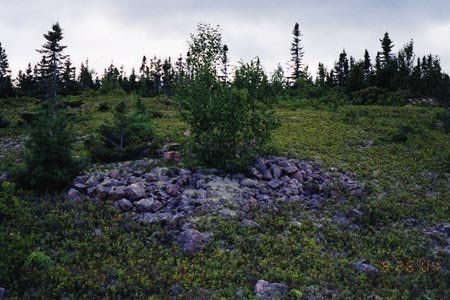
We passed on the offer of a review copy of the new novel by Kathleen O'Neal Gear and Michael Gear, but they do seem to be a remarkable phenomenon. Together they have fifty novels in about 25 years, and almost all are set in pre-contact aboriginal North American. And they are both professional archaeologists, who run an archaeological consulting firm in Wyoming.They also raise bison.
The new series, in which The Dawn Country is the second, is set in the history of the Hodenosaunee (ie, the Five -- later Six -- Nations or "Iroquois'), but the Gears' archaeological fictions cover most parts of North America and range from the Ice-Age migrations out of Beringia to contact times.
More about the Gears and their work here.
Thursday, February 24, 2011
Wednesday, February 23, 2011
My new gig
Posted by
Mary Stokes
One of the perks involved in being a graduate student is the variety of interesting, low-paying part-time jobs one is offered (or applies for, but that tends to be unnecessary--they will find you.) Often these are TAing, or adjunct/sessional lecturing. I've done some of both, and they have their charms. The downside (aside from the whole working hard for peanuts thing) is that both operate according to a kind of super-charged Parkinson's law--not only do they fill the time allotted, but they also fill a lot of the time NOT allotted.
One thing I haven't done in a long time is work as an RA, or research assistant. Looking back these have been my favourite academic mcjobs, though I suspect it may depend on who you are working for. In my first RA-ship, many years ago, I did a little of the photocopying/find books in the library sort of thing one expects. But most of it was editing--I got to help select the articles for two books of collected essays, edit them, and deal with the fallout from the authors. I was introduced to anyone who was anyone in my field, and to many who weren't anyone then but are now. Still reaping the dividends of that one (thanks, Professor David Flaherty.)
A few weeks ago I was approached out of the blue by Dean Lorne Sossin of Osgoode Hall Law School to take on a RA thing to support a really promising public history project, the Osgoode History and Archives Project. ( I alluded to this project in an earlier post, in referring to the awesomeness and historical proclivities of R. Roy McMurtry.) The initial phase is planned to be an integral part of the renovation of the school, which will be re-opening this September. This looks like it will be tremendous, and the Dean and Louis Mirando, the Chief Librarian, both of whom I report to, seem like the best kind of supervisors; helpful, supportive, respectful and appreciative of the value of history (the latter is rare in legal-academic captivity, and definitely to be celebrated). But it's a little scary: after all this time criticizing other public history exhibits, I have to put up or shut up.
We had a meeting yesterday with the company which is doing the design and installation, Lord Cultural Concepts (students not knowing what to do with their public history or museology degrees should check them out, they look like a great company.) I am so excited by the plans, but I won't talk about them, because we want them to be a surprise. You can check out our currently minimal but effective interactive web presence here.
Here's what the space looks like now, more or less (that's Dean Sossin on the phone.) But trust me, it will be amazing.
One thing I haven't done in a long time is work as an RA, or research assistant. Looking back these have been my favourite academic mcjobs, though I suspect it may depend on who you are working for. In my first RA-ship, many years ago, I did a little of the photocopying/find books in the library sort of thing one expects. But most of it was editing--I got to help select the articles for two books of collected essays, edit them, and deal with the fallout from the authors. I was introduced to anyone who was anyone in my field, and to many who weren't anyone then but are now. Still reaping the dividends of that one (thanks, Professor David Flaherty.)
A few weeks ago I was approached out of the blue by Dean Lorne Sossin of Osgoode Hall Law School to take on a RA thing to support a really promising public history project, the Osgoode History and Archives Project. ( I alluded to this project in an earlier post, in referring to the awesomeness and historical proclivities of R. Roy McMurtry.) The initial phase is planned to be an integral part of the renovation of the school, which will be re-opening this September. This looks like it will be tremendous, and the Dean and Louis Mirando, the Chief Librarian, both of whom I report to, seem like the best kind of supervisors; helpful, supportive, respectful and appreciative of the value of history (the latter is rare in legal-academic captivity, and definitely to be celebrated). But it's a little scary: after all this time criticizing other public history exhibits, I have to put up or shut up.
We had a meeting yesterday with the company which is doing the design and installation, Lord Cultural Concepts (students not knowing what to do with their public history or museology degrees should check them out, they look like a great company.) I am so excited by the plans, but I won't talk about them, because we want them to be a surprise. You can check out our currently minimal but effective interactive web presence here.
Here's what the space looks like now, more or less (that's Dean Sossin on the phone.) But trust me, it will be amazing.
Tuesday, February 22, 2011
History of heads on spikes
Posted by
Christopher Moore
You can have a revolution without putting the old leader's head on a spike, but it is one of those defining moments that symbolizes an irrevocable change. Charles I in 1649, Louis XIV XVI in 1793, Nicolas II in 1918, Nicolae Ceausescu in 1989, they all did their part to confirm that a real revolution was in progress.
Watching Hosni Mubarak's last telecast last week, I wondered he might be the one who would surrender his head as the symbol of what they are now calling the Arab 1848.
Would Mubarak's apparent determination to hold on at all costs actually keep him in the presidential palace until the mob decideded to storm the gates and ...? Well, no. The army had other ideas, and Mubarak was gone the next day (though he is apparently still in the country and presumably available for a show trial should some new regime need one.)
The prime candidate now may be Muammar Gadhafi, who for the moment at least looks equally determined to defy the people of Libya to the bitter end, even appearing in public last night to prove he was not in Venezuela. He too may have an executive jet standing by (Silvio Berlusconi is said to be a friend, not that he is very secure either). But as the tide sweeps across North Africa and the Middle East, you have to wonder if one of these furious and insecure autocrats is going to miscalculate and end up making the revolutionary gesture.
(Image: www.DestinationCreation.com)
Watching Hosni Mubarak's last telecast last week, I wondered he might be the one who would surrender his head as the symbol of what they are now calling the Arab 1848.
Would Mubarak's apparent determination to hold on at all costs actually keep him in the presidential palace until the mob decideded to storm the gates and ...? Well, no. The army had other ideas, and Mubarak was gone the next day (though he is apparently still in the country and presumably available for a show trial should some new regime need one.)
The prime candidate now may be Muammar Gadhafi, who for the moment at least looks equally determined to defy the people of Libya to the bitter end, even appearing in public last night to prove he was not in Venezuela. He too may have an executive jet standing by (Silvio Berlusconi is said to be a friend, not that he is very secure either). But as the tide sweeps across North Africa and the Middle East, you have to wonder if one of these furious and insecure autocrats is going to miscalculate and end up making the revolutionary gesture.
(Image: www.DestinationCreation.com)
Monday, February 21, 2011
Vote Referendum in Britain
Posted by
Christopher Moore
Britain's Parliament has approved a plan to hold a referendum May 5 on adopting the "Alternative Vote" system for future House of Commons elections, it says here. And here is a decent, apparently unslanted summary of what AV and some of its alternatives mean. (Essentially, in each constituency, you pick 1,2,3,... among the candidates on the ballot, and as the least-supported candidates are eliminated, voters' second and third choices are applied until one candidate has 50% in that riding. It is not, most observers agree, proportional representation -- it could even reduce party proportionality -- but provides that each member of the Commons would be a majority winner in his or her own constituency.
Britain's Conservatives apparently dislike AV (as likely losers by it) but agreed to the referendum as part of the coalition agreement with the Liberal-Democrats.
Heroic History Blogging, cont'd: live blogging World War II
Posted by
Christopher Moore
I'd been vaguely aware of this one, but here is the link to "World War II Day-by-day" +70 years, now 541 days in and still a long slog ahead before unconditional surrender. It's a pretty hardcore blog: no pictures, no elaborate stories. Just the facts, sir.
Update, February 23: Rory Curtis of "World War II Day by Day" tells us that the blog's content is also on Facebook here, enhanced with lots of additional photos, anecdotes, and memories provided by readers.
Sunday, February 20, 2011
Agnes MacPhail to JS Woodsworth
Posted by
Jordan Kerr
I love coming across gems when doing archival research. We've all been there. Those documents or artifacts that don't necessarily give you a research breakthrough but do bring a smile to your face that breaks the dizzying monotony that is doing history via microfilm.
I was going through the J.S. Woodsworth Fond and found this...
The note from Agnes MacPhail, Canada's first female federal MP, I'm assuming was sent shortly after Woodsworth gave his famous pacifism speech on Sept 8, 1939 shortly before he voted his opposition to Canada's participation in the Second World War. He voted against his own party and the moment was effectively when M.J. Coldwell assumed leadership of the CCF. I'm also assuming that this note may have given title to the staple biography on Woodsworth, Kenneth McNaught's A Profit in Politics: A Biography of J.S. Woodsworth.
For kicks, here's a radio address given by Woodsworth in 1935.
Here you can listen to MacPhail in 1948 speaking about women in politics.
I was going through the J.S. Woodsworth Fond and found this...
![]() | |
| During the special parliamentary session to decide Canada's participation in WW2 |
The note from Agnes MacPhail, Canada's first female federal MP, I'm assuming was sent shortly after Woodsworth gave his famous pacifism speech on Sept 8, 1939 shortly before he voted his opposition to Canada's participation in the Second World War. He voted against his own party and the moment was effectively when M.J. Coldwell assumed leadership of the CCF. I'm also assuming that this note may have given title to the staple biography on Woodsworth, Kenneth McNaught's A Profit in Politics: A Biography of J.S. Woodsworth.
For kicks, here's a radio address given by Woodsworth in 1935.
Here you can listen to MacPhail in 1948 speaking about women in politics.
![]() | ||
| Agnes McPhail |
![]() |
| J.S. Woodsworth |
Friday, February 18, 2011
Jim Lotz and George Rice
Posted by
Christopher Moore
My longtime colleague and correspondant, the author, northern traveller, community developer, and Haligonian Jim Lotz kindly tried to send me a copy of his recent book on Nova Scotian Arctic explorer George Rice, who froze to death way up there with the rest of the Horace Greely expedition in 1884.
But it seems to have gone lost in the mail, so all I can do is provide these links to it. Go, Jim.
Shaughnessey Cohen Prize to Anna Porter
Posted by
Christopher Moore
The Ghosts of Europe, Anna Porter's account of post-communist Eastern Europe, is the 2011 winner of the Shaughnessy Cohen Prize in political writing from the Writers' Trust of Canada. The Cohen Prize honours a work that covers:
Haven't read through the contenders, won't judge, and these are all admired books. But the idea of the Cohen being a prize for a book on Canadian politics, rather than the generic non-fiction prize it seems to be evolving into, seems a good one.
a political subject of interest to Canadian readers and enhances our understanding of the issue. The winning work combines compelling new insights with depth of research and is of significant literary merit. Strong consideration is given to books that, in the opinion of the jury, have the potential to shape or influence Canadian political life.Since Cohen was an MP who died suddenly on the floors of the House of Commons, one rather expects that "strong consideration" will indeed be given to a book about Canadian politics. But the remit to the jury members (who are anonymous, at least on the WT website) is a broad one, and in recently years Cohen juries seem to have interpreted it loosely. Other nominees this year include Tim Cook's First World War history The Madman and the Butcher, as well as Shelagh Grant' Arctic Imperative, Lawrence Martin's Harperland, and Doug Saunders's Arrival City.
Haven't read through the contenders, won't judge, and these are all admired books. But the idea of the Cohen being a prize for a book on Canadian politics, rather than the generic non-fiction prize it seems to be evolving into, seems a good one.
Rubbish never sleeps
Posted by
Christopher Moore
I thought Peter Chiasson's charming and silly story of his discovery of the remains of a Chinese pre-Columbian settlement on Cape Breton Island, as set out in his 2006 book The Island of the Seven Cities, had gone away after The Walrus published a detailed account of how his "ancient" "Chinese" "ruins" were built in the 1980s -- complete with a photo of a pickup truck in the middle. Actually, we wrote it up at the time.
But stories have lives of their own, and the National Post clearly thinks Chaisson's story is too good to fact-check. Apparently the book has been published in China, so it's gonna live forever. Even -- sigh, -- History Television is on it.
Thursday, February 17, 2011
Heroic History Blogging
Posted by
Christopher Moore
We try to keep up and, you know, post now and then on the state of historical doings in our balilwick. But there are some truly heroic historobloggers out there.
Consider Jonathan Jarrett, a British medievalist who produces a remarkable blog that had me at the title: A Corner of Tenth Century Europe. Jarrett apologizes for not posting so often -- he's teaching, doing original research in obscure archives, publishing monographs at a ferocious rate, raising a family, attending conferences, etc, etc. But he still quite frequently comes up with a post like this one, that manages to cover about 26 issues in medieval studies and is still lively, readable, full of personality, and beautifully illustrated to boot.
And has seven substantial footnotes. Footnotes on a blog post is where I draw the line, I thought, but he brings it off.
Consider Jonathan Jarrett, a British medievalist who produces a remarkable blog that had me at the title: A Corner of Tenth Century Europe. Jarrett apologizes for not posting so often -- he's teaching, doing original research in obscure archives, publishing monographs at a ferocious rate, raising a family, attending conferences, etc, etc. But he still quite frequently comes up with a post like this one, that manages to cover about 26 issues in medieval studies and is still lively, readable, full of personality, and beautifully illustrated to boot.
And has seven substantial footnotes. Footnotes on a blog post is where I draw the line, I thought, but he brings it off.
Wednesday, February 16, 2011
Set your PVRs? Canadians to see banned Kennedy series
Posted by
Christopher Moore
National Post reports on how History Television Channel in the US folded on the Canadian-produced series The Kennedys after Kennedy loyalists complained it wasn't accurate -- read, it has too much extracurricular presidential bonking. But it will run in April on History Television in Canada, and on a zillion other channels around the world.
As someone says in the article, if literal specific accuracy to the documented historical record is so vital in film drama, where would The King's Speech or The Social Network or The Queen -- or any other drama -- be?
That's Katie Holmes and Greg Kinnear playing the leads (photo from National Post).
Update, Feb 17: Mary Stokes observes that (US) History Channel's declaration that The Kennedys is insufficiently accurate for its standards
also operates indirectly to authenicate what they do show as accurate and 'true'--which is dubious, or at least arguable,and wisely points out:
the comments by some Canadian critics that are contemptuous of the States, to wit "thank God that couldn't happen here," forget the controversies over The Valour and the Horror and Prairie Giant. It can and does happen here.Too true, and many historians lent themselves to the campaigns to silence those programs.
Tuesday, February 15, 2011
Flag Day is a thing in Canada?
Posted by
Mary Stokes
(illustration courtesy of Mount Allison University)Who knew? Not me, but more power to the late, great, historian George Stanley (1907-2002). He even has a facebook page. Now that's glory for you.
Americans rediscover loyalists
Posted by
Christopher Moore
Every few years historians in the United States get a frisson from rediscovering that not all Americans supported the cause of "liberty" during that unpleasantness in the 1770s and 1780s. Maya Jasanoff's new Liberty's Exiles sounds like a terrific piece of historical writing, actually, but any Canadian historian who has even dabbled in the field will not exactly be thunderstruck to learn that loyalism “cut right across the social, geographical, racial and ethnic spectrum of early America—making Loyalists every bit as ‘American’ as their patriot fellow subjects. Loyalists included recent immigrants and Mayflower descendants alike."
By coincidence, I have been reading David Mills's 1988 study The Idea of Loyalty in Upper Canada 1784-1850. It's accurately titled: the study is less about the historical loyalist exiles who interest Jasanoff than about the struggle, mostly among non-"loyalists" (in that sense), to capture and define the label loyalty. The concept starts out being very much the property of the conservative elite, but as reform views entrench themselves in the political scene, the reformers become adept at defining their position of political dissent based on constitutional rights as true loyalty in the best British tradition.
Monday, February 14, 2011
A Safe Haven:The Story of the Black Settlers of Oxford County
Posted by
Jordan Kerr
Every year along with black history month comes my need to put a plug in for a book from my hometown area. The book, by amateur history Joyce Pettigrew, is a fascinating account of Black history in Oxford County, Ontario. I would strongly encourage other scholars to follow up on Mrs. Pettigrew's work as there is very much enthusiasm among the local historical societies at the present time to recover this history and work towards restoring the site of a former African Methodist Episcopal cemetery and church site near Otterville, Ontario.
Pettigrew, Joyce. A Safe Haven:The Story of the Black Settlers of Oxford County. South Norwich Historical Society, 2006.
A summary of the book and information on how to obtain it can be found here. I treasure my copy.
Happy reading,
Jordan
Pettigrew, Joyce. A Safe Haven:The Story of the Black Settlers of Oxford County. South Norwich Historical Society, 2006.A summary of the book and information on how to obtain it can be found here. I treasure my copy.
Happy reading,
Jordan
Sunday, February 13, 2011
Susan Crean on LAC
Posted by
Jordan Kerr
In fitting with the archival theme that occasionally pops up here I thought I'd share this. Susan Crean writes a wonderful piece in the Literary Review of Canada that combines a little archival romance, nostalgia and fair but frank criticism of the running of Library and Archves Canada. Even as an undergrad I regularly hear similar sentiments from my history student peers. The frustrations encountered while doing research (or attempting to do so) is a regular topic of conversation in after seminar chats. I cant speak to some of her comments on the managerial aspects of LAC but the sentiments I hear on the ground anecdotally back up her analysis.
Jordan
Jordan
Friday, February 11, 2011
Slavery in Canada portal for Black History Month
Posted by
Christopher Moore
Online historians at Northern Blue announce their Slavery in Canada portal in time for Black History Month. Online textbook, images and video, biographies and timelines, classroom activities, and an interactive element.
This month in Canada's History
Posted by
Christopher Moore
Lead story in this month's Canada's History, now going out to subscribers, is a photo essay on Canada's best National Historic Sites, including (cover photo) Louisbourg.
The story is in honour of Parks Canada's centennial. Which makes an odd bit of history in itself, because the first national park, Banff, was established in 1885, and Parks Canada noted the 125th anniversary of that last year. But centennials are fudgeable (as I know to my benefit, having written a few commemorative things over the years). Turns out the Dominion Parks Service, later Parks Canada, was established in May 1911, one of the final achievements of the Laurier government before that fall's election, I guess.
Even if that was mostly just a minor bureaucratic reshuffling, Parks Canada is saluting it by giving free admission on July 1 and other goodies, so who's to complain? And the Canada's History article is pretty spectacular too. More available at its website.
My own column for this ish looks at Michael Winter's book from last fall, The Death of Donna Whelen, which he calls a novel but which seems to me a remarkable exercise in documentary reconstruction. Winter uses transcripts of a St. John's murder trial and...
in their fast-flowing talk, their fierce judgments and flashes of kindness, Winter’s talkers lay bare a whole world. Winter says he has written a novel, but this is also one of the most vivid Canadian social histories I have read in years. If historians a hundred years from now are looking for what 1990s working-class St John’s looked and sounded like, The Death of Donna Whalen may be the place they start.
Not something anyone would say about CBC Radio, I think
Posted by
Christopher Moore
Paul Lay, editor of Britain's History Today, comes to the defence of BBC Radio Four:
Few institutions have done more for the dissemination of history in Britain than BBC Radio 4.But then History News Network links to a CBC news piece about Nunavut archaeology.
Wednesday, February 09, 2011
Methodology, Historiography and Theory oh my
Posted by
Mary Stokes

The March 2011 issue of the Canadian Historical Review (vol.92, no.1) is now available online.
An intriguing set of articles in this one:
Ian Radforth, Political Demonstrations and Spectacles during the Rebellion Losses Controversy in Upper Canada
Simon Jolivet, Entre nationalismes irlandais et canadien-français : Les intrigues québécoises de la Self Determination for Ireland League of Canada and Newfoundland
Karen Wall, PearlAnn Reichwein Climbing the Pinnacle of Art: Learning Vacations at the Banff School of Fine Arts, 1933–1959
Stuart Henderson, Off the Streets and into the Fortress: Experiments in Hip Separatism at Toronto's Rochdale College, 1968–1975
Joan Sangster, Invoking Experience as Evidence
Jocelyn Letourneau, David Northrup, Québécois et Canadiens face au passé : similitudes et dissemblances
Along with the usual reviews.
While no doubt all are up to the CHR's generally high standard, and admirably showcase the impressive innovation and diversity of current historical research in this country consonant with the journal's mission, to my mind the most exciting are the Sangster and Letourneau/Northrup pieces. These address the kind of deep-political and historiographic 'big' questions for which a national review is the appropriate venue.
Here are the two abstracts, which should show what I mean.
Sangster:
Letourneau/Northrup:
An intriguing set of articles in this one:
Ian Radforth, Political Demonstrations and Spectacles during the Rebellion Losses Controversy in Upper Canada
Simon Jolivet, Entre nationalismes irlandais et canadien-français : Les intrigues québécoises de la Self Determination for Ireland League of Canada and Newfoundland
Karen Wall, PearlAnn Reichwein Climbing the Pinnacle of Art: Learning Vacations at the Banff School of Fine Arts, 1933–1959
Stuart Henderson, Off the Streets and into the Fortress: Experiments in Hip Separatism at Toronto's Rochdale College, 1968–1975
Joan Sangster, Invoking Experience as Evidence
Jocelyn Letourneau, David Northrup, Québécois et Canadiens face au passé : similitudes et dissemblances
Along with the usual reviews.
While no doubt all are up to the CHR's generally high standard, and admirably showcase the impressive innovation and diversity of current historical research in this country consonant with the journal's mission, to my mind the most exciting are the Sangster and Letourneau/Northrup pieces. These address the kind of deep-political and historiographic 'big' questions for which a national review is the appropriate venue.
Here are the two abstracts, which should show what I mean.
Sangster:
This paper uses the hundreds of private letters that women sent to the Royal Commission on the Status of Women in 1968–9 to explore women's changing interpretations of paid work in the twenty-five years after the Second World War. These working women often invoked their own experiences as evidence the commission should heed, although its staff tended to see the letters as subjective and personal, and thus less useful than official briefs. The letters offer us insight into how women negotiated and interpreted changing patterns of paid work, as the number of working mothers increased significantly in this era. An analysis of the letters revisits feminist debates about the concept of experience: while some feminist writers have become increasingly skeptical of using women's words as ‘authentic’ evidence from the past, others remain committed to the ‘retrieval of experience,’ arguing that we can use the concept in a way that does not reify experience, gloss over differences between women, or ignore the way in which it is interpreted by historical actors using the cultural resources at hand. Following from the second line of argument, the paper also suggests that the letters offer us a sense of connection to and feeling for the past, which should remain important aspects of feminist history.
Letourneau/Northrup:
Based upon a large survey about the historical consciousness of Canadians, this paper explores the similarities and differences in the way Québécois and other Canadians engage the past in their everyday life. The difference between these two groups is not the one that might be expected. We find that Québécois, mostly francophone Québécois, are more likely than other Canadians to report indifference about the past. Why is this so?
Tuesday, February 08, 2011
Museum Secrets at the Museum
Posted by
Christopher Moore
I haven't followed every episode of the Museum Secrets series on History Television (airs Thursday nights at ten, and episodes are frequently repeated). But what I have seen... it's not bad.
The Royal Ontario Museum seems to agree. For the next few weeks it is mounting a special exhibit featuring items from its collection that have been shown on the program.
Carnegie Libraries Galore!
Posted by
Jordan Kerr
![]() |
| Old Norwich Ontario Carnegie Library |
For those interested, while the Carnegie building no longer houses the library, the building remains. A history of the Norwich Library with some archival materials can be found here.
| A tad blurry, sorry. I'm not very good with a camera..... |
Monday, February 07, 2011
Monday roundup
Posted by
Christopher Moore
Friday I was at a Ontario Library Association conference in Toronto in connection with a new book (about which more another day). The event is pitched to teachers and to books for young people, and I heard that nonfiction and the information book (includng the history book) is very strong these days. Lots of authors around. On the historical side, my friend Ron Brown, the very prolific geographer-historian of rural and small town Ontario heritage, was promoting his new book From Queenston to Kingston.
A more general publisher's booth was announcing The Guilty Plea, a new courtroom procedural by Ronald Rotenberg. Not a historical book, except it reminded me of Rotenberg's very readable previous book, Old City Hall, which does indeed have something historic about it. In the plot background of Old City Hall, while the courtroom and police drama is playing out... the Maple Leafs win the Stanley Cup! I cannot think of another Toronto novel which has allowed itself that wish-fulfilment.
Saturday I was, well, bemused, by John Furlong's extraordinarily tone-deaf retelling of why there was so little French in the Olympic Opening Ceremony a year ago. Y'see, they wanted "Mon Pays" by Gilles Vignault, and when he declined to licence the rights to them, well, then it was all his fault, and why should they have to do anything French when someone would be so uncooperative? Furlong seems completely deaf to how odd the opening line "my country is not a country" might have sounded in the Canadian-nationalist festivities of the opening ceremonies, and to the reasons why Quebeckers, and particularly nationalist Quebeckers like Vignault, grasp the sting in the line. Amazing, English Canadians have been in dialogue with Quebec nationalism for fifty-odd years now, and there are still important, well-positioned people who simply do not seem to have heard a thing....
Sunday I read in History Today Online that the most dangerous livelihood in early Europe may have been kingship. Uneasy lies the head, for sure. About 22% of all kings from 600 to 1800 died by murder.
A more general publisher's booth was announcing The Guilty Plea, a new courtroom procedural by Ronald Rotenberg. Not a historical book, except it reminded me of Rotenberg's very readable previous book, Old City Hall, which does indeed have something historic about it. In the plot background of Old City Hall, while the courtroom and police drama is playing out... the Maple Leafs win the Stanley Cup! I cannot think of another Toronto novel which has allowed itself that wish-fulfilment.
Saturday I was, well, bemused, by John Furlong's extraordinarily tone-deaf retelling of why there was so little French in the Olympic Opening Ceremony a year ago. Y'see, they wanted "Mon Pays" by Gilles Vignault, and when he declined to licence the rights to them, well, then it was all his fault, and why should they have to do anything French when someone would be so uncooperative? Furlong seems completely deaf to how odd the opening line "my country is not a country" might have sounded in the Canadian-nationalist festivities of the opening ceremonies, and to the reasons why Quebeckers, and particularly nationalist Quebeckers like Vignault, grasp the sting in the line. Amazing, English Canadians have been in dialogue with Quebec nationalism for fifty-odd years now, and there are still important, well-positioned people who simply do not seem to have heard a thing....
Sunday I read in History Today Online that the most dangerous livelihood in early Europe may have been kingship. Uneasy lies the head, for sure. About 22% of all kings from 600 to 1800 died by murder.
On the whole, young monarchs whose power was not wholly consolidated, such as Prince Edward V of England and his younger brother Richard the Duke of York, were most likely to be murdered.
Thursday, February 03, 2011
History of the speed of news
Posted by
Christopher Moore
Good to see an substantial obituary of historian Marcel Trudel in the Globe & Mail today, though not in the online edition yet, it seems -- a story covered by history bloggers a couple of weeks ago, ahem.
Tuesday, February 01, 2011
Dan Savage: “It Gets Better” comes to Carleton U
Posted by
Jordan Kerr
First of all, sorry for the hiatus. Busy time of the year plus a partner recovering from severe pneumonia = little time for blogging.
In connection to previous post on the It Gets Better Project I thought I'd post this notice that LGBT rights activist and sex/relationship advice columnist Dan Savage will be speaking at Carleton University on Feb 2 about the It Gets Better Project. Now, I know this isn't necessarily the space to advertise such an event, but I have reasoning behind my madness.A common, though debated, theme of Canadian history that ideas and movements begin in the US or Britain and become transplanted and adopted/adapted here also fits the gay rights movement in general. With its infantile beginnings in the US cir. 1940's-1950's in the Homophile movement the strain eventually reached Canada and morphed into our own gay rights/liberation movement beginning in the 1970's.
My point? Dan Savage is American and has quite a following within the North American LGBT community. As well, he is very political, often encouraging his listeners (via a podcast) to vote for particular candidates, propositions etc. With this in mind I expect, well knowing that historical prediction is rather futile, that Savage will have a place in the North American, or even the Global, LGBT movement of the late 20th and early 21st centuries. Keep an eye out for his name 50 years from now.
Here you see him highlighted in the high profile American media...
http://www.dailymotion.com/video/x3qu3o_dan-savage-on-tcr_fun
http://abcnews.go.com/WNT/video/conversation-project-jeremy-hubbard-dan-savage-it-gets-better-stranger-youtube-gay-suicide-teen-world-news-11761205
Nothing like keeping an eye on the history of the future...
Jordan Kerr
Subscribe to:
Posts (Atom)