Guess not.
Here's a lovely revisionist take on St. Nick, in honour of the C-day, by one of my favourite (non-history) bloggers.
Saturday, December 25, 2010
Thursday, December 23, 2010
Slow down

In the new year I'll be posting the promised survey of Bests in CanHist during 2010. Thanks to all who have sent suggestions. More nominations warmly welcomed ... into early January. (Send an email)
And if you were following "Vincent Moore's History of the Twentieth Century," I recently wrapped it up here.
[Image: www.canadiandesignresource.ca via Google Images]


Fixed election dates: a dumb idea whose time has come.. and now may be going again

Maybe we will have to try some more of these ill-conceived electoral reform ideas to see how unhelpful they actually are. Trying fixed election dates has certainly exposed the flaws in the concept. One might imagine, by analogy, that nothing would undermine support for an elected Senate like trying it for a few years (as actually happened in the 1850s-60s). Nothing would expose the illusions of proportional representation like trying it (essentially, that's where New Zealand is now).
But "throwing the bastards in" can be a risky experiment. We've had about ninety years exposure of the folly of entrusting leadership of political parties to a process of massive competitive vote-buying -- but it's still sacrosanct everywhere in Canada.
[A note on BC leadership politics. In November I was denying that any parliamentary caucus in Canada had successfully brought down a leader who was inclined to fight. I should acknowledge that the threat of 13 BC NDP backbenchers to leave caucus if their leader Carole James did not consent to a leadership convention looks like a successful exception to my rule. Being willing to destroy the party, yeah, that will work. But one of the points I've tried to make is that Canadian parties and politics need leadership review systems that can work without destroying the party -- or costing millions, or taking months, or....]
Wednesday, December 22, 2010
Does history make better citizens than astronomy?
Where is the evidence for the often repeated, but never demonstrated, claim that compulsory Canadian history courses will make “good citizens of the present and future” (Laying Foundations for Citizenship – editorial, Dec. 21)?Ramsay Cook argues that subjects from astronomy to zoology would do as well.
Over to you, Historica-Dominion.
Tuesday, December 21, 2010
Sunset on the edge of the American west
The once stellar history (and philosophy and some politics) blog Edge of the American West has announced a "hiatus." The team of contributors just kinda ran out of steam (as any regular reader would have noticed) and decided to stop.
Monday, December 20, 2010
History of Commuting

Virgil Duff, longtime University of Toronto Press editor who will be known to many historians who have published there, is saluted here less for his editorial labours than for his heroic commuting. Forty-one years travelling five days a week on the GO Trains to the UTP offices makes him the southern Ontario line's most frequent passenger.
I figured he read manuscripts on the train every day, but not so, it seems.
Know the feeling
An honest historian reflects on the maddening fluidity of seemingly hard data:
I am in the final stages of preparing a manuscript for publication.... Here's my beef for today. Before I turn in this manuscript, I am checking every single footnote, every last citation, primary and secondary sources alike. And I am shocked, just shocked, at how many times I can't find the documents I had at my fingertips when I wrote the book. Admittedly, pieces of the prose date back to 2002, but I wrote most of the text in the past 2 years.
Friday, December 17, 2010
Canadian archeologist dies excavating former Parliament Buildings
I was saddened to read today that archeologist Mario Bergeron was killed thursday in Montreal while excavating the old Parliament Buildings burned in 1849. I didn't know Mr. Bergeron but my condolences, and I'm sure those of the entire history community, go out to his family and friends.
Jordan
Jordan
Some of us only have to put up with too cold/too crowded/too slow archives
On the other hand, Ken Reynolds, historian and blogger, is just back from a tour of duty (his second) as a Department of National Defence historian at NATO headquarters in Kandahar. Welcome home, Ken. This is one of his blog projects-- an online biographical profile of every soldier in one First World War Battalion.
Wednesday, December 15, 2010
Embrace the political

Dan Lett of the Winnipeg Free Press is one of the most intelligent of Canadian journalists.
His column yesterday is as thoughtful and thought provoking as anyone could hope for. That said, I have some issues with it (natch, or I wouldn't be blogging about it.)
First, "Fighting over exhibit size is no way to advance debate" is not the most eye-catching of headlines. I blame the editor, not the author, but it's a shame, because it means the column will probably be under the radar for all but those looking for something historical to blog about.
Secondly, as a conclusion, it's just plain wrong. Lett's musings on the nastiness of the competition between Ukrainians and Jews for equality or primacy of recognition for the horrors of Holomodor versus those of the Holocaust as measured in space in the future Canadian Museum for Human Rights, are brilliant in raising questions which are have intrigued me for many years.
Lett writes:
For dispassionate observers, the debate over which is the worst atrocity, or
even whether one atrocity has been given too much emphasis while others have
been marginalized, is awkward, even discomforting. It is, in essence, an attempt
to measure and compare human suffering. For Ukrainians, this is about being
marginalized, adding an insult to the injury inflicted on them in the early
1930s. For many Jews, the debate itself is anti-Semitic, a bid to diminish the
importance of the Holocaust as part of an ongoing war against the Jewish people.
How do we, as historians, and as citizens, measure historical evil and victimhood? Is the perception of the holocaust as the ultimate historical evil in the mind of much of the Western World the product of inherited guilt and/or superior organization, commitment, historical consciousness on the part of the Jewish diaspora, or is there some additional degree of evil inherent in the intentionality of genocide by the Nazis which transcends any quantitative measurement of lives lost and terror and suffering undergone?
There is, of course no definitive answer. I tend to favour the latter explanation, but it is a question that cannot be dodged, and should not be dodged. Yes, this is presentism. Or may the reverse: pastism. Everything is present, and everything is political (in the largest sense of the word.) As William Faulkner put it, in my fave quotation about history :"The past is not dead. In fact, it's not even past."
Communities exist in time. They are backward looking and forward looking. The debate is nasty, because people care. A lot. And if they didn't, there would be no debate to advance.
Islamic Science Exhibit reviewed
When you consider how little serious reviewing or cultural criticism we get (The Globe Arts section will always keep us up to date on box-office totals and star divorces), it does look as if the dead-tree media are dead or moribund. But sometimes...
This New York Times review by Edward Rothstein of a museum exhibition on Islamic science makes it sound like a fascinating show to see -- and simultaneously raises serious questions about the impartiality of the whole thing.
Update: so with the Times about to start charging for online access to its content, will readers value it enough to pay?
This New York Times review by Edward Rothstein of a museum exhibition on Islamic science makes it sound like a fascinating show to see -- and simultaneously raises serious questions about the impartiality of the whole thing.
Update: so with the Times about to start charging for online access to its content, will readers value it enough to pay?
Tuesday, December 14, 2010
Something to watch on History Television?

The six part series from a Toronto film company, Kensington Communications, includes episodes at the Vatican, the Louvre, Toronto's Royal Ontario, and othes.
The series launches January 6, and we'll take a look. The interactive website promises to go active about then, but in the meantime, the Museum Secrets blog is full of info.
Shooting Queen Victoria?

'Course that mob was actually aiming for Elgin. Charles and Camilla were merely drive-bys
Monday, December 13, 2010
"Vimy" at the GCTC
 |
| Photo from GCTC site |
The play struck me quite strong at times. After recently undertaking my first research experience using First World War letters it was stirring, to say the least, to see and hear some of the experiences and emotions I read the letters acted out in front of me.
Whether you're well versed in Canadian First World War history or not, the play is with worth seeing. Unfortunately, the last show was on Saturday, but hopefully it will return at some point.
Jordan Kerr
http://randomunistudent.blogspot.com/
What were the historical bests of 2010? A bleg.
Some years I do a survey of our prominent historians and writers about the best history books, films, exhibits, controversies, and events of the past year. And each year a depressingly large contingent replies, "Oh, gee, I've been busy, I haven't been keeping up, I don't read much outside my field, I...."
Sometimes I fear I will start buying into in the public stereotype of historians as dim and tweedy bores.
 But this blog can't survey everything or keep up with every publication (he said, understating enormously) -- and surprisingly few historical publishers ever think of sending a review copy or notice to Canada's leading history blog So I'm turning to you, loyal readers.
Have you seen a book worth noting among the year's best histories? Or a film? Or a museum exhibition that really stood out. Email suggestions and I'll compile a master list for early in the new year. Seriously, I want your help. Good work deserves recognition. Give it some thought.
Try to resist the temptation to nominate yourself, no matter how cruelly you have been neglected. And "worst of" is fun, but works better if the good has already been honoured -- which in our field is too rare.
Hoping to hear from you. (Bleg? Blog + beg = bleg.) Image: Google Images
Sometimes I fear I will start buying into in the public stereotype of historians as dim and tweedy bores.
Have you seen a book worth noting among the year's best histories? Or a film? Or a museum exhibition that really stood out. Email suggestions and I'll compile a master list for early in the new year. Seriously, I want your help. Good work deserves recognition. Give it some thought.
Try to resist the temptation to nominate yourself, no matter how cruelly you have been neglected. And "worst of" is fun, but works better if the good has already been honoured -- which in our field is too rare.
Hoping to hear from you. (Bleg? Blog + beg = bleg.) Image: Google Images
Casts from pasts: no box office blast
"History is being quickly shuttled off Broadway stages and back into the library stacks," reports the Globe and Mail. The story ain't in the online ed, because it's picked up from the NYT which has the story of three plays dealing with (American) history all dying at the box office..
Friday, December 10, 2010
There is a procedure: party discipline in Britain and Canada
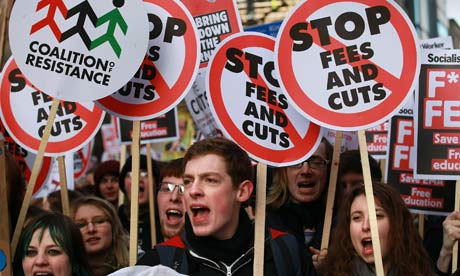
Some parliamentary secretaries resigned rather than support their government, but no one is being fired from caucus, no one is being denied re-nomination.
This is how politics works in functioning parliamentary democracies, where leaders are part of caucus and accountable to it and where caucuses of the people's elected representatives are understood to be coalitions of interests, not merely cheering claques for leaders imposed on them by extra-parliamentary shenanigans.
Oh, and some people in a Rolls-Royce got egged. See which story gets most coverage.
(Photo: The Guardian online)
Thursday, December 09, 2010
"There is a procedure": party leadership in Ireland and Canada
The spectacle in British Columbia politics -- in which destroying the party seems to be an integral aspect of any serious intraparty debate about policy and leadership (in both political parties) -- continues to contrast sharply with the situation in Ireland, in which cabinet ministers and backbenchers speculate openly about replacing Prime Minister Brian Cowen -- and yet government goes on, everyone remains in the party, and the leader calmly says:
I am the democratically elected leader of my party. There is a procedure if anybody has views about having another leader of the party."In Ireland as in other functioning parliamentary democracies, debates within parties are recognized as healthy and inevitable, and accommodated within the political process. If backbenchers come to believe a leadership review is necessary, they simply put forward a motion to that effect in caucus, and it either passes or fails. The Irish Independent reports:
Rebel TDs who were sounding colleagues out about signing a motion of no confidence -- which requires 18 TDs -- now appear to have given up and say it is up to the "officer class" of senior ministers to act.Instead both BC parties will spend months and millions in one of those massive vote-buying sprees Canadians call a leadership race, only to produce another crew of dictatorial egomaniacs. There are better ways -- indeed, they exist in pretty much every other parliamentary democracy in the world.
"I have no doubt there are well over 18 people there, but whether they sign a motion is another matter," a Cowen ally said.
Wednesday, December 08, 2010
The Great Corruptionist rides again

Is Skype now essential to a jobhunting academic's CV?
Tenured Radical argues that it is.
And if you find yourself Skyping a job interview, she has lots of practical how-to tips:
And if you find yourself Skyping a job interview, she has lots of practical how-to tips:
A Sharpie, some note cards, and a small bulletin board (or a dry erase white board) that can be placed behind your laptop are a worthwhile investment. The survey you would be expected to teach? Sketch it out, with key texts. A little anecdote that dresses up a methodological problem in your thesis? A phrase like "Soup kitchen/condom/fireman" will remind you of exactly what you wanted to say about it.Not looking that direction, myself, but I've been getting into some webcast invitations from history classrooms, and it sounds like good advice.
History of Mathematics.. but I thought only one went to St. Ives
An Egyptian document more than 3,600 years old, the Rhind Mathematical Papyrus, contains a puzzle of sevens that bears an uncanny likeness to the St. Ives riddle. It has mice and barley, not wives and sacks, but the gist is similar. Seven houses have seven cats that each eat seven mice that each eat seven grains of barley. Each barley grain would have produced seven hekat of grain. (A hekat was a unit of volume, roughly 1.3 gallons.) The goal: to determine how many things are described. The answer: 19,607.The New York Times story credits Marcel Danesi, "puzzle expert" at the University of Toronto. (Who knew?)
Tuesday, December 07, 2010
John A., boy detective

Roderick Benns's The Legend of Lake on the Mountain: An Early Adventure of John A. Macdonald features an introduction by Brian Mulroney (presumably destined to star in his own volume) and praise from Richard Gwyn, Jack Granatstein, and Patricia Phenix. More info here.
"Well, young man, maybe this Mackenzie will lead some kind of revolution, like they had in the United States. What do you think of that?"
"Meaning no disrespect, sir, but I think there must be other ways to figure out how to run our affairs."
(Fireside Press kindly sent a review copy our way.)
Festival of Lights: the history and the historian
In honour of Chanuka, which ends tomorrow, a post on the historiography of Jewish tradition....
At a Chanuka party last weekend, I got into a discussion which made me realize how little I knew about the historiography of Judaism generally, and the origins of the tradition of Chanuka, as opposed to the story of Chanuka, specifically. The latter is well chronicled, mostly in books for kids and gentiles. It's an appealing, inspiring story.

But the larger history is inspiring too, as is the story of the great historian Elias Bickerman (also spelled Bikerman and Bickermann) author of the magisterial From Ezra to the Last of the Maccabees: the Foundations of post-Biblical Judaism (among many other works) which should be the first stop for anyone interested in the history of Judaism.


Bickerman, who died in 1985, is also the subject of a recent biography with a very boring cover by Albert Baumgarten. But it's not a boring book.
Bickerman saw himself as a classicist, rather than a Judaic scholar, and it is probably in large part thanks to him that many modern day departments of classics include Hebrew along with Latin and Greek. That Baumgarten portrays him as "a historian of the Jews"raises some interesting questions about the biographer's right to re-identify the subject, as does Baumgarten's decision to write a biography about someone who was so serious about his desire that only his published work represent his life that he destroyed his personal papers before his death.
Romantic Archiving?
Following up on a snippet I included in a previous post, I'd thought I'd share another thought from Timothy Findley's The Wars.
Historians are a strange lot who understand history to be a living thing; it never dies out and is constantly growing. It's not simply that knowledge that the past affects the preset and the future but rather the innate feeling that historical objects can give us a personal connection to people who have come before us. Not always is it a personal connection but also a feeling that such objects give you a rare glance into an age that's beyond ones ability to fully partake in.
These objects, are powerful academic AND emotional conduits into past lives and past societies. I've found the emotional aspect is most powerful when such objects encounter our tactile sense. There is something strangely powerful about holding, for example, a soldiers letter. Maybe this shouldn't be confined to historians alone, why do we treasure photos and belongings of loved ones who have passed away and fill our museums to artifacts rather than simply texts?
Historians often engage in these emotions in doing archival research. These thoughts go through our minds, and are exchanged between friends and colleagues, but rarely are they put to paper. These are quite obviously grounded in historical imagination but nonetheless often provide motivation while sitting in a quiet room with a depressing amount of old paper to wade through. Perhaps I'm being a touch too romantic but I think Findley expresses such thoughts well and these two passages struck me...
"You begin at the archives with photographs...All you have to do is sign them out and carry then across the room. Spread over table tops, a whole age lies in fragments underneath the lamps...You hold your breath . As the past moves under your fingertips, part of it crumbles. Other parts, you know you'll never find. This is what you have." pp. 3-4
"On Sunday, Robert sat on his bed in the old hotel at Bailleul and read what Rodwell had written.
'To my daughter, Laurine; Love your mother. Make your prayers against despair. I am alive in everything you touch. Touch these pages and you have me in your fingertips. We survive in one another. Everything lives forever. Believe it. Nothing dies." pp. 150-151
Historians are a strange lot who understand history to be a living thing; it never dies out and is constantly growing. It's not simply that knowledge that the past affects the preset and the future but rather the innate feeling that historical objects can give us a personal connection to people who have come before us. Not always is it a personal connection but also a feeling that such objects give you a rare glance into an age that's beyond ones ability to fully partake in.
These objects, are powerful academic AND emotional conduits into past lives and past societies. I've found the emotional aspect is most powerful when such objects encounter our tactile sense. There is something strangely powerful about holding, for example, a soldiers letter. Maybe this shouldn't be confined to historians alone, why do we treasure photos and belongings of loved ones who have passed away and fill our museums to artifacts rather than simply texts?
Historians often engage in these emotions in doing archival research. These thoughts go through our minds, and are exchanged between friends and colleagues, but rarely are they put to paper. These are quite obviously grounded in historical imagination but nonetheless often provide motivation while sitting in a quiet room with a depressing amount of old paper to wade through. Perhaps I'm being a touch too romantic but I think Findley expresses such thoughts well and these two passages struck me...
"You begin at the archives with photographs...All you have to do is sign them out and carry then across the room. Spread over table tops, a whole age lies in fragments underneath the lamps...You hold your breath . As the past moves under your fingertips, part of it crumbles. Other parts, you know you'll never find. This is what you have." pp. 3-4
"On Sunday, Robert sat on his bed in the old hotel at Bailleul and read what Rodwell had written.
'To my daughter, Laurine; Love your mother. Make your prayers against despair. I am alive in everything you touch. Touch these pages and you have me in your fingertips. We survive in one another. Everything lives forever. Believe it. Nothing dies." pp. 150-151
Findley, Timothy, The Wars. Toronto: Penguin Books, 1996.
Anyone have research stories to attest to this?
Also, I just remembered this from a few years ago for some reason and thought I'd include it. Not really related, but still funny.
Medieval Helpdesk
Jordan Kerr
ActiveHistory's how-to: searching your First World War Ancestor

At ActiveHistory, Ian Milligan provides very detailed "Step by Step" instructions for searching for the military records of individual Canadians. But one of the key steps is "Go to Ottawa," and there he's soliciting help. If you are working in those sources, you can be one of his volunteers
Milligan is kind enough to suggest this is an aid for students. But even experienced historians have lots of collections and archives they've never worked in and don't know their way around. With enough volunteers, maybe A/H could extend this "step-by-step" to other popular research topics. (E.g., I still don't know much about our nearly hundred year old house.)
(Image from Google Images: no relation)
Monday, December 06, 2010
Vincent Moore's History of the Twentieth Century, Ctd.
Part 5: The fifties
In the 1950s, my father participated in at least two great historical trends of the time: parenthood and immigration.
Like a great many other wartime couples, my parents, who married in 1945 contributed vigorously to the postwar baby boom. By their fifth anniversary, they had three children. And like a great many other European couples, they responded to the grimness of postwar Europe by emigrating.
My mother came from a British Empire family, with relations all over the red-painted parts of the globe, and she already had a younger brother in Vancouver. My father started his search for a new start there. Historians of immigration have a phrase for this: chain migration. One of the strongest predictors of immigration is having a relative who has already done so. He soon found an opportunity in Nelson, British Columbia. Six months after he crossed the Atlantic by early transatlantic flight, my mother and their three children went by passenger ship and the C.P.R. to join him there.
In 1950s Britain, my father must have been thoroughly unstuck in class, at once a lower-class Irish Catholic with a Scots wife and at the same time a decorated ex-officer and newspaper proprietor. Where did that place him? In Canada, all such questions fell away. Indeed, the British accents that my parents retained all their lives signified gentility if anything in ’fifties British Columbia. My father, who had joined the provincial judicial administration system, soon seemed thoroughly at home, driving huge distances around the mountain roads of the Kootenays, often with a Supreme Court judge and a sheriff in the car. The Moores became popular members of the sociable Nelson community. (I still have an engraved silver platter presented to him in 1960, expressing the esteem of the Kootenay Bar Association for his services there. People did that kind of thing then.)
Whatever the hardships of leaving home and family, I do not recall my parents ever expressing a moment’s regret about their decision to immigrate, and they both – but particularly my father -- became proud, enthusiastic Canadians. And their growing children had a very fortunate fifties middle-class Canadian upbringing.
Of course they had it comparatively easy. British emigrants like us had practically free entry to Canada at that time. The massive Italian immigration to Canada was already under way, and the part of Toronto I live in now became heavily populated in the 1950s with Balts, Poles, Ukrainians, and other Eastern Europeans, but most of those people had a harder passage here and doubtless more challenges being accepted than Vincent Moore did.
The second half of the century was starting to work out well for my father and his family.
[Update: Vincent Moore's History of the Twentieth Century continued and concluded -- December 22, 2010]
[Update: Vincent Moore's History of the Twentieth Century continued and concluded -- December 22, 2010]
The sixties
Like a great many North Americans by the 1960s, Vincent Moore (age 50 in 1960) emerged into his fortunate share of the postwar prosperity. He had never lived in poverty and been spared the worst of the 1930s. By 1960 he was successfully established in his new country and career, and that year he moved his family to Vancouver, where he rose to a senior position in the provincial judicial administration. He had a good income, the stock market prospered, and there was (I am guessing) an inheritance after my grandfather Lennox died in the late 1950s. My mother, who had worked during the Second World War and early in their marriage, no longer worked for income They joined a golf club, they acquired recreational property, they travelled.
It was pretty much taken for granted in his family that his sons would have university education, but it did not feel that we were, like so many of our peer group, the first “educated” generation of our family. Neither of my parents had any higher education, but they seemed like cultured, educated, worldly-wise people to me. It was not as if I had never heard an idea expressed or an issue debated before I went to the University of British Columbia.
A feature of my father’s life that now seems notable was his engrained liberalism. That hardly seems an inevitable result of his life experience, but I wonder if the way he became unstuck in Britain’s class system in the ‘20s, ‘30s, and ‘40s left him with an appreciation of tolerance and acceptance. In the early to mid-1960s, when many still thought the United States involvement in Vietnam was probably a correct and inevitable thing to do, he was viscerally sceptical. Though he sometimes expressed a wry admiration for the military and the way it got things done, I think he was convinced by his own military experience that war was nearly always the wrong answer. Near the end of his life, he was similarly appalled by the Falklands conflict.
Nothing would ever have tempted my father to live again in Britain, though he visited happily many times. Both my parents, but particularly my father, had become very proud Canadians and passport-carrying citizens as soon as they were entitled to be. Where Britain would always be trying to fix him in class and status, Canada was more tolerant of that sort of thing.
Vincent Moore was hardly of the counterculture, but he was not much threatened by it. Generational conflict was not a big issue in his household. If the sixties were a decade when people were allowed to reinvent themselves, then my father’s life had prepared him for the sixties.
The seventies
In 1975 my father reached the age of retirement. He concluded his career, slightly extending his retirement, on a task force concerned with reinventing court reporting in the light of new technology and new processes of judicial administration. A man who had built his early career on an ability to take down verbatim transcripts of conversations faster than anyone could talk became fulll of excitement and enthusiasm for the digital revolution he just glimpsed on the horizon.
Then he settled into retirement in Vancouver, come through the risks of the twentieth century into remarkable security. In retirement, he combined his knowledge of the British Columbia courts, his wartime-born love of things Italian, and his old journalist's skills, and wrote a lively biography of a Vancouver lawyer, judge, and pillar of the Italian community that became a west coast best-seller in 1981.
The eighties
Early in the 1980s, a doctor told my father he should not plan on seeing Vancouver’s Expo 86. The doctor was right. Vincent Moore died of cancer in July 1983, not quite seventy-three.
Friday, December 03, 2010
What's next for Historica-Dominion?
Toronto entertainment lawyer and producer Michael Levine will take the helm at the Historica-Dominion Institute. Historica-Dominion has grown enormously since Rudyard Griffith's little idea factory merged with the larger Historica Foundation a couple of years ago. The appointment of Levine, dealmaker and entertainment entrepreneur extraordinaire, suggests some blockbuster events may well be part of the institute's future. I'm looking forward to it.
Levine succeeds journalist and scholar Andrew Cohen, the first head of the merged institute, who goes back to writing and teaching in Ottawa
Levine succeeds journalist and scholar Andrew Cohen, the first head of the merged institute, who goes back to writing and teaching in Ottawa
Thursday, December 02, 2010
This month in Canada's History

The columns are strong too. Tina Loo examines how much of our Canadian documentary record is permanently closed from view. If the files you request at Library and Archives Canada are coded 18 or 32, you are in trouble, she writes. Loo calls for "interrogating the institutions, processes, and material circumstances that govern and shape the flow of information" (or, as she makes clear, the non-flow of information.)
And I kinda like my own column on the man who was dot.ca and the emergence of the Canadian internet presence.
If you subscribed like you oughta, you'd have all this in hand too.
Frances Russell against an empowered Senate
Frances Russell had a feisty column in the Winnipeg Free Press yesterday. Sparked by a recent poll suggesting a large majority of Canadians support an elected Senate, she sets out all the reasons why it's a bad idea and salutes the wisdom of the constitution-makers of 1867 in focussing power in the representative lower house.
'Course I'm always a sucker for journalists who cite me as their authority.
(H/t Immanuel Giulea.)
Update, December 3: Meanwhile, Timothy Garton-Ash, always lucid on European politics and history, seem befuddled by Britain's upper house. He grasps the threat of a powerful but unrepresentative upper house, but cannot quite bring himself to reject it. (Thanks Stephen McLean.)
'Course I'm always a sucker for journalists who cite me as their authority.
(H/t Immanuel Giulea.)
Update, December 3: Meanwhile, Timothy Garton-Ash, always lucid on European politics and history, seem befuddled by Britain's upper house. He grasps the threat of a powerful but unrepresentative upper house, but cannot quite bring himself to reject it. (Thanks Stephen McLean.)
Wednesday, December 01, 2010
Libary and Archives Canada: not as bad as you would think!

Greetings from rainy Ottawa, where your humble correspondent is deep in the records of the Provincial Secretary, Canada West. (Sorry, not nice to invite envy.)
The joys of going through countless reels of microfilm aside, I admit I have been agreeably surprised by my return to what I still prefer to think of as the National Archives.
Like most people in the Canadian history network, I had been aware of the chilly and getting chillier relationship between the CHA and the powers-that-be who make LAC policy. The latter would be much the same people who care so much about the quality of present and future information--viz. the census, so you can imagine the degree of their concern for past information and the people who use it. You can read about the the latest skirmish here.
Now I will say there is a certain sense of yo-yo dieting about this trip. Things which bugged me on my last visit many years ago--the inaccuracies of inventory for my sources and non-existence of the advertised finding aids...they're the same. Except the binders are tattier, and with an 'update' re the said inaccuracy/non-existence provided via the high tech solution of a yellow sticky. (I'm not joking.) So if I had been looking for progress, I would have been disappointed.
But due to the magic of lowered expectations, I feel only relief. My research trip was a last minute thing, so I was afraid that I would'nt be able to access some of the textual material I needed--the website advised a couple of weeks lead time. That's what you need for the Ontario archives. But I heard back from people--with names and contact info--within a day, and everything was ready for me. And indeed all the staff I have dealt with have been as nice as pie.
Other good things, by which I mean better than the spanking new Ontario Archives. A pretty good search engine and website. Old school hand-powered microfilm readers. Extended hours (fewer than previously, but the Ontario archives only have service hours) Lockers for your material. At the AO you have to re-request your material every day. I know.) The provision of see through bags so you can take more stuff in with you. Yesterday I had my laptop and charger, wallet, digital camera, ipod, cellphone, lip balm, kleenex, notebook and pencil with me. Try to juggle any more than the wallet, laptop and charger without some kind of bag, Ontario Archives. Also brilliant: the view from the reading room over the river. I tried Jordan Kerr's historical gaze to try to imagine voyageurs. but I need more practice with that. A great B & B closeby.
Bad things--above mentioned inventories. The cafeteria is bad, bad, bad. Luckily the Scone Witch is only a few minutes away.
Subscribe to:
Posts (Atom)